The Atomic Secret Code: Nuclear Physicists Crack 20-Year Gamma Ray Mystery with 'Hidden Magnetism'
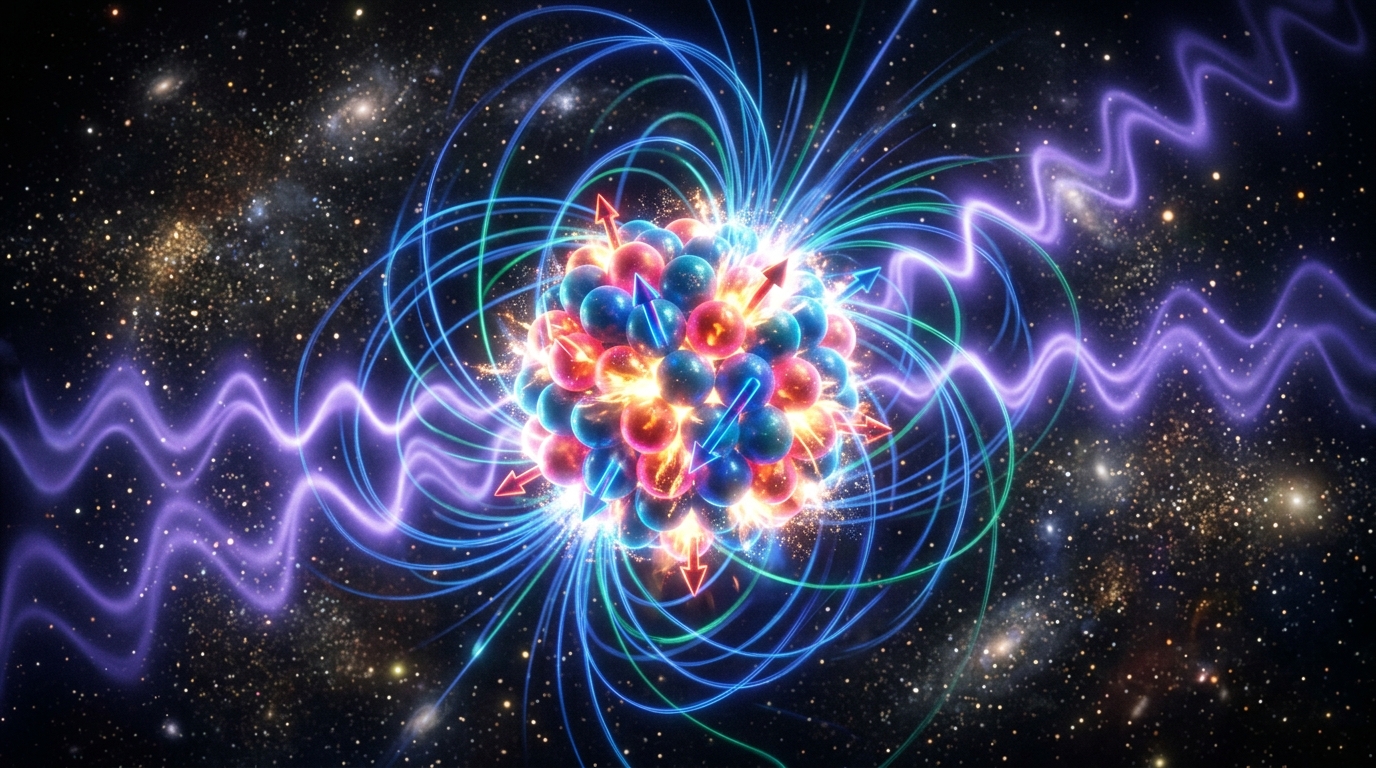
For over twenty years, nuclear physicists have stared at their radiation detectors with furrowed brows. According to every textbook model of the atom, when an energized atomic nucleus cools off, its probability of emitting gamma-ray photons should quietly taper off to zero at low energies. But experimental data kept doing the exact opposite: nuclei were spitting out a massive, unpredicted spike of low-energy gamma rays. Physicists called it the "Low-Energy Enhancement" (LEE), and for two decades, nobody could explain why atoms were breaking the rules.
Now, in a landmark study published in Nature, an international research team led by Michigan State University's Facility for Rare Isotope Beams (FRIB) and the Lawrence Livermore National Laboratory (LLNL) has finally solved the mystery. The culprits? Protons and neutrons flipping their internal magnetic moments like billions of microscopic compasses!
🧭 Electric vs. Magnetic: The Subatomic Showdown
Gamma rays can be unleashed through two distinct nuclear pathways: electric transitions (where electric charges slosh and rearrange inside the nucleus) or magnetic transitions (where the intrinsic spins of protons and neutrons flip direction). Standard theory assumed electric transitions dominated everything. But when the team analyzed radioactive copper decaying into zinc-70 (70Zn), they discovered the unexpected surge was almost entirely powered by magnetic dipole (M1) transitions!
Why should anyone outside of a nuclear physics laboratory care about subatomic magnetic flips?
- How the Universe Forged Gold and Platinum: Most heavy elements in the cosmos—like the gold in your wedding ring and the uranium powering reactors—were forged in catastrophic supernova explosions and neutron star collisions through the rapid neutron-capture process (r-process). That reaction rate depends directly on gamma-ray emission probabilities!
- Fixing 20 Years of Cosmic Calculators: Because astrophysicists didn't understand the magnetic origin of low-energy gamma rays, stellar nucleosynthesis models had massive margin-of-error blind spots. Now, cosmic abundance simulations can finally get their math right.
- Nuclear Forensics & Clean Energy: Pinpointing the exact quantum mechanics of nuclear de-excitation provides vital data for next-generation nuclear reactor design, stockpile stewardship, and tracing radioactive isotopes in global security.
✨ The Gold in Your Ring Just Got an Explanation
Every atom of gold on Earth was blasted across the cosmos billions of years ago when dying stars collided. By uncovering how atomic nuclei secretly flip their internal magnets to radiate gamma rays, scientists have illuminated the final missing link in how the periodic table's heaviest treasures were cooked in the cosmic oven.
It turns out atomic nuclei weren't trying to break physics after all—they were just playing with magnets behind our backs!
You might also like

The Moon's Far Side Preserved 1,000°C Magnetic Hard Drives in Natural Glass Beads
Scientists analyzing Chang'e-6 lunar soil discovered rare high-temperature gamma-iron trapped inside impact glass beads, creating microscopic magnetic fossils that remember the Moon's ancient dynamo.
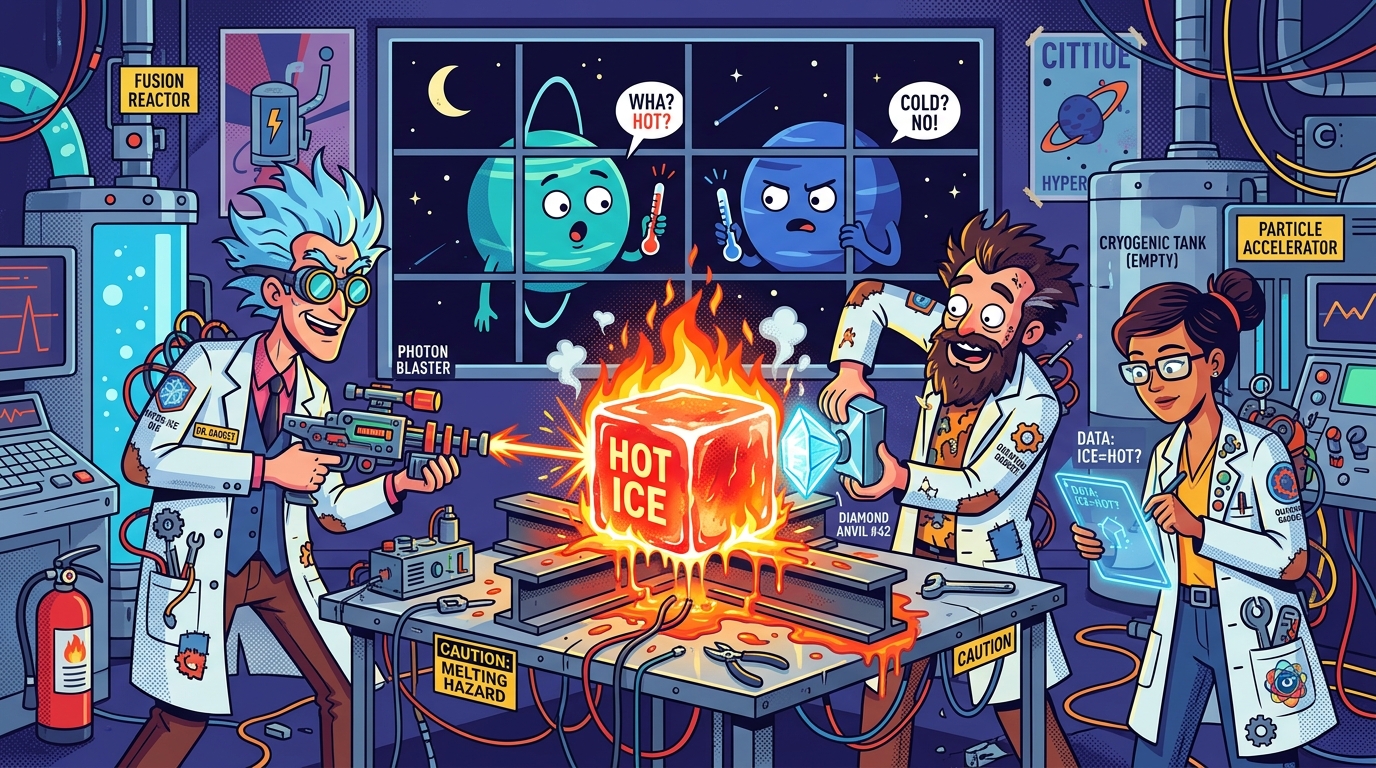
Ice Hot Enough to Melt Steel: How Physicists Recreated the Electric Slush of Uranus and Neptune
French physicists crushed water inside diamond anvils past 2 million atmospheres and heated it to 1,527°C—creating superionic hexagonal close-packed ice. It's solid oxygen trapping a flowing river of liquid protons, proving deep planetary ice is an electric inferno.
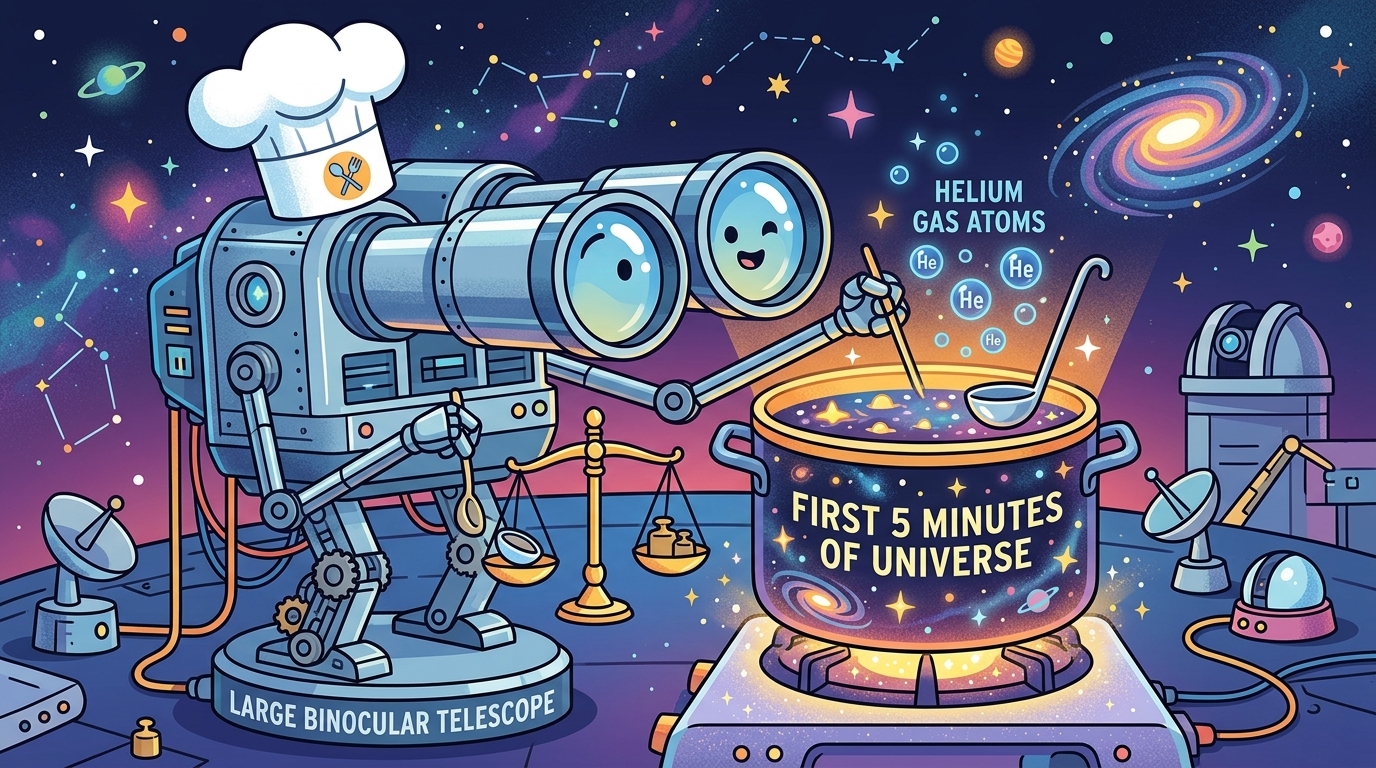
Weighing the Big Bang's Soup: Telescopes Measure Universe's First 5 Minutes Helium to 0.5%
Astronomers pointed the twin-eyed Large Binocular Telescope at 15 pristine galactic fossils for 130 hours to measure the exact amount of helium forged in the first five minutes of the Big Bang with three times greater precision than ever before.