Cosmic Monster Trucks: JWST Catches 21 Teenage Alien Solar Systems Smashing Planets into Vaporized Glass
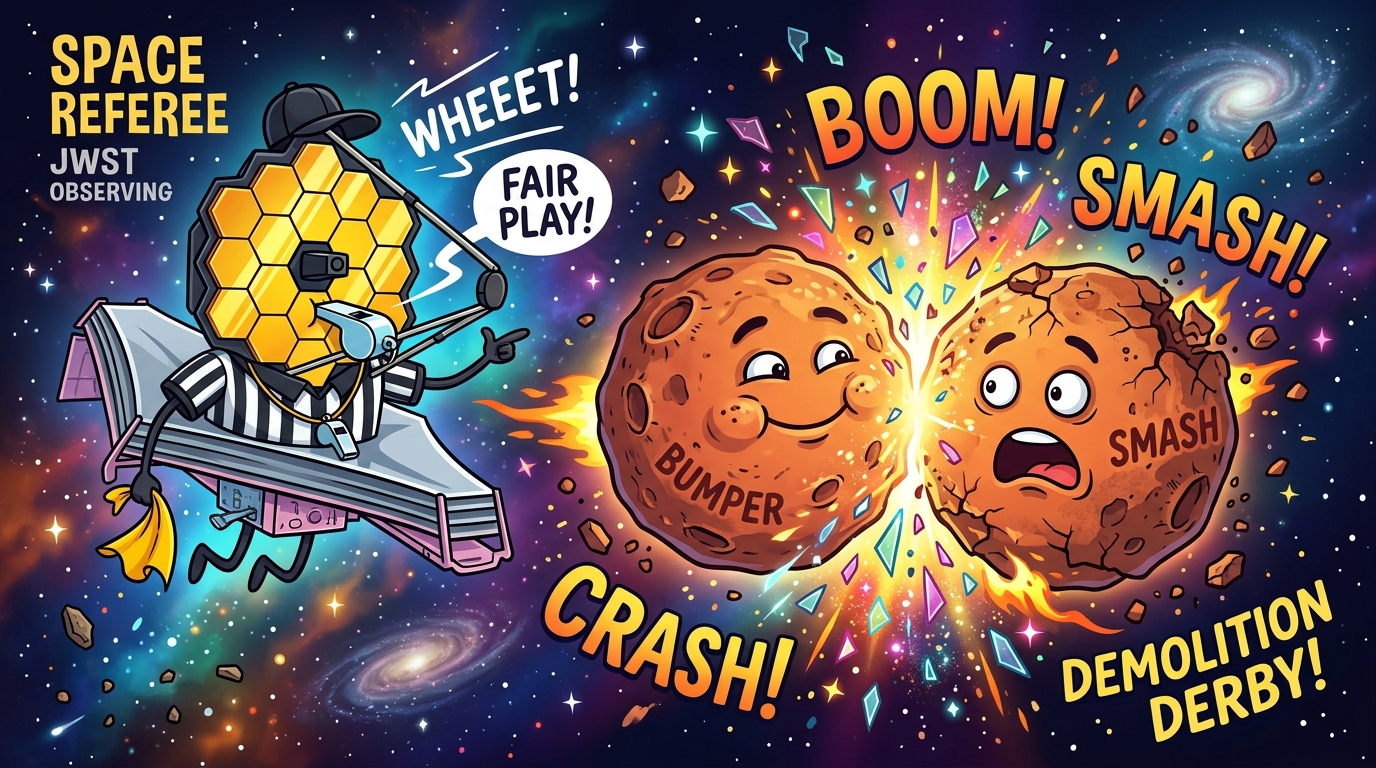
If you thought human teenagers were destructive when left unsupervised, you haven't seen an alien solar system in its puberty. When planetary systems are under 300 million years old, they don't slam bedroom doors—they slam entire Mars-sized planets into each other at cosmic velocities until rocks literally vaporize into boiling glass.
In early October 2026, a groundbreaking study published in The Astrophysical Journal led by Dr. Kate Su of the Space Science Institute unveiled the most dramatic footage of planetary childhood ever captured. Armed with the golden mirrors and Mid-Infrared Instrument (MIRI) of the James Webb Space Telescope (JWST), researchers surveyed 21 rare "extreme debris disks"—cosmic crime scenes where newly formed worlds are currently engaged in no-holds-barred demolition derbies.
☄️ The Planetary Bumper Car Championship
Extreme debris disks (EDDs) are stellar systems choked with baffling amounts of hot dust swirling perilously close to their host stars. By decoding the infrared mineral fingerprints of this dust, Webb revealed two distinct collision leagues:
- The Silica Glass Cloud Annihilators: About one-third of the systems glowed brightly with spectral signatures of pure silica—the exact chemical recipe for obsidian and volcanic glass. These aren't minor fender-benders; they are colossal, head-on impacts between Mars-sized protoplanets that hit so hard the kinetic energy flash-boiled mountain ranges into rock vapor.
- The Forsterite Demolition Derby: The other two-thirds exhibited silica-poor dust loaded with olivine and forsterite (a crystalline green mineral). These correspond to glancing, high-speed bumper car collisions between Moon-sized planetary embryos that shrapnel-blasted their outer mantles into space.
- Strictly Under-300-Million-Year Mayhem: The high-energy, silica-vaporizing catastrophic smashups occurred strictly around stars younger than 300 million years old, pinpointing the exact expiration date for giant planetary brawls.
For planetary astronomers, these observations are the ultimate cosmic flashback. Roughly 4.5 billion years ago, our own tranquil Earth was just a battered baby rock when a rogue Mars-sized wanderer dubbed Theia plowed straight into it. The resulting cataclysm vaporized a good portion of our primordial crust, flung glowing molten debris into orbit, and eventually condensed into the Moon.
Until JWST, scientists could only simulate those apocalyptic collisions on supercomputers. Now, JWST has provided real-time spectroscopic snapshots of the exact same Moon-forming violence unfolding across alien star systems right this moment.
🪐 Why Cosmic Chaos is Good News for Habitability
Watching planets smash themselves into glass powder might sound grim, but it's actually the essential rite of passage for habitable worlds:
- Clearing the Orbital Lanes: Young solar systems start with dozens of crowded, unstable baby protoplanets. Giant impacts merge smaller stragglers into chunky, stable terrestrial planets like Earth and Venus.
- Volatile Delivery: Catastrophic collisions stir up deep mantles and deliver water-rich asteroids and comets to newly formed rocky crusts, filling future oceans.
- Spin and Moons: Off-center impacts can stabilize a planet's rotational axis (just as the Moon stabilizes Earth's climate) and kickstart internal geodynamos that generate protective magnetic shields.
So the next time your life feels slightly chaotic, take comfort in knowing that your home planet survived the most violent monster truck rally in the galaxy—and James Webb is out there watching 21 other star systems smash their way toward stability.
You might also like
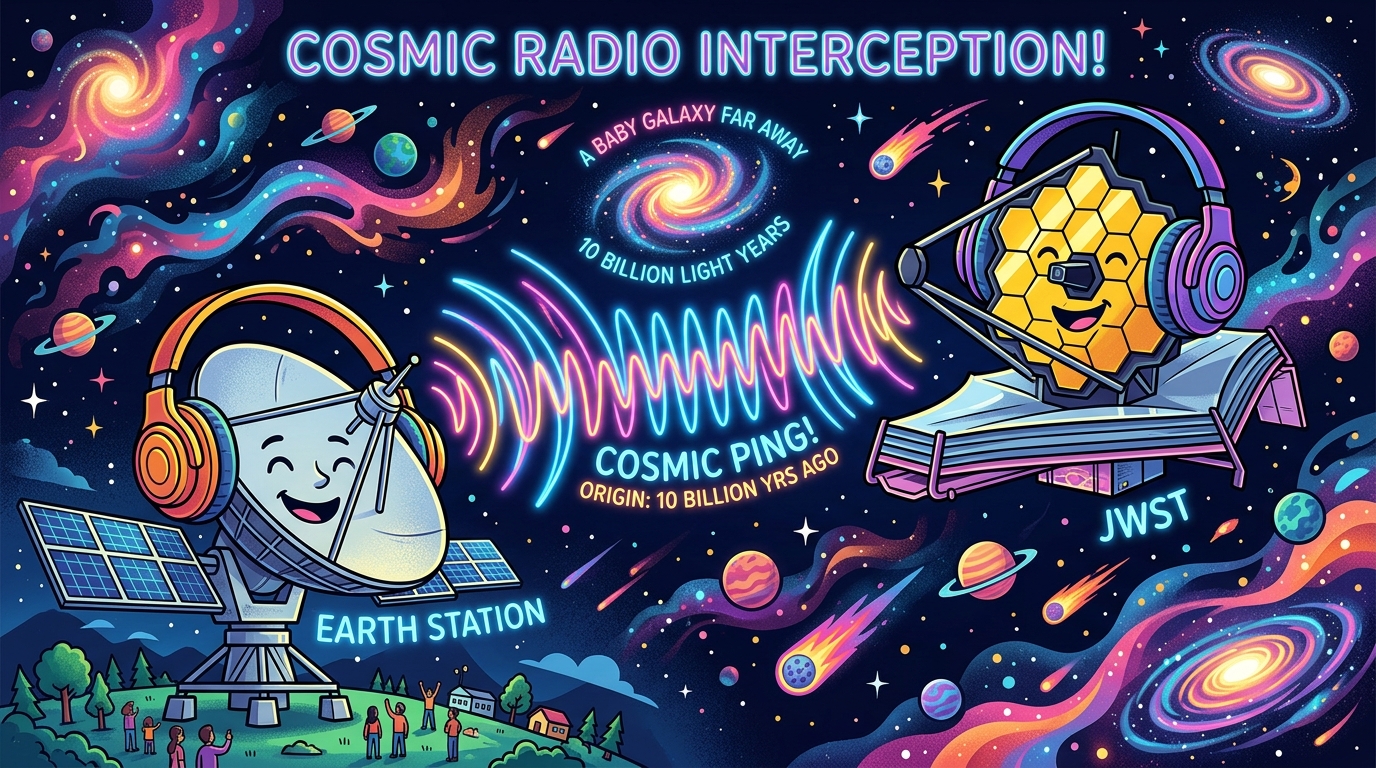
The 10-Billion-Year-Old Voicemail: Webb and MeerKAT Catch the Most Distant Radio Flash in Cosmic History
Astronomers have detected FRB 20240304B, a fast radio burst that traveled over 10 billion years across the universe, shattering cosmic distance records and proving ancient baby galaxies loved loud fireworks.

The Zombie Star That Blew Up in 1181 AD Left Behind Cosmic Strings of Pearls
Astronomers turning the Gemini North telescope toward supernova remnant Pa 30 discovered that the infamous 'zombie star' from 1181 AD didn't just survive its own blast—its cosmic dandelion explosion is threaded with glowing pearls.
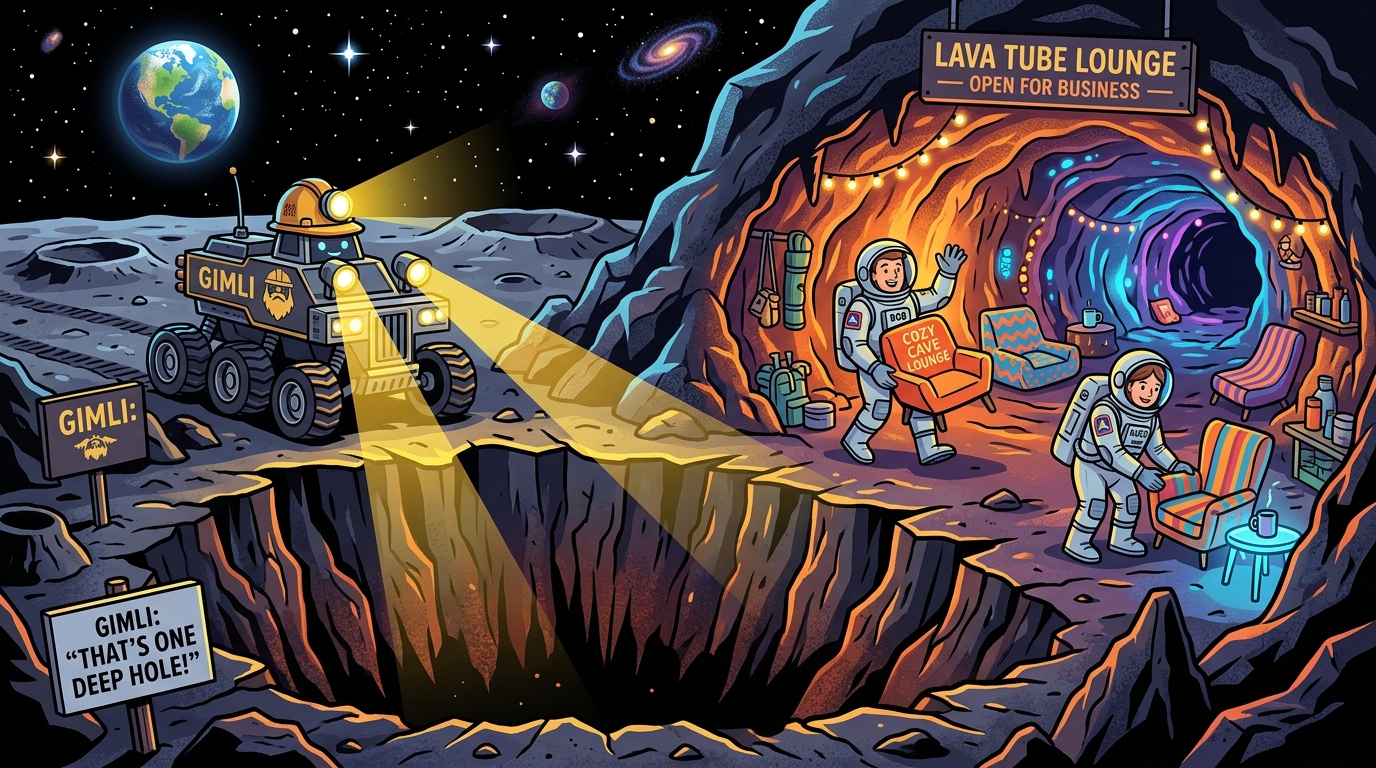
NASA Dispatches GIMLI to the Moon: Mining Subterranean Lava Caves for Astronaut Luxury Suites
NASA's PRISM program has officially selected the GIMLI mission to probe the mysterious Marius Hills Pit, verifying whether massive underground lunar lava tubes can shield future astronaut outposts from cosmic doom.