NASA's Nancy Grace Roman Space Telescope Blasts Off on Falcon Heavy to Map the Dark Universe
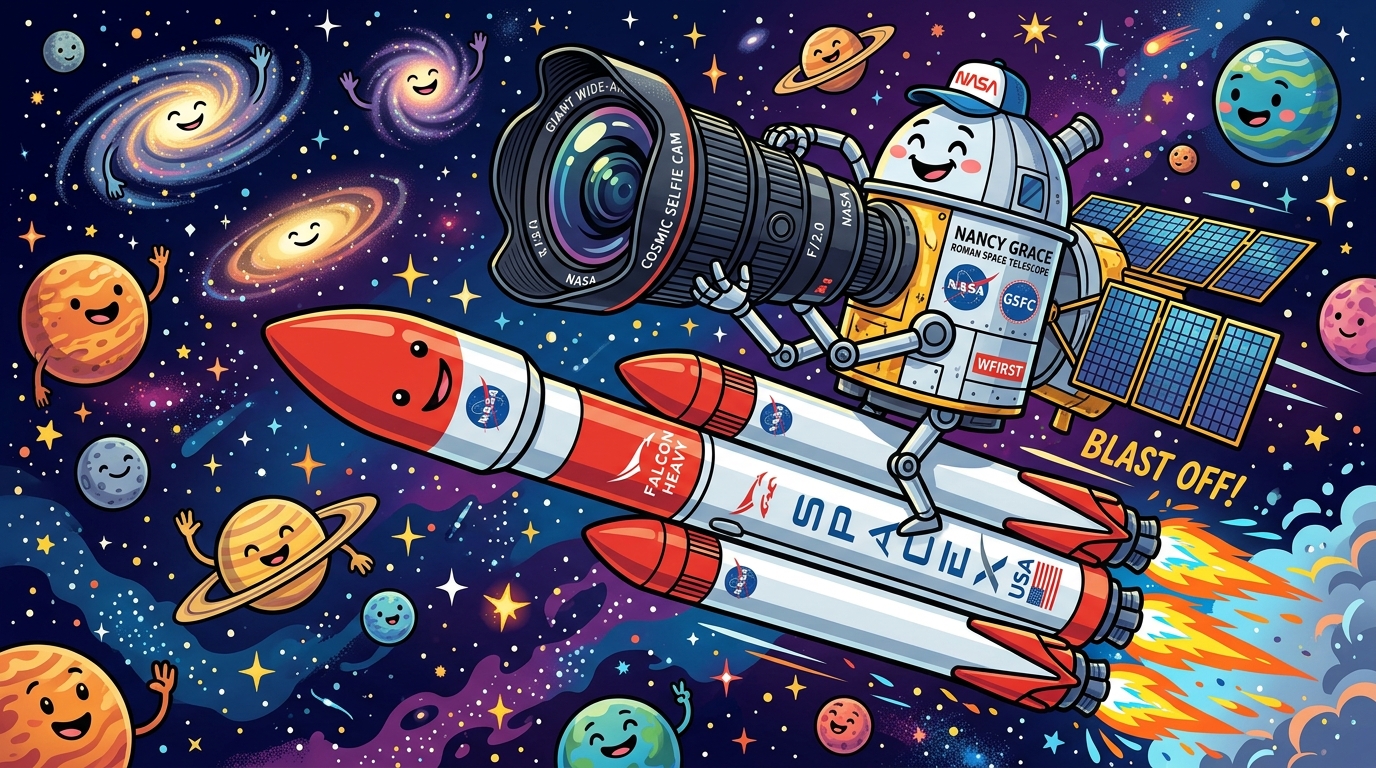
If the Hubble Space Telescope was like looking at the cosmos through a high-powered cardboard paper towel tube, NASA's newly launched Nancy Grace Roman Space Telescope is a 300-megapixel IMAX panoramic camera strapped to a rocket.
On the morning of August 30, 2026, at 7:26 a.m. EDT, a SpaceX Falcon Heavy roared to life at Launch Complex 39A at Kennedy Space Center in Florida, lofting NASA's flagship Nancy Grace Roman Space Telescope toward its cosmic perch at the Sun-Earth Lagrange Point 2 (L2)—a tranquil gravitational haven 1.5 million kilometers (930,000 miles) from Earth.
🚀 The Wide-Angle Monster of Modern Astrophysics
Equipped with a primary mirror measuring 2.4 meters (matching Hubble's diameter), Roman boasts the Wide Field Instrument (WFI), a 300-megapixel infrared sensor matrix that delivers a view 100 times larger than Hubble's infrared camera in a single snapshot without sacrificing pinpoint optical clarity.
What makes Roman such a game-changer for 21st-century astrophysics?
- Unmasking Dark Energy & Dark Matter: Roman is slated to survey billions of galaxies, mapping cosmic expansion and the invisible gravitational scaffolding that shapes the universe.
- Hunting Rogue Worlds and Exomoons: Using gravitational microlensing—where the gravity of passing planets bends background starlight—Roman will discover thousands of exoplanets, including free-floating rogue planets drifting alone in interstellar darkness.
- Starlight-Killing Coronagraph: The observatory carries a revolutionary tech-demonstrator Coronagraph capable of blocking out the blinding glare of host stars by a factor of 100 million, directly imaging mature Jupiter-sized gas giants in alien solar systems.
- Big Data Cosmic Blitz: In just five years, Roman is projected to collect over 20 petabytes of pristine observational data—more infrared imaging than Hubble gathered in over three decades.
🌌 The Legacy of the "Mother of Hubble"
Named in honor of Dr. Nancy Grace Roman—NASA's first Chief of Astronomy whose tireless advocacy created the Hubble Space Telescope—this mission cements her vision of giving humanity an unclouded window into deep space.
As the observatory cruises along its three-month trajectory to L2, astronomers around the world are prepping their hard drives. The era of taking single celestial snapshots is over; the cosmic panoramic selfie has officially begun!
You might also like
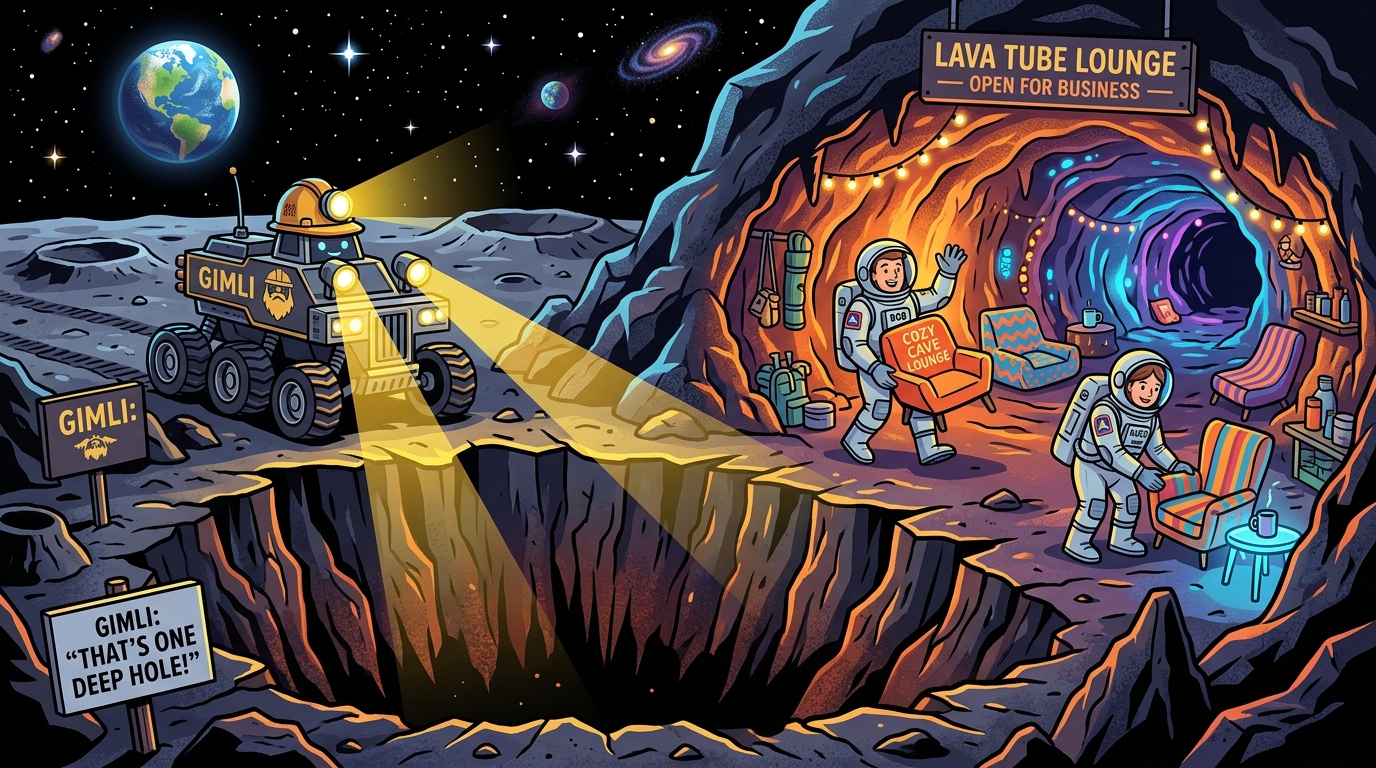
NASA Dispatches GIMLI to the Moon: Mining Subterranean Lava Caves for Astronaut Luxury Suites
NASA's PRISM program has officially selected the GIMLI mission to probe the mysterious Marius Hills Pit, verifying whether massive underground lunar lava tubes can shield future astronaut outposts from cosmic doom.
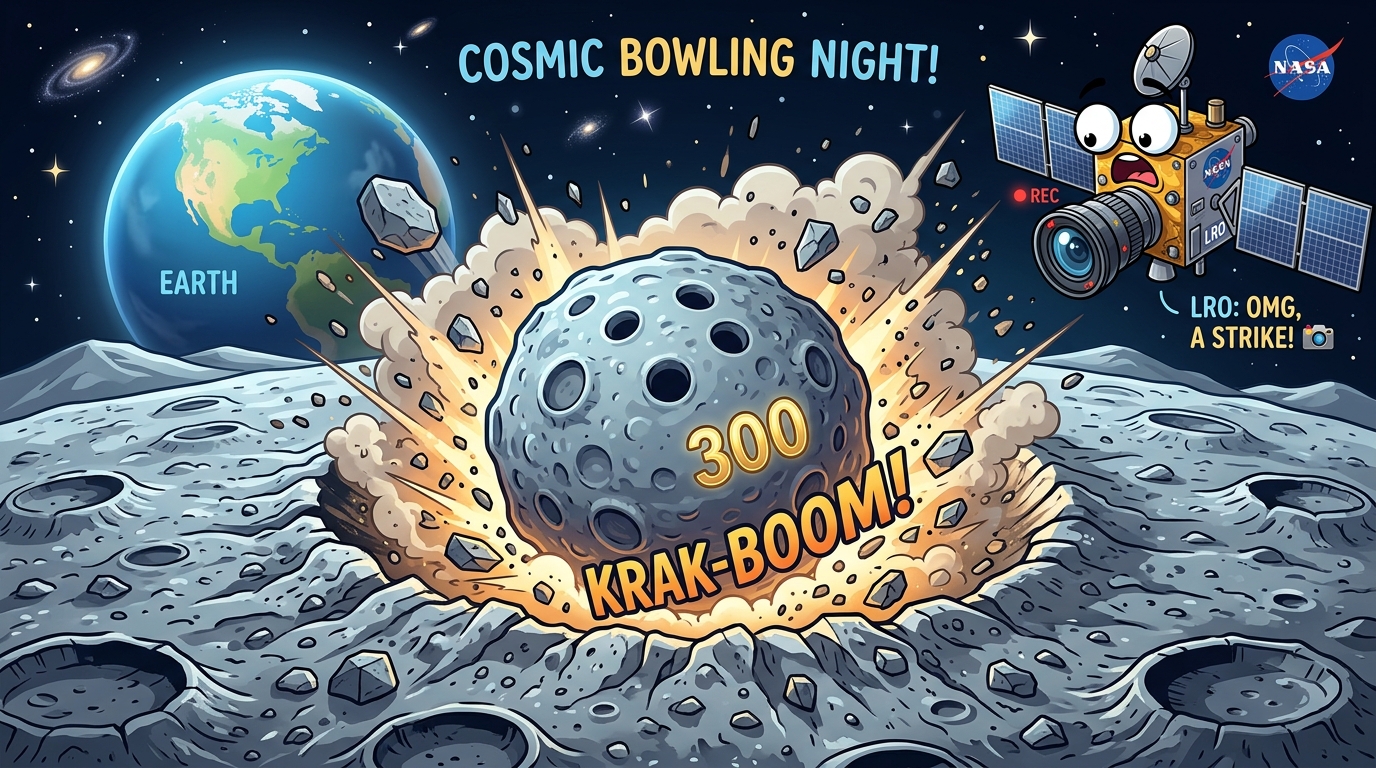
Cosmic Strike! A Building-Sized Asteroid Just Punched the Largest Fresh Crater on the Moon in a Century
NASA’s Lunar Reconnaissance Orbiter caught 'McGetchin,' a monstrous 728-foot impact crater blasted open by a space rock the size of a six-story apartment building—chilling 4 miles of lunar soil by 16 degrees.

Cosmic Cerberus: Astronomers Unmask the Solar System's First 'Three-Headed' Asteroid (44) Nysa and Its Hidden Moon
Using cutting-edge adaptive optics on giant mountain telescopes, astronomers revealed that asteroid (44) Nysa is shaped like a bizarre three-lobed cosmic snowman—accompanied by a loyal 1-km mini-moon bodyguard!