Cosmic Leafblower: XRISM Finds Black Hole Winds Are 100x More Violent Than Feared

Pop culture teaches us that black holes are the ultimate cosmic vacuum cleaners: pitch-black cosmic trash compactors where matter goes in and absolutely nothing ever escapes. But astrophysicists have long known that when supermassive monsters gorge on gas, they belch out furious winds. Now, thanks to the newly operational JAXA/NASA XRISM (X-ray Imaging and Spectroscopy Mission) observatory, we know those belches are roughly 100 times more cataclysmic than any computer simulation dared to imagine.
Targeting the hyperluminous quasar H1821+643, situated in a giant elliptical galaxy billions of light-years away, XRISM's ultra-sensitive Resolve microcalorimeter spectrometer peered straight into the searing corona surrounding a supermassive black hole harboring billions of solar masses. What it witnessed was a cosmic tempest that renders our most violent hurricanes laughable.
🌪️ Anatomy of a Galactic Storm
The data sent back by XRISM shattered preexisting astrophysics models:
- 300,000 Light-Year Blast Radius: The quasar's winds are violently ejecting interstellar gas far beyond the bounds of its host galaxy—spanning triple the diameter of our entire Milky Way.
- Energy of Billions of Supernovae: The mechanical power unleashed in these thermal winds carries the kinetic energy equivalent to billions of exploding stars detonating simultaneously.
- 100x Greater Turbulence: Previous models assumed black hole winds dissipated gently into the surrounding intra-cluster medium. XRISM measured turbulent kinetic energies two orders of magnitude higher than expected.
This discovery solves—and simultaneously complicates—one of cosmology's greatest mysteries: why do massive galaxies stop giving birth to new stars? The answer, it turns out, is that the monster at their heart is operating an astronomical leafblower. By violently purging hundreds of suns' worth of pristine hydrogen gas every year, the black hole starves its parent galaxy into premature retirement.
No gas, no clouds; no clouds, no gravity collapses; no collapses, no baby stars. It is the ultimate cosmic scorched-earth policy.
🛰️ XRISM Just Getting Started
By mapping plasma temperatures and velocities down to a few electron volts of precision, XRISM is rewriting textbooks on galaxy evolution. If you ever complain about windy weather outside today, just be thankful your local black hole isn't blowing 300,000 light-years of superheated X-ray plasma across your backyard.
You might also like
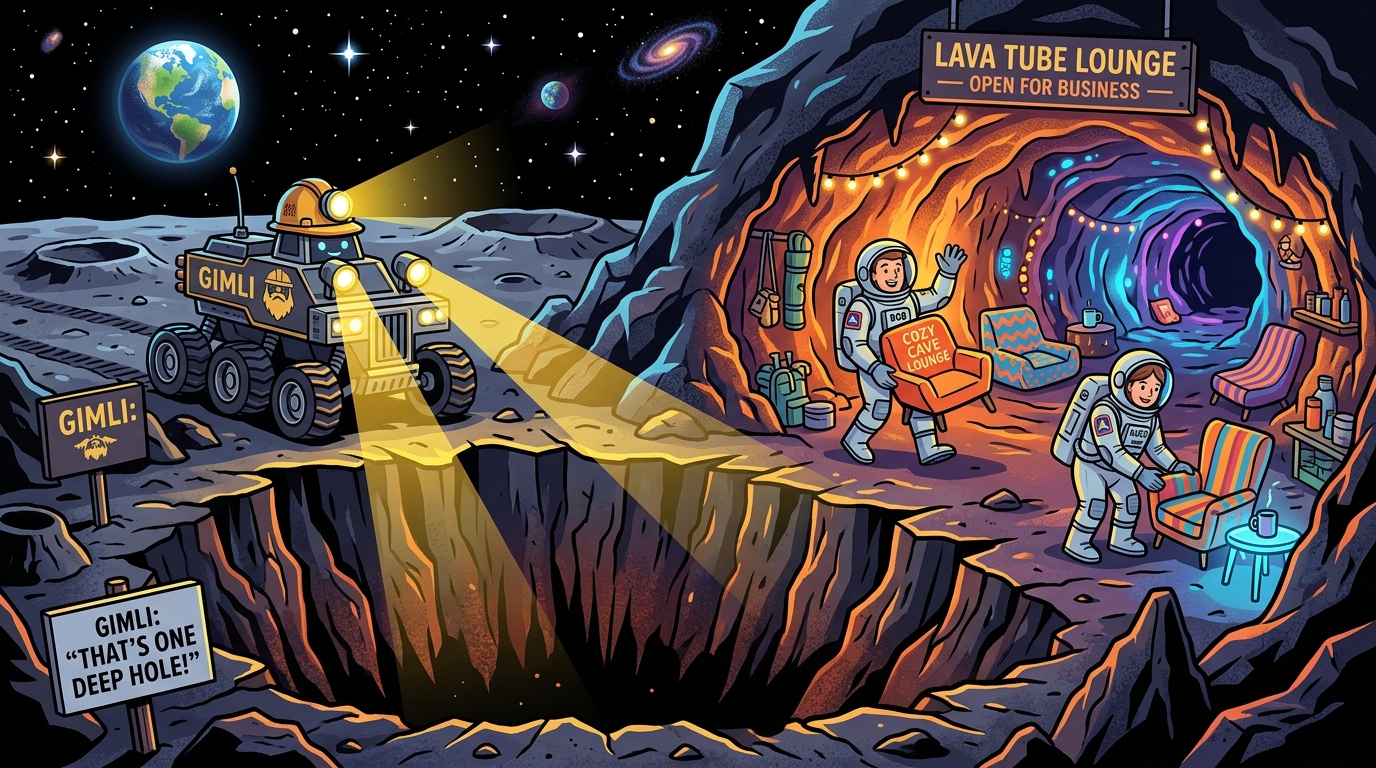
NASA Dispatches GIMLI to the Moon: Mining Subterranean Lava Caves for Astronaut Luxury Suites
NASA's PRISM program has officially selected the GIMLI mission to probe the mysterious Marius Hills Pit, verifying whether massive underground lunar lava tubes can shield future astronaut outposts from cosmic doom.

Cosmic Strike! A Building-Sized Asteroid Just Punched the Largest Fresh Crater on the Moon in a Century
NASA’s Lunar Reconnaissance Orbiter caught 'McGetchin,' a monstrous 728-foot impact crater blasted open by a space rock the size of a six-story apartment building—chilling 4 miles of lunar soil by 16 degrees.
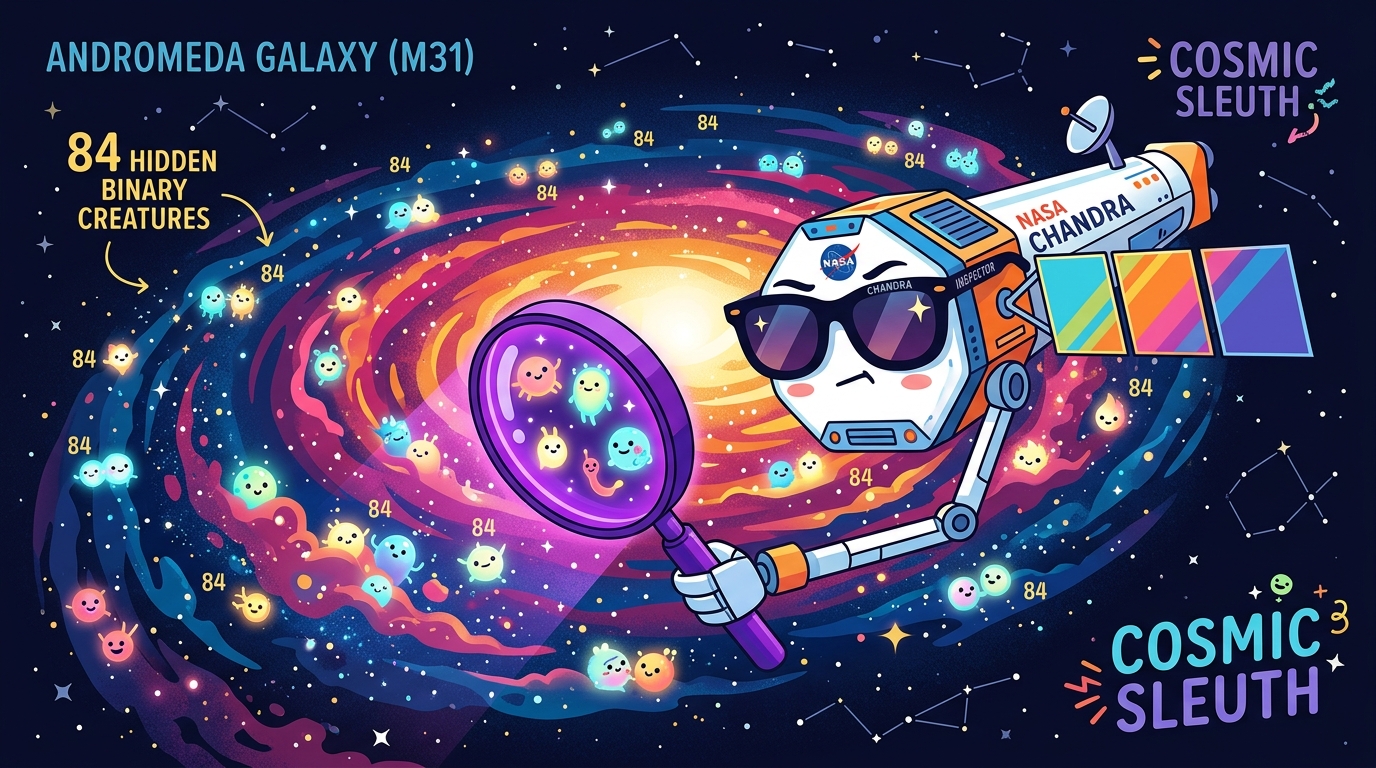
The Ultimate Cosmic Hide-and-Seek: Chandra Uncovers 84 Stealth 'Hypersoft' Beacons
Astronomers digging through 25 years of NASA Chandra X-ray archives just unmasked 84 bizarre 'hypersoft' objects across six galaxies that glow furiously in ultraviolet but whisper in ultra-low X-rays.