The Universe Isn't Running Out of Gas: Galaxies Just Got Lazy in Front of a Full Fridge

For decades, cosmologists held a rather depressing view of the cosmos: the universe was slowly starving. Observations showed that star formation across the cosmos peaked billions of years ago and has since plunged by an alarming 59% over the last 4.5 billion years. The prevailing scientific theory was simple and tragic: galaxies were burning through their gas tanks, gradually running out of cold neutral hydrogen until the fires of creation sputtered and died.
Well, put away the galactic sympathy cards. According to a colossal study published in Nature Astronomy by an international team led by the Chinese Academy of Sciences, galaxies aren't starving at all. By combining China's 500-meter Aperture Spherical radio Telescope (FAST)—the world's most sensitive single-dish radio eye—with distance measurements from 2.5 million galaxies in the DESI (Dark Energy Spectroscopic Instrument) survey, astronomers took a dipstick to the cosmic gas tank. The result? Neutral hydrogen has barely dropped at all!
🔭 The 2.5-Million Galaxy Dipstick
Detecting the faint 21-centimeter radio whisper of neutral hydrogen from distant galaxies is like trying to hear a cricket chirp in a hurricane. But FAST's colossal dish and DESI's 3D cosmic map allowed researchers to statistically stack signals from millions of galaxies across 4.5 billion years of lookback time. While star birth cratered by a factor of 2.46, the neutral hydrogen reservoir only budged by a modest 11% to 26%.
So, what does this mean in plain English? The universe isn't suffering from an energy crisis—it's suffering from terminal cosmic procrastination.
- Full Pantry, Zero Cooking: Imagine a master chef whose restaurant output dropped by 60%, but when health inspectors opened the walk-in pantry, it was packed to the ceiling with fresh ingredients. Galaxies have plenty of raw hydrogen gas; they simply can't be bothered to condense it into dense molecular star nurseries.
- Supermassive Disruptors: Why did galaxies stop turning gas into stars? Astrophysicists point fingers at central supermassive black holes and supernova winds blowing hot shockwaves through interstellar clouds, essentially microwaving the gas so it's too warm and turbulent to collapse into stars.
- Cosmic Midlife Slump: In its rebellious youth, the universe was pumping out radiant blue supergiants by the trillions. Now, at 13.8 billion years old, it's kicked off its shoes, ordered takeout, and is lounging on the cosmic sofa binge-watching gravitational waves.
✨ A Paradigm Shift in Cosmic Evolution
This completely rewrites the playbook of galactic astrophysics. Instead of tracking when galaxies run out of fuel, astronomers now have to investigate the microscopic bottlenecks preventing abundant gas from collapsing into stars. The gas tank is fine—it's the galactic engine that refuses to turn the key.
The next time someone accuses you of lying on the sofa all weekend despite having a fridge full of groceries, remember you're in good company: the entire universe is doing the exact same thing on a cosmic scale!
You might also like

Oklahoma's Ames Meteor Crater Knocked 100 Million Years Off Its Age After Getting Caught With Recycled Fossils
High-precision uranium-lead zircon dating reveals Oklahoma's Ames impact crater was formed 370 million years ago—nearly 100 million years later than believed—kicking it out of Earth's hypothetical Saturn-ring club.
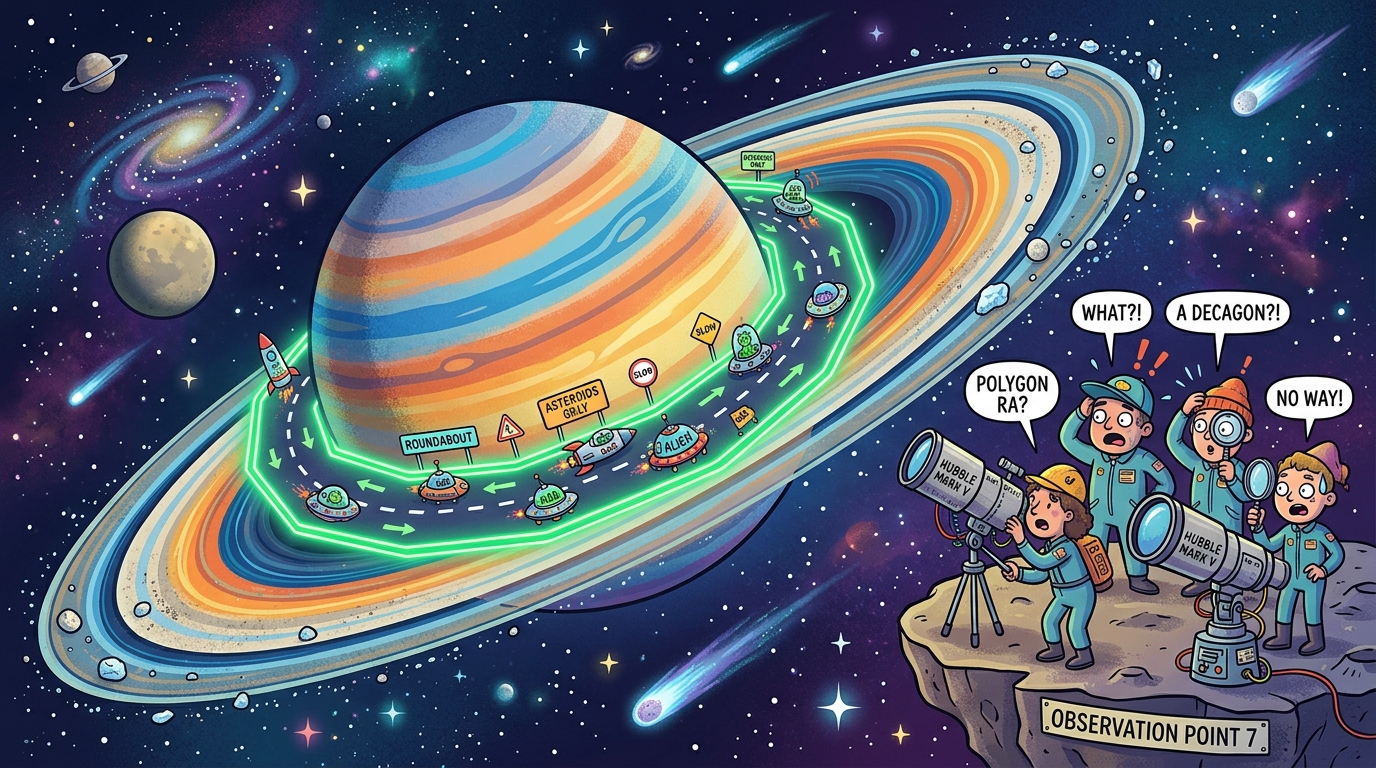
Saturn Got Bored With Its Hexagon, So Its South Pole Spun Up a 10-Sided Decagon
Hubble astronomers discovered a giant 10-sided atmospheric wave cruising around Saturn's south pole at 10 km/h, with each side stretching longer than planet Earth.
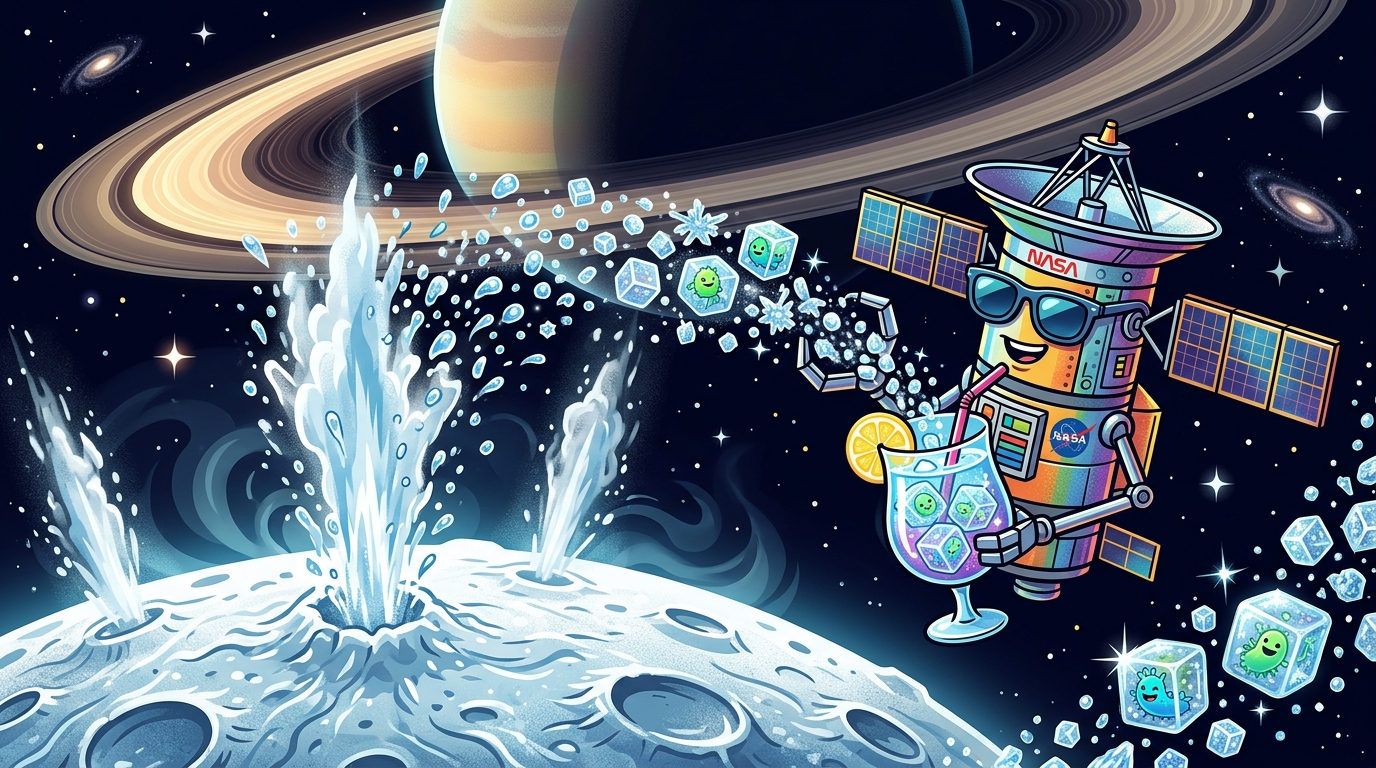
Enceladus Is Running an Interstellar Smoothie Bar That Pre-Sorts Alien Life for NASA
Saturn's icy moon doesn't just spew water into space—it slowly freezes, crashes, and shatters ocean droplets into pre-concentrated ice grains so future probes won't have to dig through cosmic slush.