Hubble Archival Data Catches Dark Matter Hiding in Plain Sight
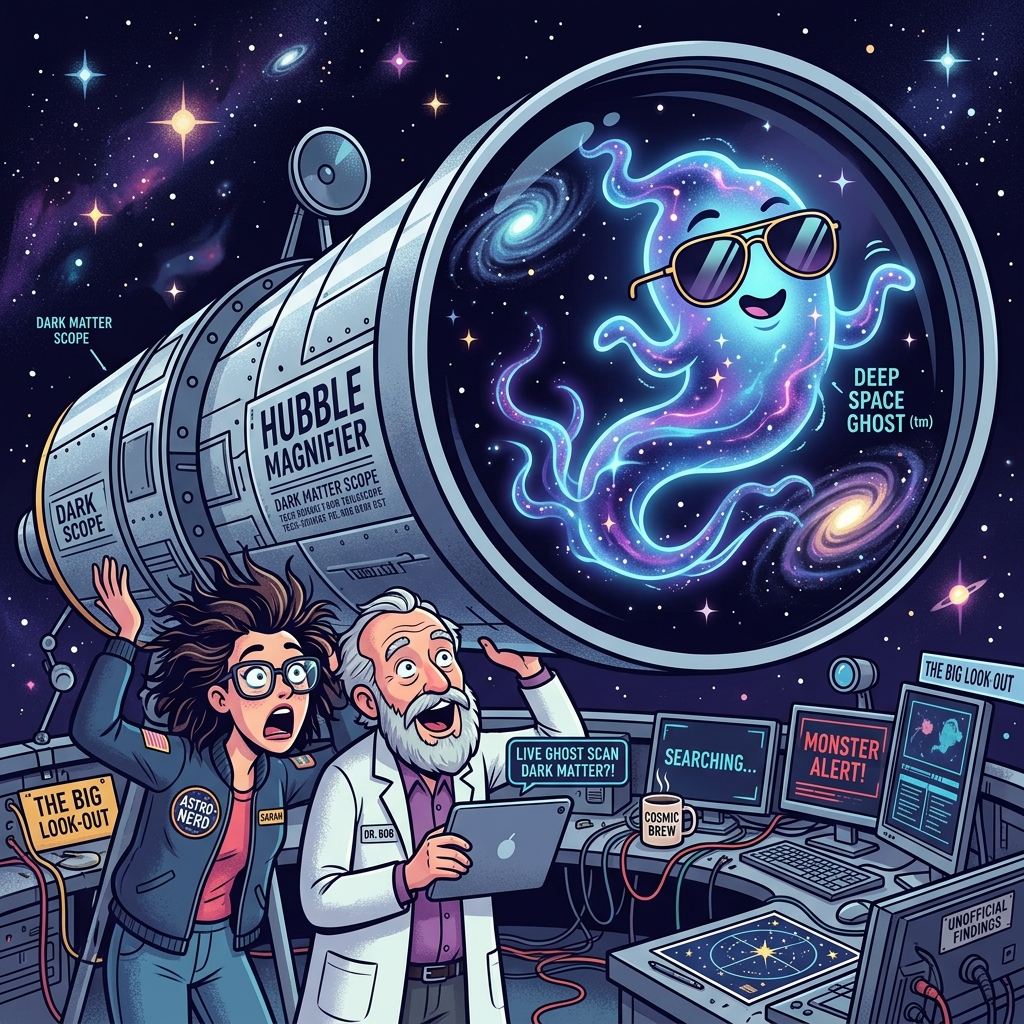
Dark matter has spent the last century being astrophysics' ultimate ghost: we know it makes up 85% of the universe's matter, but it refuses to emit light, reflect light, or even leave a voicemail. However, astronomers just caught it red-handed—by digging through decades-old Hubble Space Telescope hard drives.
In a landmark study published in Nature on August 12, 2026, researchers co-led by the University of Copenhagen and Northwestern University unveiled the first-ever globular cluster stellar stream observed outside the Milky Way.
🌌 Cosmic Breadcrumbs in Archival Data
When a small cluster of stars gets pulled apart by a dwarf galaxy's gravity, it leaves behind a delicate ribbon of stars called a stellar stream. Because these stars orbit within the galaxy's invisible dark matter halo, the shape of the stream acts like a cosmic radar scan of invisible mass.
Until now, astronomers could only observe stellar streams inside our own Milky Way galaxy. Detecting one in a distant low-mass ultra-diffuse galaxy required analyzing high-resolution Hubble archival footage that had been sitting quietly in storage for years.
🔭 Why This Matters
By mathematically modeling the orbits of stars along this newly discovered stream, physicists can measure exactly how much invisible dark matter is holding the low-mass galaxy together—proving that old telescope data still holds universe-altering secrets.
It turns out you don't always need a multi-billion-dollar next-gen space telescope to make groundbreaking discoveries. Sometimes, you just need a sharp pair of eyes and a really good search query in the archives.
You might also like
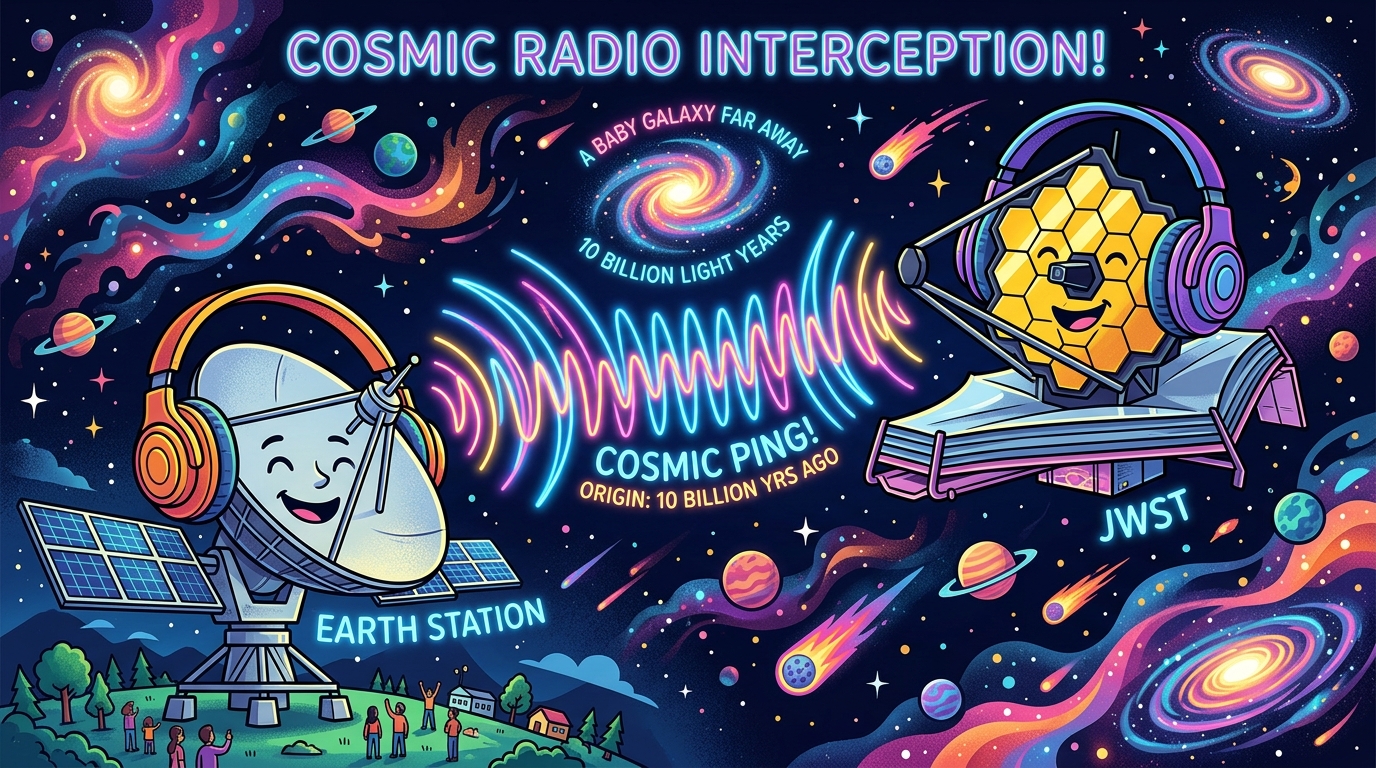
The 10-Billion-Year-Old Voicemail: Webb and MeerKAT Catch the Most Distant Radio Flash in Cosmic History
Astronomers have detected FRB 20240304B, a fast radio burst that traveled over 10 billion years across the universe, shattering cosmic distance records and proving ancient baby galaxies loved loud fireworks.
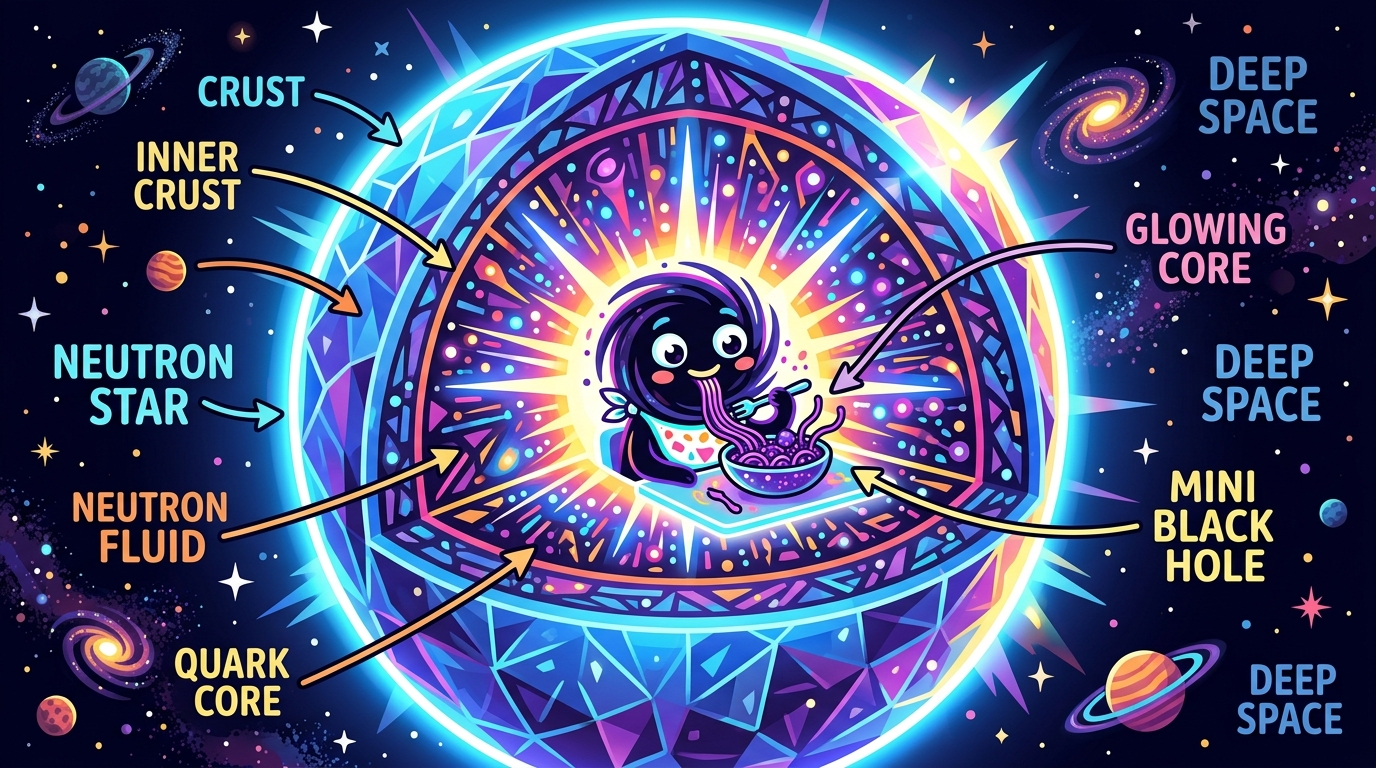
Cosmic Tapeworms: How 40-Ton Mini Black Holes Nest Inside Dead Stars and Gorge on Dark Matter
Theoretical physicists uncovered a bizarre astrophysical phenomenon: tiny 40-ton black holes could form inside dense neutron stars, surviving Hawking radiation by continuously devouring captured dark matter like celestial parasites!

Earth Put on Headphones: Physicists Turn the Entire Planet into a Dark Matter Radio
Why build a billion-dollar underground particle detector when Mother Earth already gave us an 8,000-mile magnetic resonant cavity? Japanese physicists just used Earth's ionosphere to hunt for ghost-like ultralight axions and dark photons.