JWST Spotlights Star Living Next to Supermassive Black Hole (With Water & Dust Intact)
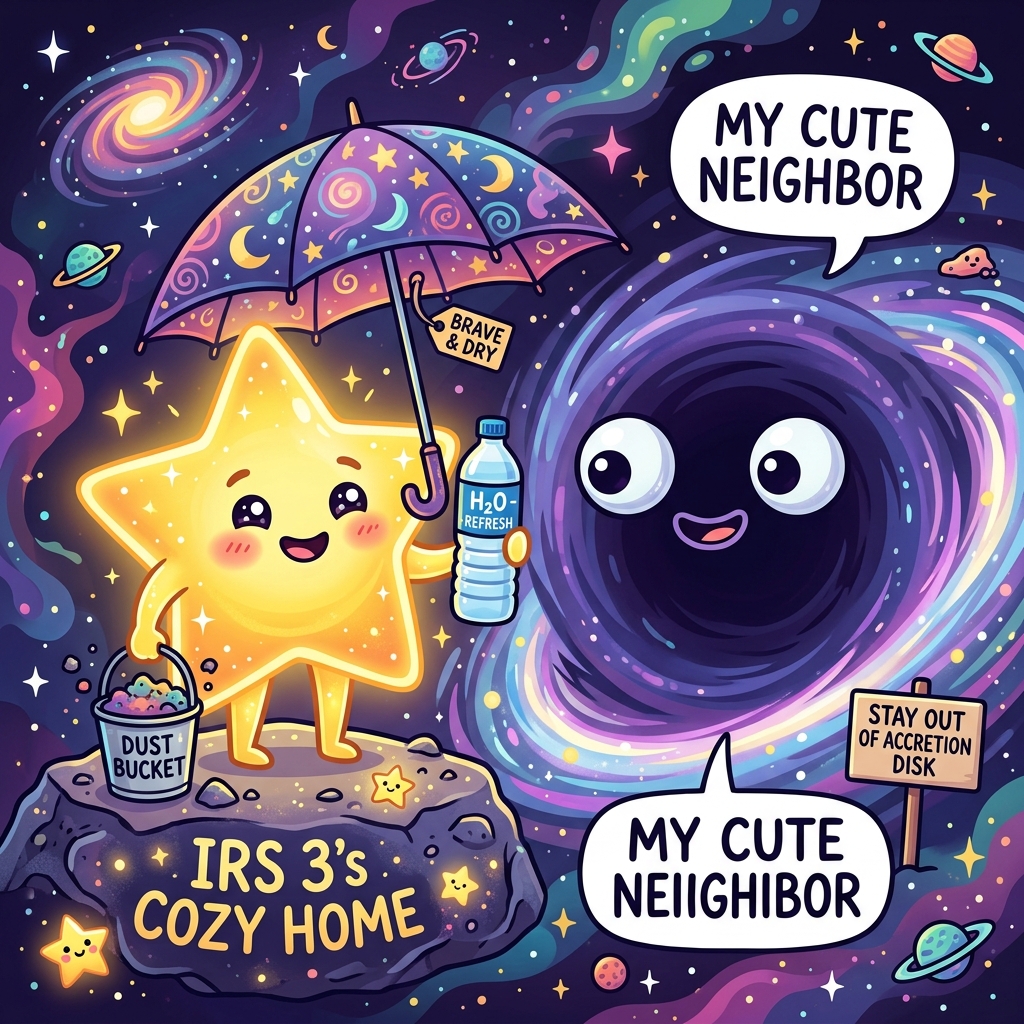
Living 0.55 light-years from a 4-million-solar-mass supermassive black hole sounds like the ultimate cosmic nightmare, but one resilient star is keeping its water bottle and dust bucket safe anyway.
Using the James Webb Space Telescope (JWST) and its Mid-Infrared Instrument (MIRI), an international astronomy team led by Dr. Florian Peißker from the University of Cologne detected water vapor and oxygen-rich silicate dust surrounding the dying star IRS 3, located mere fractions of a light-year from Sagittarius A*.
🌌 High-EQ Astrophysics Translation:
Even right next to the galaxy's most destructive gravity monster, planetary building blocks (water and cosmic minerals) don't get instantly obliterated—they can stubbornly survive in a star's protective embrace.
A Misunderstood Stellar Neighbor
Astronomers previously believed IRS 3 was a carbon-rich star surrounded by thick soot. Webb's precise infrared spectrum revealed a surprise: IRS 3 is actually an oxygen-rich star spewing out silicate dust and water, constantly replenishing the hostile galactic core with raw ingredients for future celestial chemistry.
Proving Cosmic Resilience
The discovery proves that complex chemistry and cosmic building blocks aren't exclusive to quiet galactic suburbs. Even in the extreme radiation environment of the Milky Way's center, stars continue to seed space with the ingredients of life.
You might also like
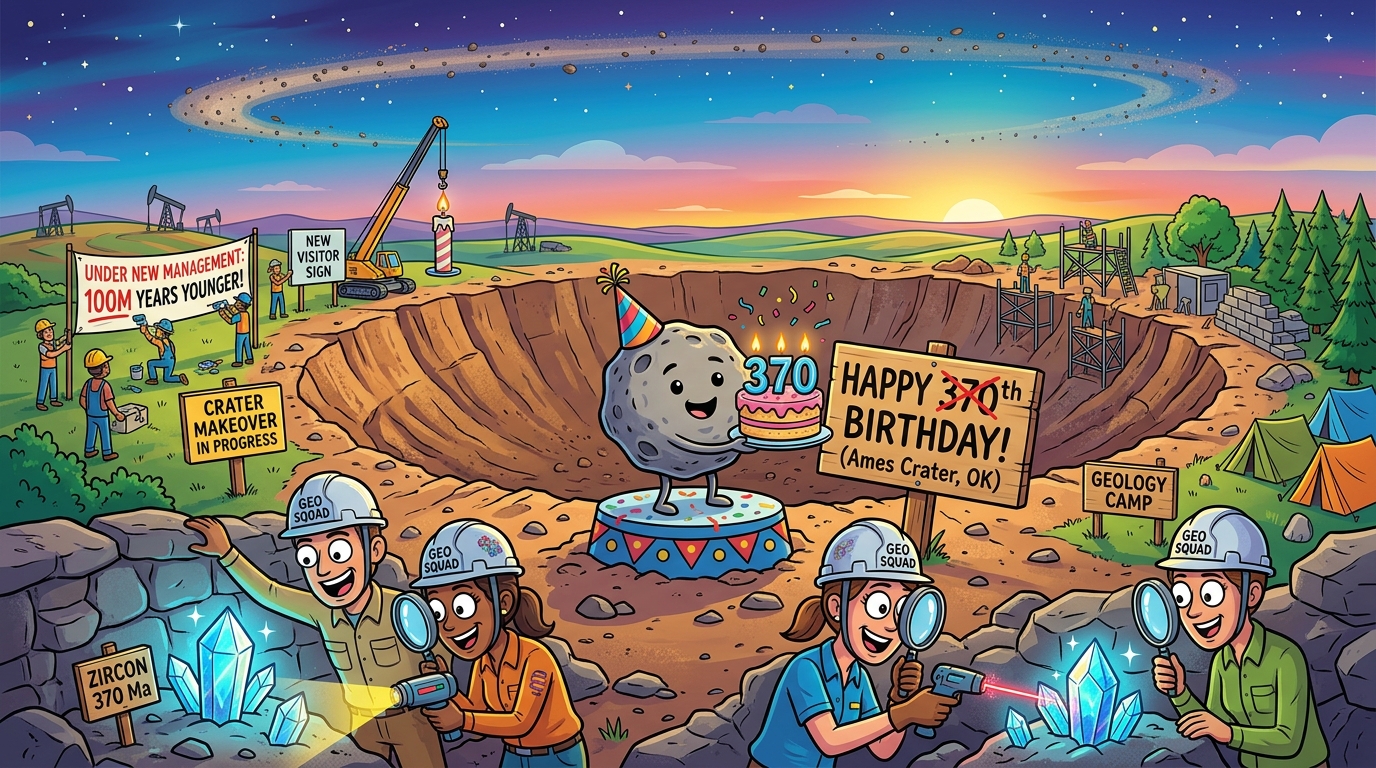
Oklahoma's Ames Meteor Crater Knocked 100 Million Years Off Its Age After Getting Caught With Recycled Fossils
High-precision uranium-lead zircon dating reveals Oklahoma's Ames impact crater was formed 370 million years ago—nearly 100 million years later than believed—kicking it out of Earth's hypothetical Saturn-ring club.
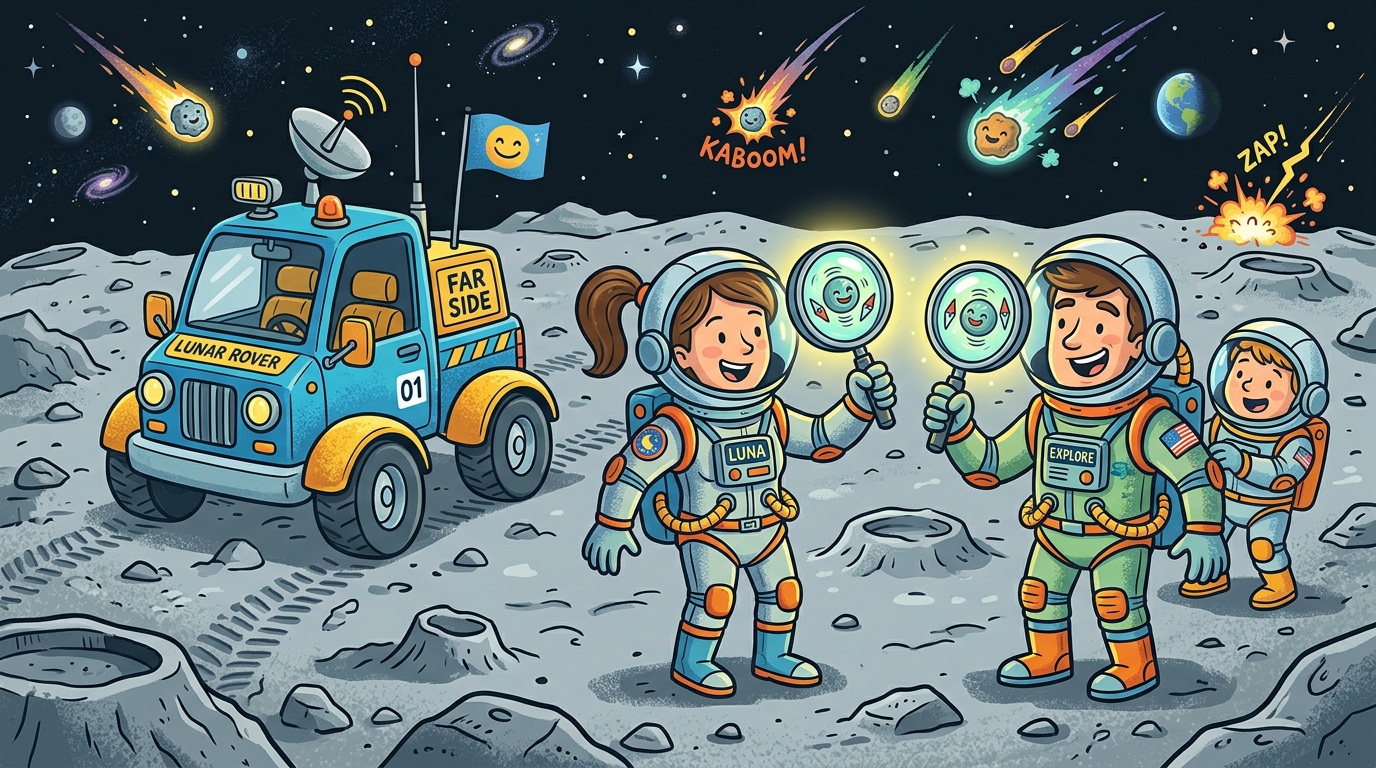
The Moon's Far Side Preserved 1,000°C Magnetic Hard Drives in Natural Glass Beads
Scientists analyzing Chang'e-6 lunar soil discovered rare high-temperature gamma-iron trapped inside impact glass beads, creating microscopic magnetic fossils that remember the Moon's ancient dynamo.
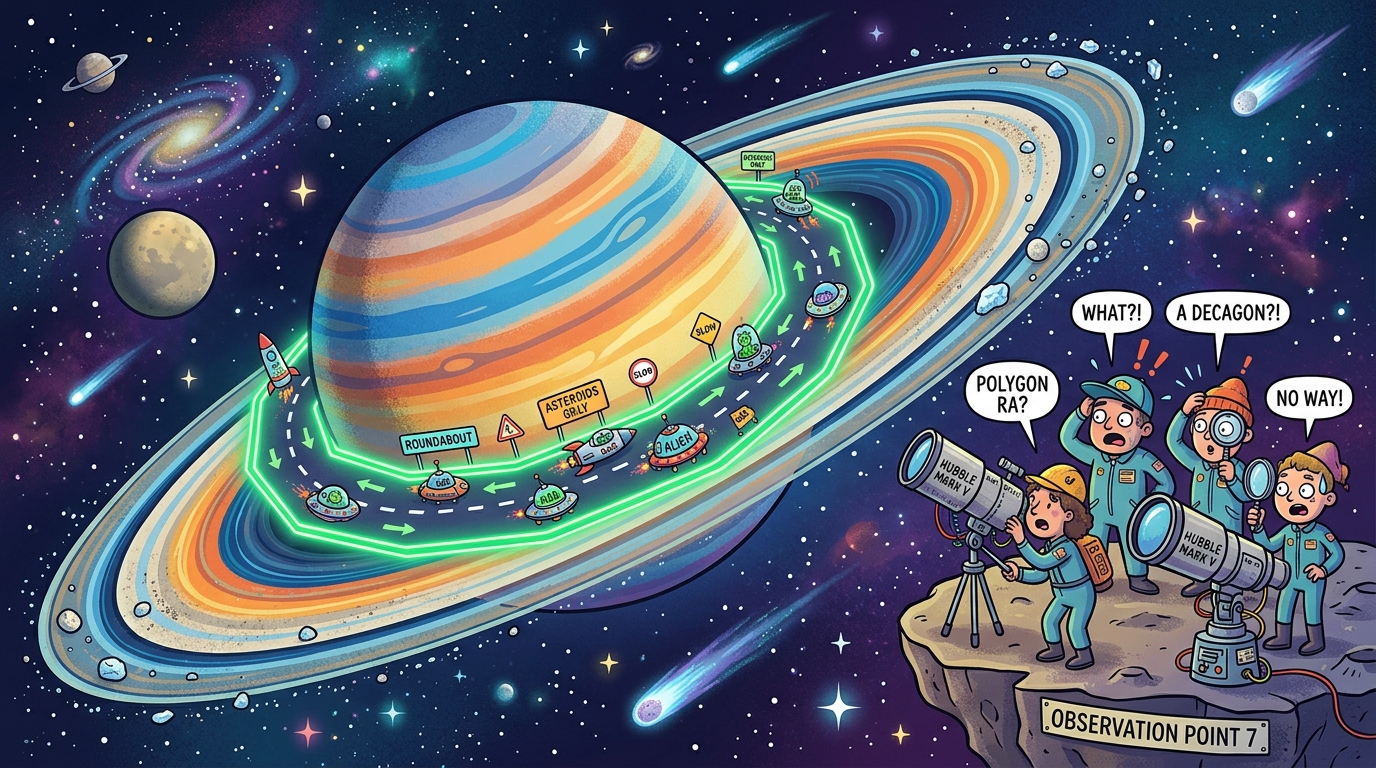
Saturn Got Bored With Its Hexagon, So Its South Pole Spun Up a 10-Sided Decagon
Hubble astronomers discovered a giant 10-sided atmospheric wave cruising around Saturn's south pole at 10 km/h, with each side stretching longer than planet Earth.