Eat Your Trash: NASA-Backed Scientists Turn Recycled Plastic Bottles into Edible 3D-Printed Cookies
For decades, mothers across the globe have lectured their children not to eat plastic. Well, leave it to NASA and a team of intrepid synthetic biologists to turn parental wisdom completely upside down.
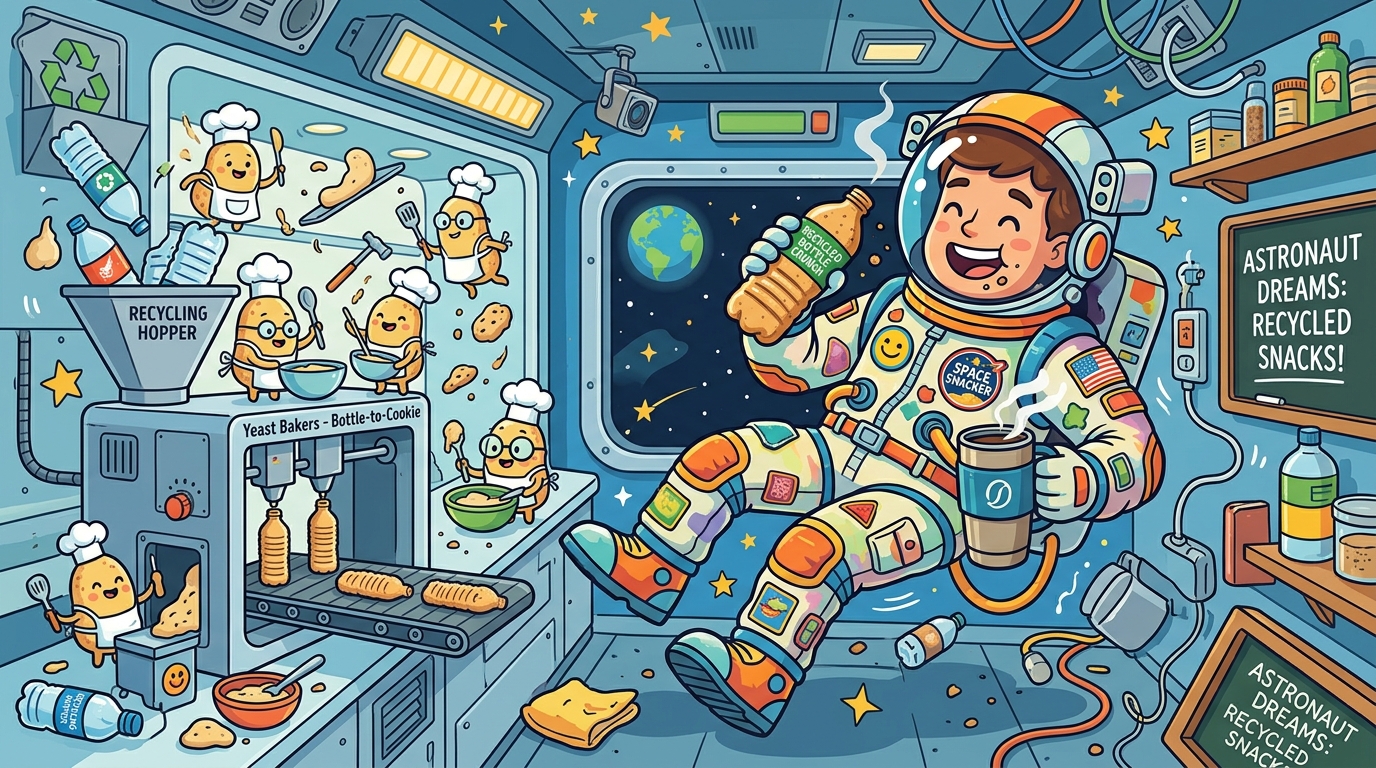
At Southern Illinois University (SIU) Carbondale, researchers have achieved what sounds like a sci-fi fever dream: converting discarded polyethylene terephthalate (PET) plastic bottles and dry corn stalks into edible, protein-packed 3D-printed cookies named "µBites" (pronounced micro-bites). Presented at the American Chemical Society (ACS) fall meeting, this delightfully bizarre breakthrough offers a delicious two-for-one punch: curbing humanity's plastic pollution catastrophe while serving up high-protein snacks for astronauts bound for Mars.
🍪 How to Bake a Soda Bottle: The Recipe
Making a culinary delicacy out of municipal rubbish doesn't happen in a toaster oven. Here is how Associate Professor Lahiru Jayakody and graduate student Sandhya Jayasekara pulled it off:
- The Pressure Cooker from Heck: Using a proprietary technique called oxidative hydrothermal dissolution, the team cooks PET plastic and agricultural waste with high heat, pressure, and oxygen to blast stubborn polymer chains down into bite-sized carbon molecules.
- The Hungry Yeast Chefs: Genetically modified strains of baker's yeast gobble up these dissolved plastic fragments, synthesizing essential proteins, healthy fats, and metabolic acids.
- Gourmet Bio-Tweaks: One engineered yeast strain converts plastic byproducts into beta-carotene (vitamin A), while another whips up genuine vanilla flavoring straight from fermented biomass!
- The 3D Squeeze: The resulting microbial dough is blended with starch, fiber, and sweetener, then extruded through a food-grade 3D printer into crispy, bite-sized wafers.
Naturally, the burning question on everyone's mind: Does it actually taste like an old water bottle? According to sensory panels that evaluated the aroma, participants reported pleasant vanilla and nutty notes, with the vast majority expressing enthusiasm to munch down on µBites in survival or resource-starved scenarios. Formal taste tests are slated as soon as institutional ethics review boards finish wrapping their heads around the concept of eating upcycled Tupperware.
Funded in part by the NASA Deep Space Food Challenge, the primary objective is keeping astronauts alive during multi-year expeditions to the Moon or Mars, where Amazon Prime deliveries are notably non-existent. Instead of packing tons of perishable rations or hauling deadweight plastic packaging home, space crews could simply feed their leftover containers to bioreactor yeast vats and print fresh pastries on demand.
🚀 From Martian Bases to Earthly Landfills
With global food demand projected to surge by up to 56% by 2050, the researchers believe microscopic factories are the key to global survival. As Professor Jayakody aptly noted: "Plastic is carbon and food is carbon. Microbes are clever—we're just letting them fix the mess we made."
So next time you finish a bottle of soda, show some respect. With a dash of genetic wizardry and a very patient 3D printer, that empty plastic container might just be your dessert on the way to Mars.
You might also like
Cosmic Wardrobe Malfunction: JWST Catches Asteroid Chariklo's Rings Radically Shifting Opacity in Real Time
Astronomers thought planetary rings were timeless cosmic jewelry. But new James Webb Space Telescope observations reveal that mini-planet Chariklo swapped its ring opacity like mood rings—in just 10 short years.
Cosmic D10 Dice: Hubble Discovers a Giant 10-Sided 'Decagon' Encircling Saturn's South Pole
Saturn already boasted a bizarre 6-sided hexagon on its north pole. Now Hubble astronomers spotted a wobbly 10-sided atmospheric decagon spinning around its south pole like a celestial board game piece.
NASA Engineers Invent Violet Plasma 'Laundry Gun' to Zap Dirty Space Socks
Because doing laundry on Mars by incinerating your clothes in the atmosphere isn't an option, scientists built a handheld raygun that sterilizes astronaut fabrics with cold purple plasma.