The Iceberg Tank: How a 76-Square-Kilometer Ice Island Rammed a Rocky Island and Walked Away Without a Scratch
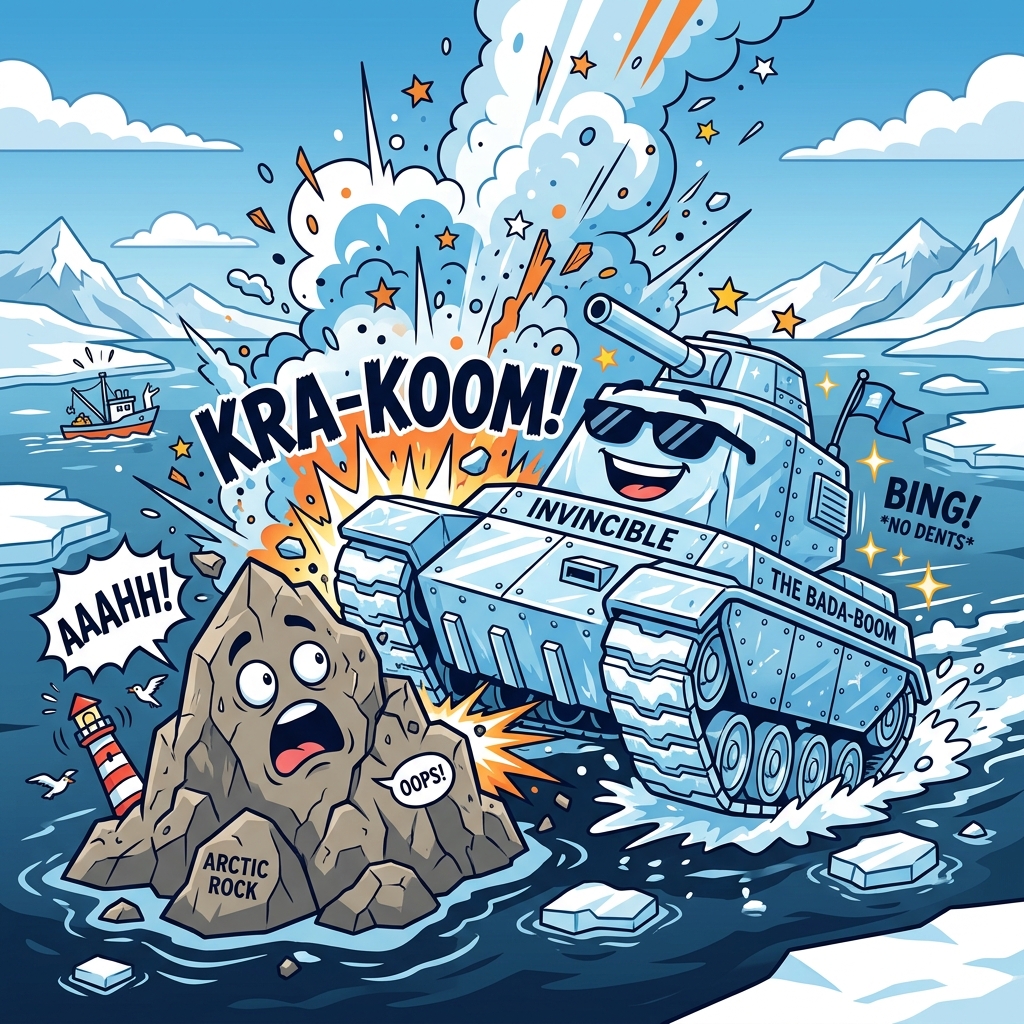
In human maritime history, icebergs have a terrifying reputation for sinking supposedly unsinkable metal ships. But what happens when an iceberg meets an immovable object—like an entire rocky Arctic island? Glaciologists monitoring satellite feeds recently watched what should have been a catastrophic smashup in the Nares Strait between Greenland and Canada. Instead, they witnessed the geological equivalent of an armored tank casually bouncing off a mailbox.
The contender in the blue corner was an absolute colossus: a 76-square-kilometer, 150-meter-thick tabular "ice island" that calved from northern Greenland's famous Petermann Glacier. Drifting south through the frigid Nares Strait driven by relentless winds and tidal currents, it was on a direct collision course with Joe Island, a steep, rocky outcropping standing defiantly in the middle of the channel.
🛰️ High-Def Collision: Satellite Front-Row Seats
Radar imagery from the European Space Agency's Sentinel-1 and optical data from NASA's Landsat 9 captured the slow-motion showdown with unprecedented clarity. Glaciologists expected the immense kinetic energy of a multi-billion-ton ice slab to fracture the iceberg into thousands of hazardous bergy bits. But when the two giants collided, the ice island didn't shatter—it barely even flinched!
How did a floating block of frozen water ram solid bedrock and survive without a scratch?
- The Subsurface Keel Cushion: Tabular icebergs are 90% underwater. Long before the visible cliff faces made contact, the iceberg's deep, submerged keel scraped against the submarine shoals surrounding Joe Island, acting like a giant natural hydraulic brake.
- Glacial Armor: Unlike fragile sea ice, tabular ice from the Petermann Glacier has been compressed over centuries under tremendous pressure. It possesses the compressive strength of reinforced concrete, turning the ice island into an invincible floating fortress.
- A Casual Pirouette: Instead of smashing straight on like a battering ram, the collision caused the ice island to rotate smoothly around Joe Island, using the island as a pivot point before drifting gracefully south toward Baffin Bay.
🧊 The Unsinkable Monster Continues Its Journey
Poor Joe Island remains stranded in the Arctic wind, likely nursing a very bruised shoreline, while the 76-square-kilometer ice island continues its majestic voyage southward, completely intact and ready for its next obstacle.
The next time life throws a massive rock in your path, don't crack under pressure. Channel your inner Petermann ice island: put your armor on, use the obstacle to pivot, and keep floating forward!
You might also like
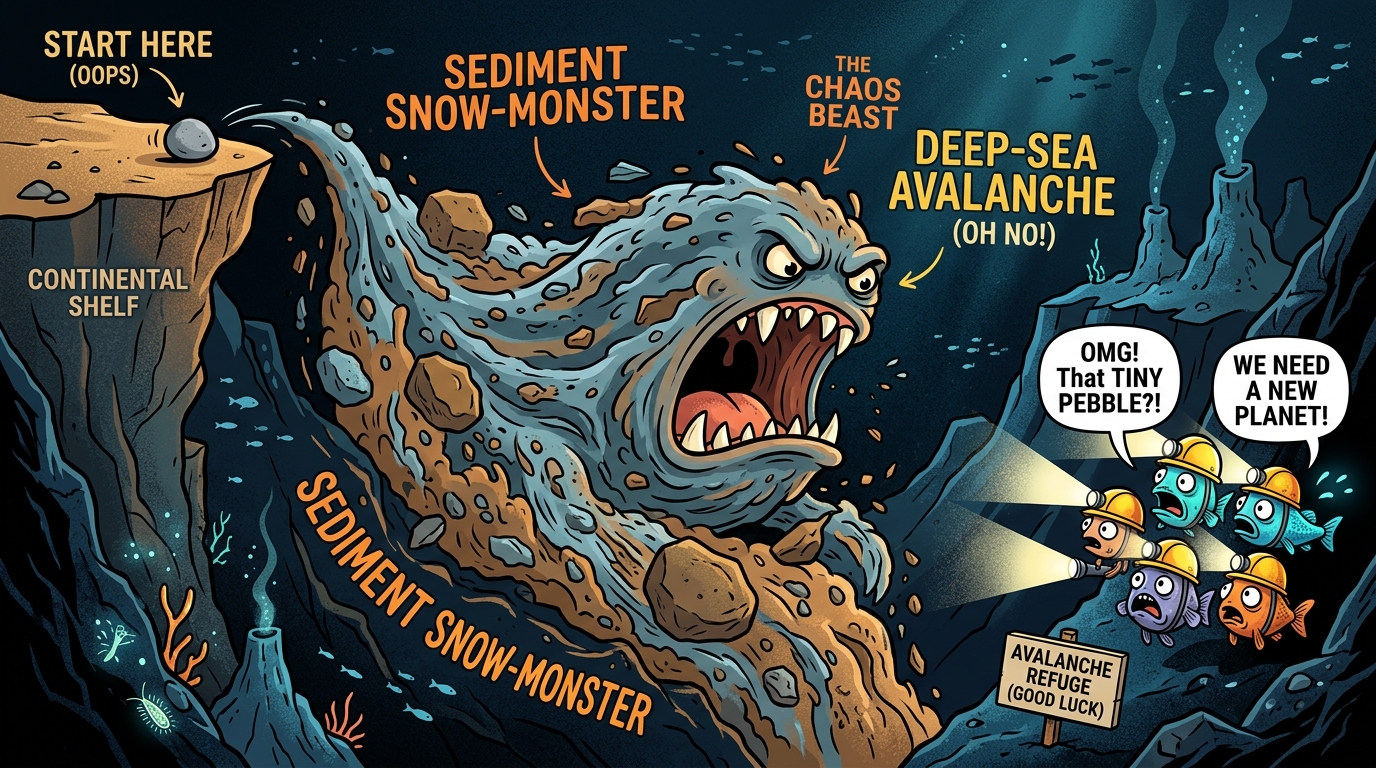
Ancient 2,000-Kilometer Subsea Avalanche Grew 100-Fold into a Deep-Sea Monster
Scientists mapped the 60,000-year-old Bed 5 underwater avalanche in Morocco's Agadir Canyon, revealing how a small 1.5 km³ slide ballooned into a 162 km³ freight train spanning 2,000 km.

The Great Molecular Arm Wrestle: Why the 2026 Nobel Prize in Chemistry Won't Shake Your Right Hand
The 2026 Nobel Prize in Chemistry honors Henri B. Kagan and Kenso Soai for cracking homochirality—explaining how a microscopic nudge can cause one mirror-image molecule to mercilessly bully its twin out of existence.
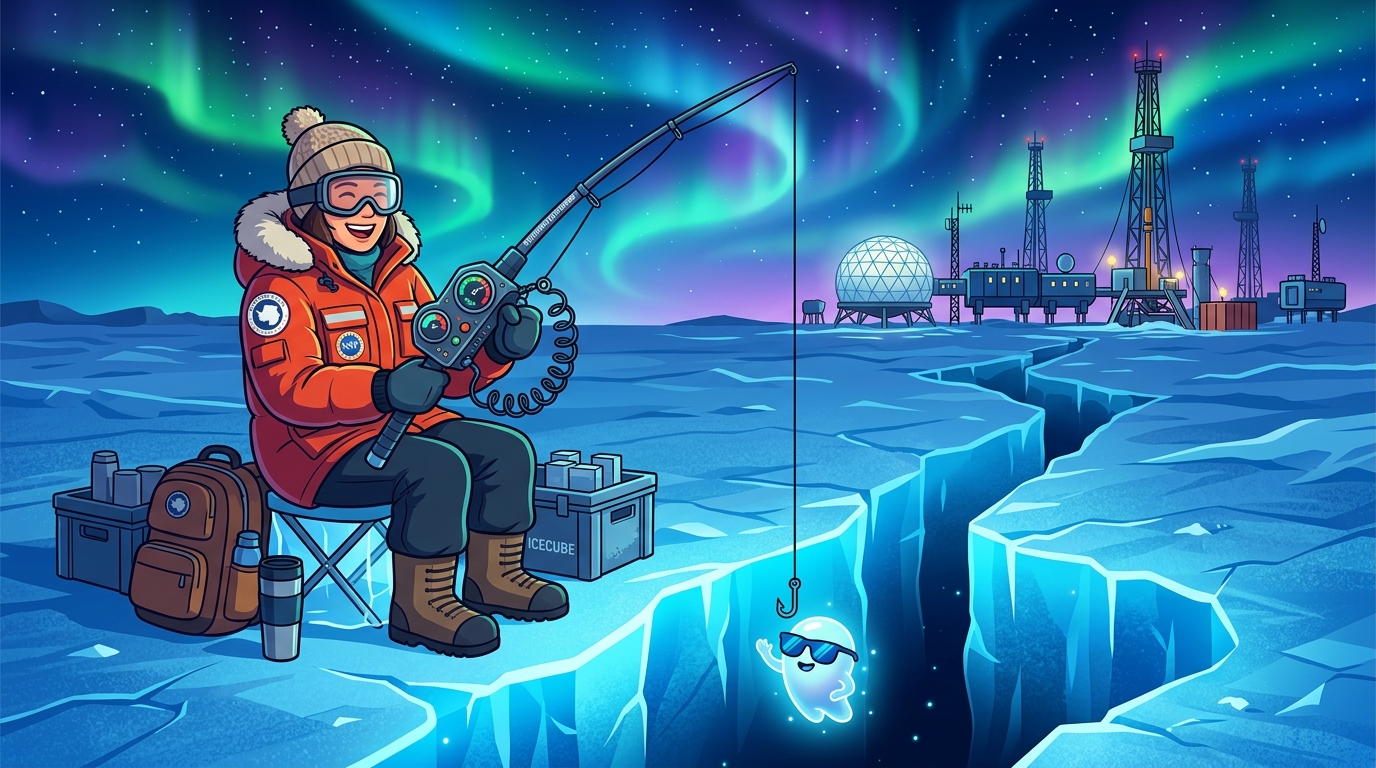
Fishing for Cosmic Ghosts at the South Pole: How a Giant Ice Cube Won the 2026 Nobel Prize in Physics
The 2026 Nobel Prize in Physics goes solely to Francis Halzen for melting 86 giant holes into two miles of Antarctic ice, turning the frozen continent into the world's weirdest telescope to catch elusive cosmic neutrinos.