Planetary Spin Rate Is the Secret Thermostat Keeping Earth From Turning Into Venus
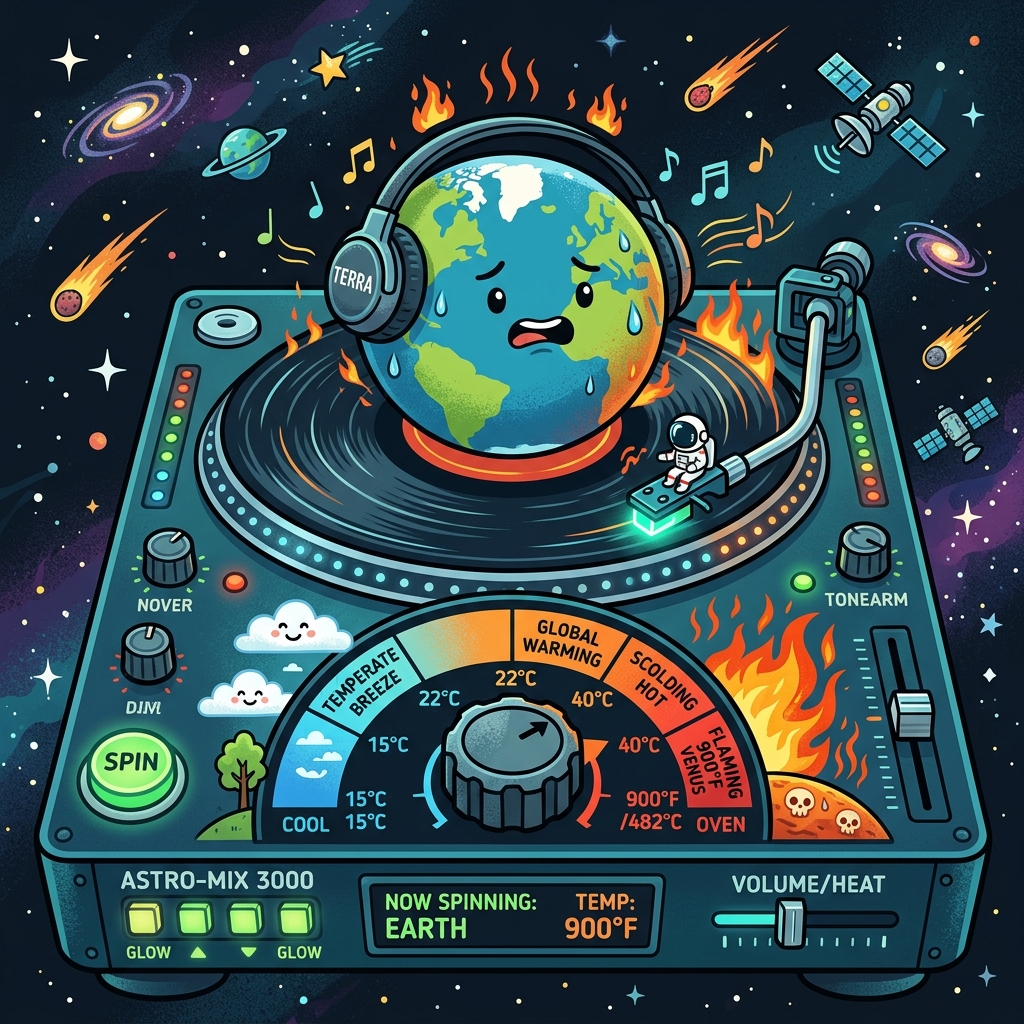
If you ever complain about Earth's 24-hour cycle, be grateful: if our planet spun just a little slower, summer vacation wouldn't exist—because we'd all be boiled alive in a 900-degree atmospheric pressure cooker.
In a new study published in The Astronomical Journal by astrophysicist Stephen Kane at UC Riverside, researchers found that a planet's rotation rate is the single most critical thermostat setting determining its long-term climate destiny.
🔥 The Venus Cautionary Tale
Take Venus for example: it takes 243 Earth days to complete just one full rotation on its axis. Because it spins so agonizingly slow, heat distribution collapses, driving a runaway greenhouse effect that melted its oceans and baked its surface to a lead-melting 900°F (475°C).
To make matters trickier for astronomers hunting for habitable exoplanets, Venus's upper atmosphere spins once every four days—meaning distant telescopes can easily mistake fast cloud winds for actual planetary rotation.
🌀 DJ Cosmos on the Turntable
The study highlights that spin rate dictates atmospheric circulation cells. Spin too fast or too slow, and heat gets trapped in atmospheric feedback loops, turning potentially cozy Earth cousins into fiery pressure cookers.
So next time your alarm clock rings at 7:00 AM, thank DJ Earth for keeping the turntable spinning at a crisp 1,000 miles per hour. It’s literally keeping us cool.
You might also like

Fishing for Cosmic Ghosts at the South Pole: How a Giant Ice Cube Won the 2026 Nobel Prize in Physics
The 2026 Nobel Prize in Physics goes solely to Francis Halzen for melting 86 giant holes into two miles of Antarctic ice, turning the frozen continent into the world's weirdest telescope to catch elusive cosmic neutrinos.

Oklahoma's Ames Meteor Crater Knocked 100 Million Years Off Its Age After Getting Caught With Recycled Fossils
High-precision uranium-lead zircon dating reveals Oklahoma's Ames impact crater was formed 370 million years ago—nearly 100 million years later than believed—kicking it out of Earth's hypothetical Saturn-ring club.
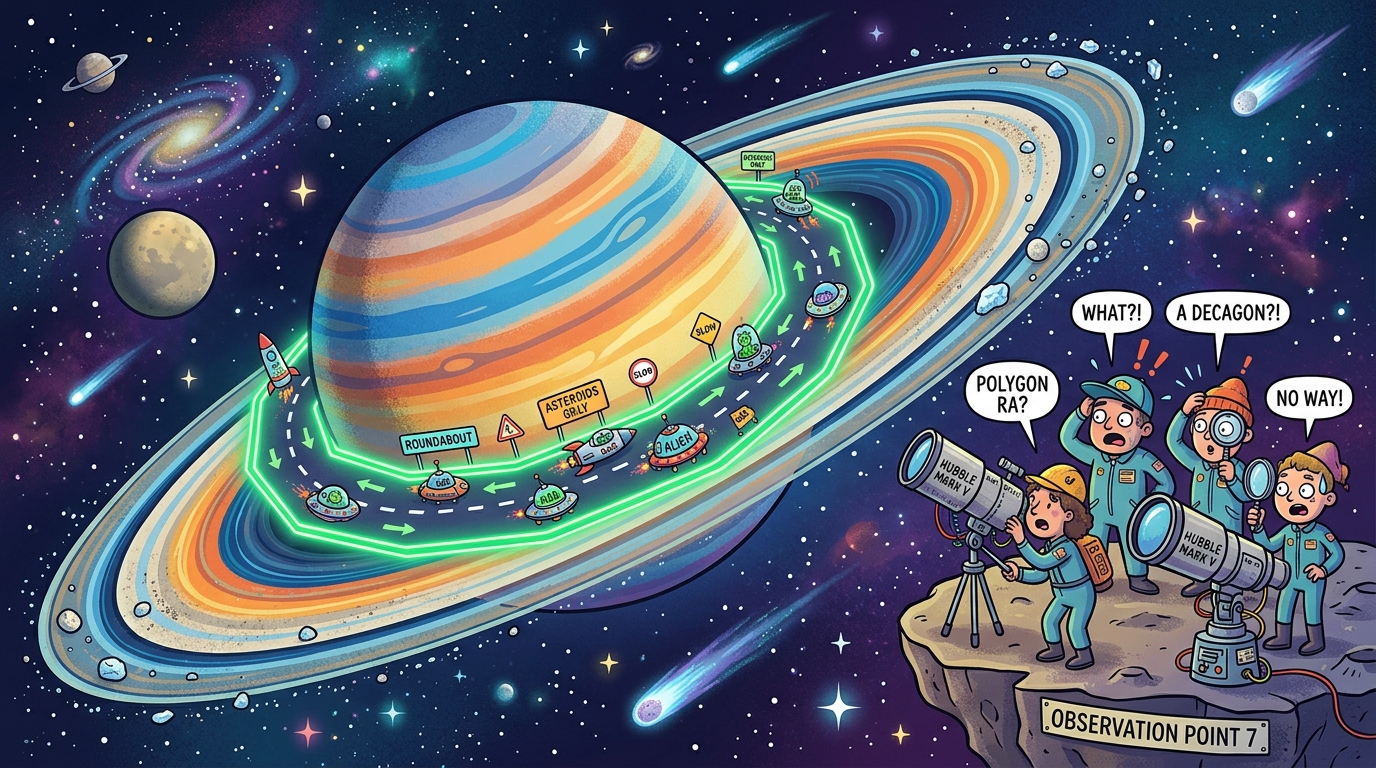
Saturn Got Bored With Its Hexagon, So Its South Pole Spun Up a 10-Sided Decagon
Hubble astronomers discovered a giant 10-sided atmospheric wave cruising around Saturn's south pole at 10 km/h, with each side stretching longer than planet Earth.