The Universe's Ultimate Disco Ball: Magnetar Proves 'Empty Space' Acts Like a Prism
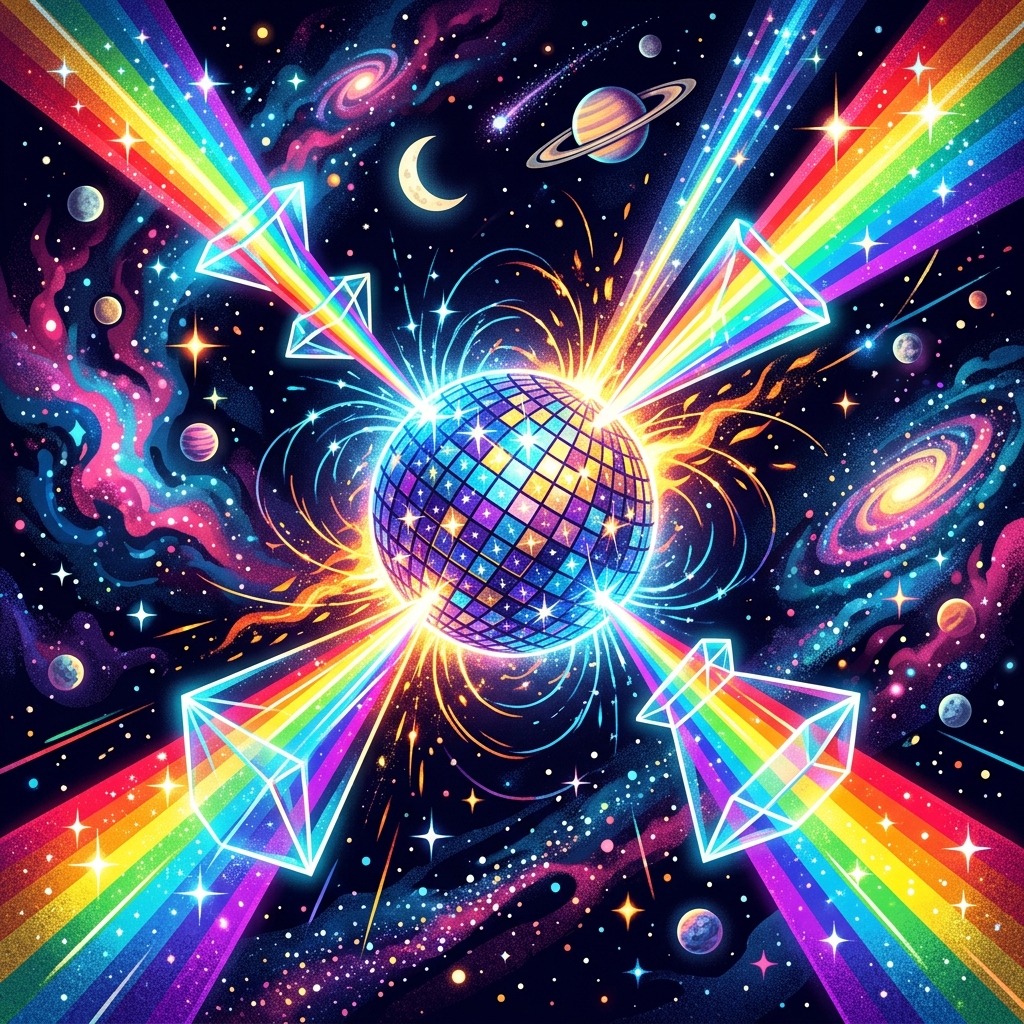
Classical physics taught us that a vacuum is literally "nothing"—an empty cosmic stage where light travels in a straight line unhindered. But in the extreme realm of quantum physics, empty space is actually a boiling cauldron of virtual particles waiting to become a crystalline prism.
In a landmark study published in Nature, an international team led by Dr. Rachael Stewart used more than 140 hours of coordinated observations from NASA's IXPE (Imaging X-ray Polarimetry Explorer), NICER on the ISS, and the Murriyang radio dish in Australia to inspect 1E 1547.0–5408—a dead neutron star, or magnetar, located 13,000 light-years away. What they found is the strongest observational evidence to date for a 90-year-old quantum paradox: vacuum birefringence.
🪩 Heisenberg’s 90-Year-Old Cosmic Prediction
Back in 1936, quantum pioneers Werner Heisenberg and Hans Euler calculated that under magnetic fields billions of times stronger than anything reproducible on Earth, the "vacuum" of space would polarize virtual electron-positron pairs. Instead of light passing through empty space unaffected, the magnetic field would turn the vacuum itself into a birefringent crystal, splitting and polarizing light rays like a cosmic prism.
Why is this magnetar detection shaking up modern physics?
- 80% Polarized X-Ray Signatures: IXPE detected record-breaking linear polarization of up to 80% in the 2–3 keV X-ray energy band as the magnetar spun. In classical physics without vacuum birefringence, such extreme polarized coherence would be impossible.
- A Celestial Particle Collider: The magnetic field of magnetar 1E 1547.0–5408 exceeds \(10^{14}\) Gauss—trillions of times stronger than a hospital MRI scanner. Humans could never build a lab magnet this powerful, turning this stellar remnant into nature's ultimate testing facility.
- Opening the Strong-Field QED Era: The findings demonstrate that Quantum Electrodynamics (QED) holds true even in cosmic pressure-cookers, laying the groundwork for testing exotic physics beyond the Standard Model.
🌌 When "Nothing" Turns Into a Prism
The discovery proves that pure vacuum is far from empty. When you crank magnetic forces to eleven, space itself puts on a glittering light show, refracting high-energy cosmic rays like a diamond.
Werner Heisenberg predicted this from a chalkboard in 1936; today, NASA's space telescopes proved that even cosmic voids know how to put on a show!
You might also like
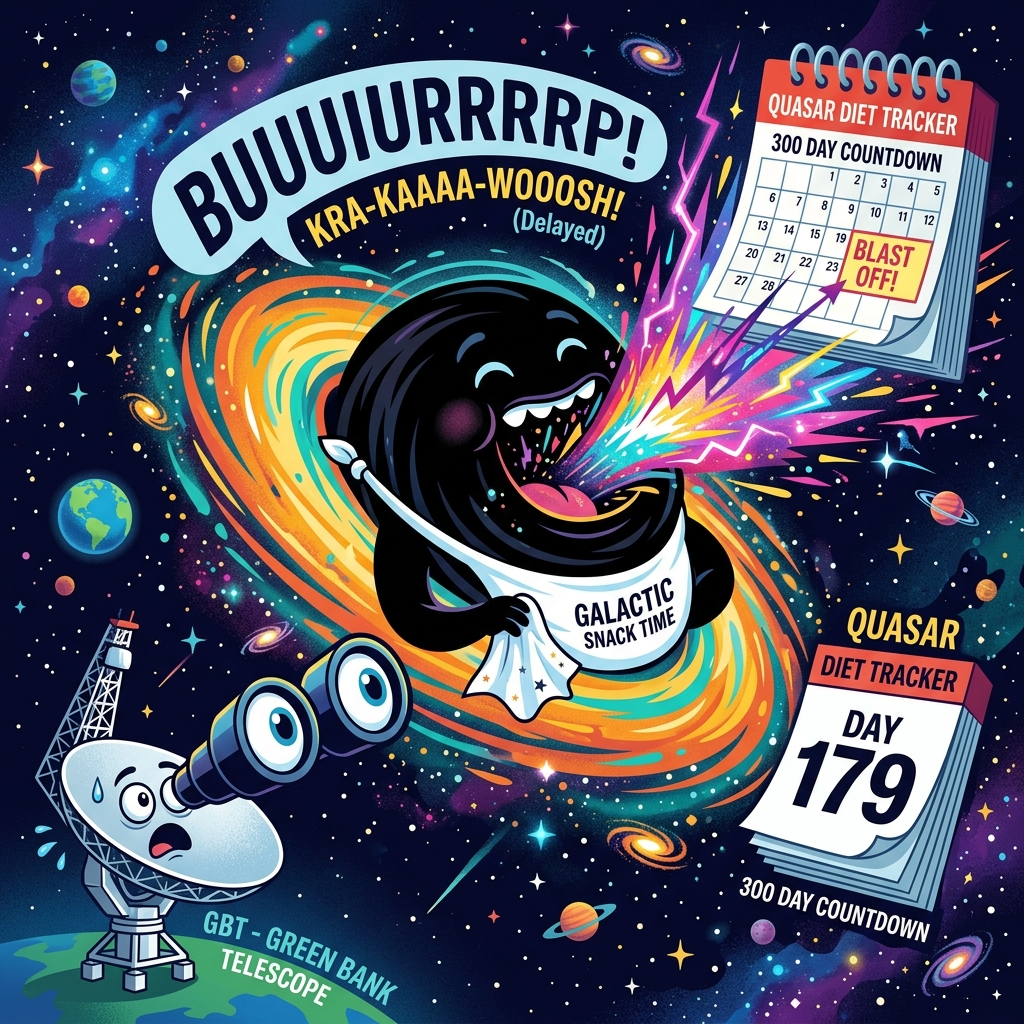
Cosmic Indigestion: Giant Black Hole Unleashes Delayed Radio Burp 300 Days After Feasting
Astronomers caught a monster 800-million-solar-mass black hole eating like a toddler: first it flashes an intense X-ray burp, and then 300 days later it finally fires out a relativistic radio jet cannonball.
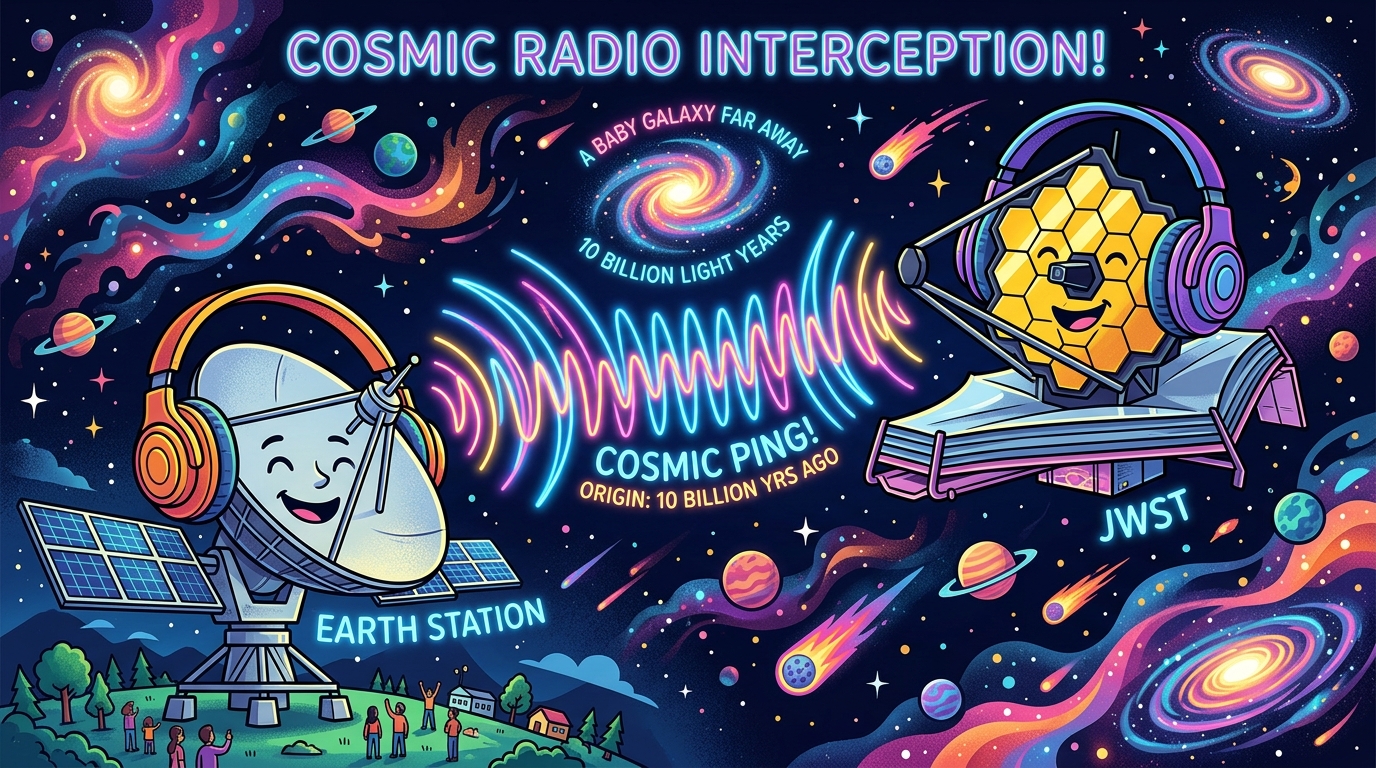
The 10-Billion-Year-Old Voicemail: Webb and MeerKAT Catch the Most Distant Radio Flash in Cosmic History
Astronomers have detected FRB 20240304B, a fast radio burst that traveled over 10 billion years across the universe, shattering cosmic distance records and proving ancient baby galaxies loved loud fireworks.
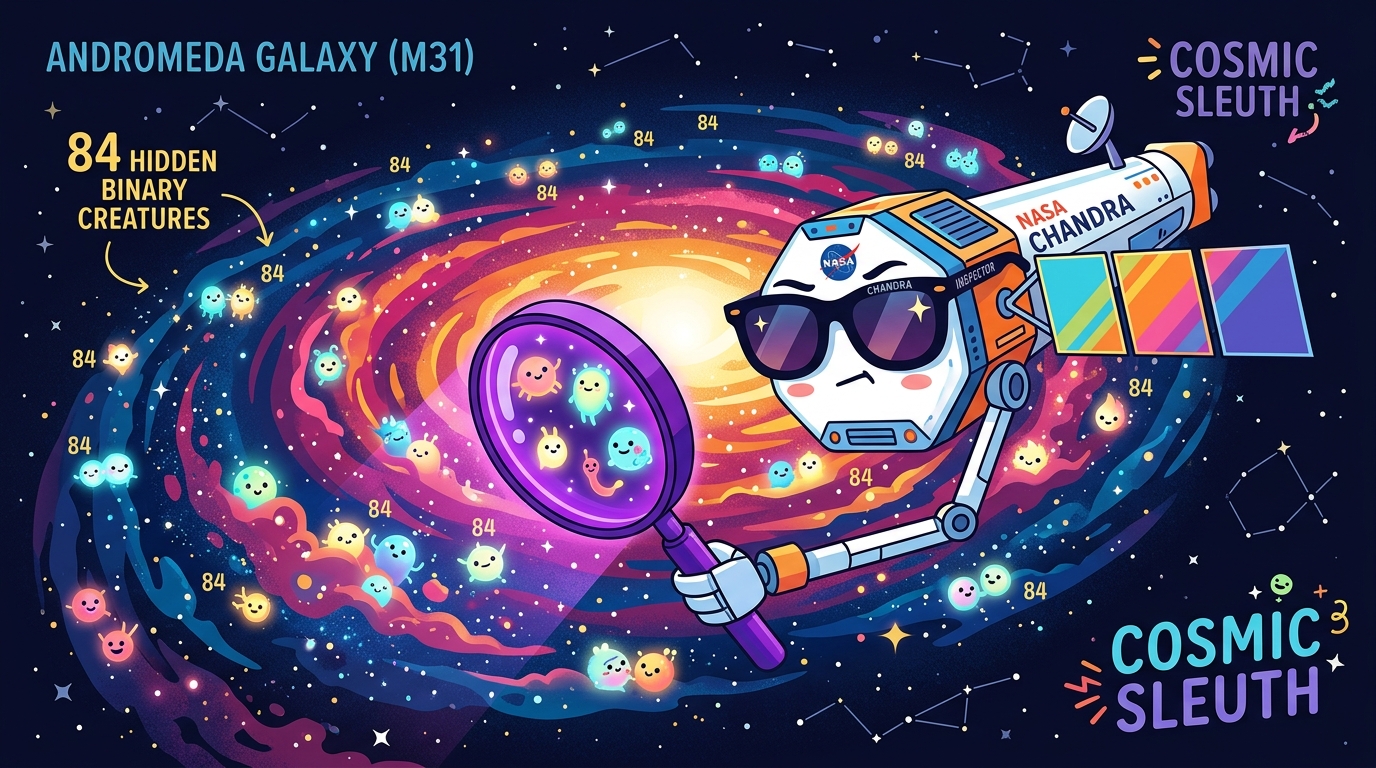
The Ultimate Cosmic Hide-and-Seek: Chandra Uncovers 84 Stealth 'Hypersoft' Beacons
Astronomers digging through 25 years of NASA Chandra X-ray archives just unmasked 84 bizarre 'hypersoft' objects across six galaxies that glow furiously in ultraviolet but whisper in ultra-low X-rays.