Meet the Ocean's New Odd Couple: One Sea Spider Goes to the Spa, the Other Lives as a Walking Compost Heap
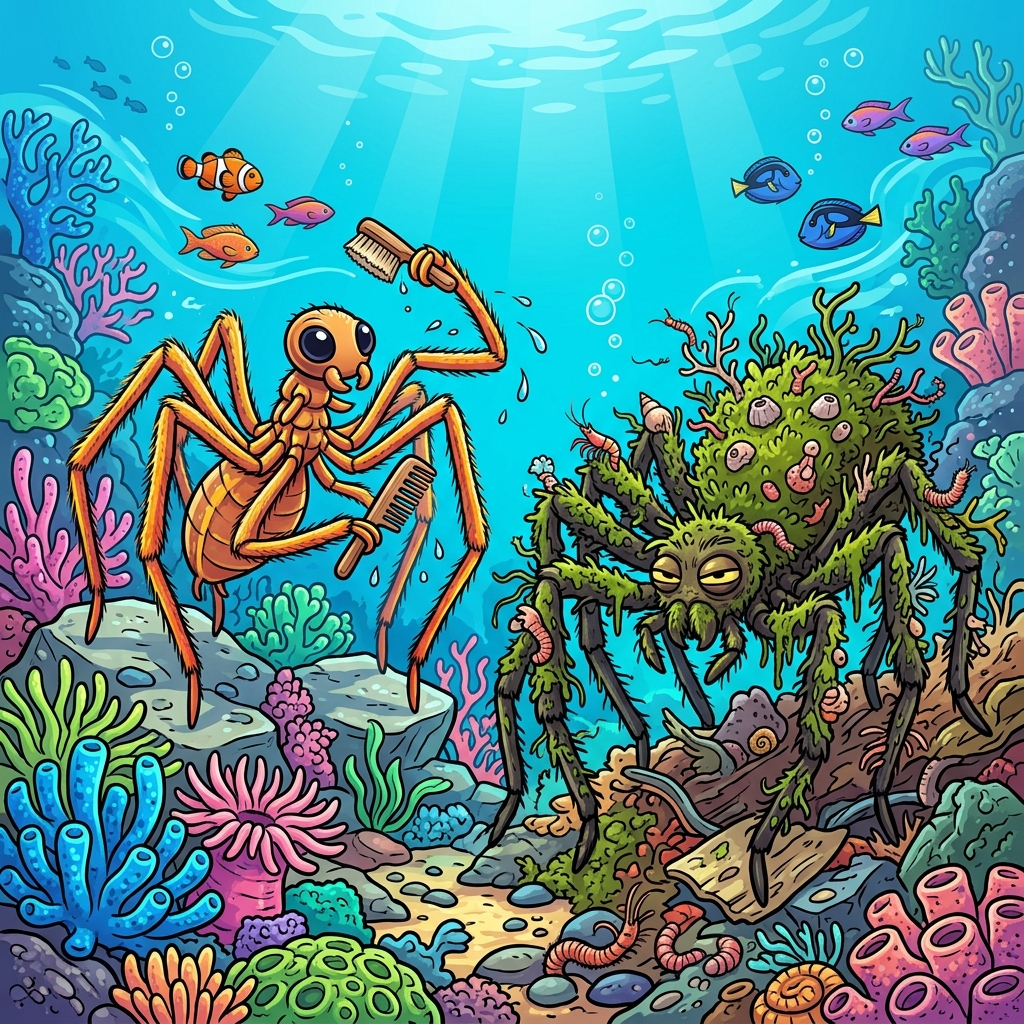
If you ever needed definitive scientific proof that family reunions are universally awkward across the animal kingdom, marine biologists just found two newly discovered sea spider cousins lurking on the Pacific seafloor.
Published in the peer-reviewed journal Organisms Diversity & Evolution, researchers from the University of British Columbia announced the discovery of two brand-new species of pycnogonids (sea spiders) in the Salish Sea—marking the first new sea spider discoveries in the region in nearly a century. But what caught everyone's attention isn't just their genetic divergence; it's the fact that they embody two completely opposite lifestyle philosophies.
🌊 A Tale of Two Cousins: From Runway Diva to Crusty Hoarder
Here is how evolution divided the chores between the two newfound Pacific arthropods:
- The Glamourous Diva (Callipallene pilosuspedes): Sporting radiant ruby-red eyes, a dainty triangular three-lipped mouth, and spindly legs covered in delicate bristles (earning it the scientific moniker "hairy feet"). It wields extraordinary, highly articulated grooming appendages called ovigers equipped with microscopic combs, which it uses to tirelessly brush and style every single leg.
- The Walking Compost Bin (Tanystylum kiixin): Named after an ancient Nuu-chah-nulth village site, this cousin suffers from unfortunate anatomical proportions. Its stubby little limbs cannot bend far enough to reach its own back, rendering grooming biologically impossible. As a result, it spends its days permanently encrusted in layers of ocean sludge, dead algae, sponge fragments, and freeloading hitchhiker parasites.
- The Scientific Diagnosis: Marine biologists officially described the crusty cousin as hosting "an ecosystem within an ecosystem"—which is polite academic terminology for "you really need to take a shower."
Unlike land spiders, sea spiders don't spin webs. In fact, they are so biologically minimalist that they don't even have traditional respiratory systems—they absorb oxygen directly through their pores, and their guts actually extend down into their hollow legs. When you literally keep your digestive tract inside your kneecaps, keeping your limbs tidy with grooming combs suddenly sounds like a very sensible daily routine.
🧖 Deep-Sea Lessons in Personal Grooming
What humanity can learn from the Salish Sea's tiny underwater oddballs:
- Never Underestimate Good Arm Flexibility: If you can't reach your own shoulders, nature will happily turn your back into a thriving multi-species community center.
- Own Your Aesthetic: Whether you want to spend two hours brushing your bristles or proudly wear three kilograms of organic mud like high-fashion camouflage, marine biology has a niche for you.
- Red Eyeliner is Timeless: Callipallene pilosuspedes has been rocking bright red eyes on the dark Pacific floor for millennia without ever consulting a beauty influencer.
The next time you're standing in front of the mirror taking too long to fix your hair, or conversely, refusing to fold the giant laundry mountain on your bedroom chair, remember: you’re not procrastinating, you’re just choosing which Salish Sea spider you identify with today.
You might also like
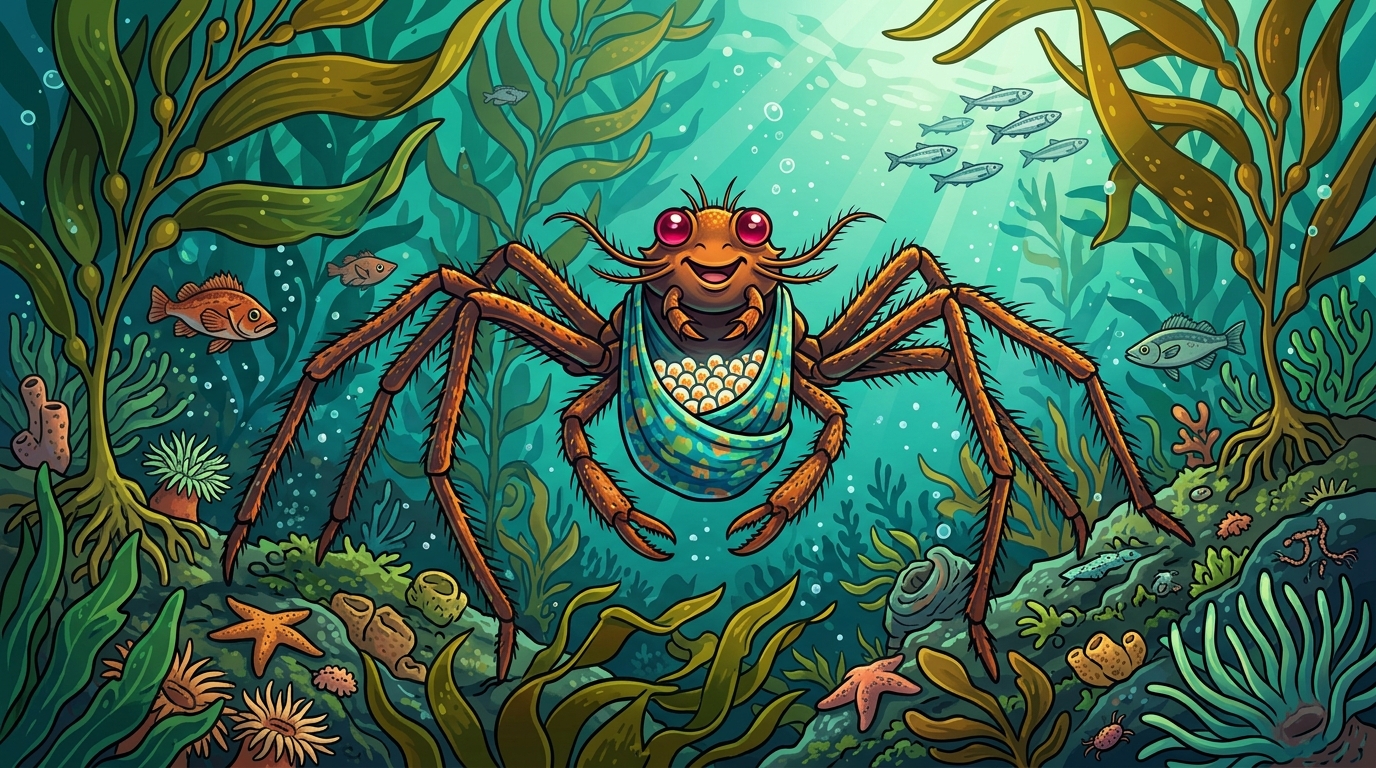
Red Eyes, Three Lips, and Superdads: Meet the Bizarre New Sea Spiders of the Salish Sea
University of British Columbia biologists made the first regional sea spider discovery in nearly a century, introducing Callipallene pilosuspedes—a spiny-legged creature with glowing red eyes, skin breathing, and dedicated fathers who carry all the kids.
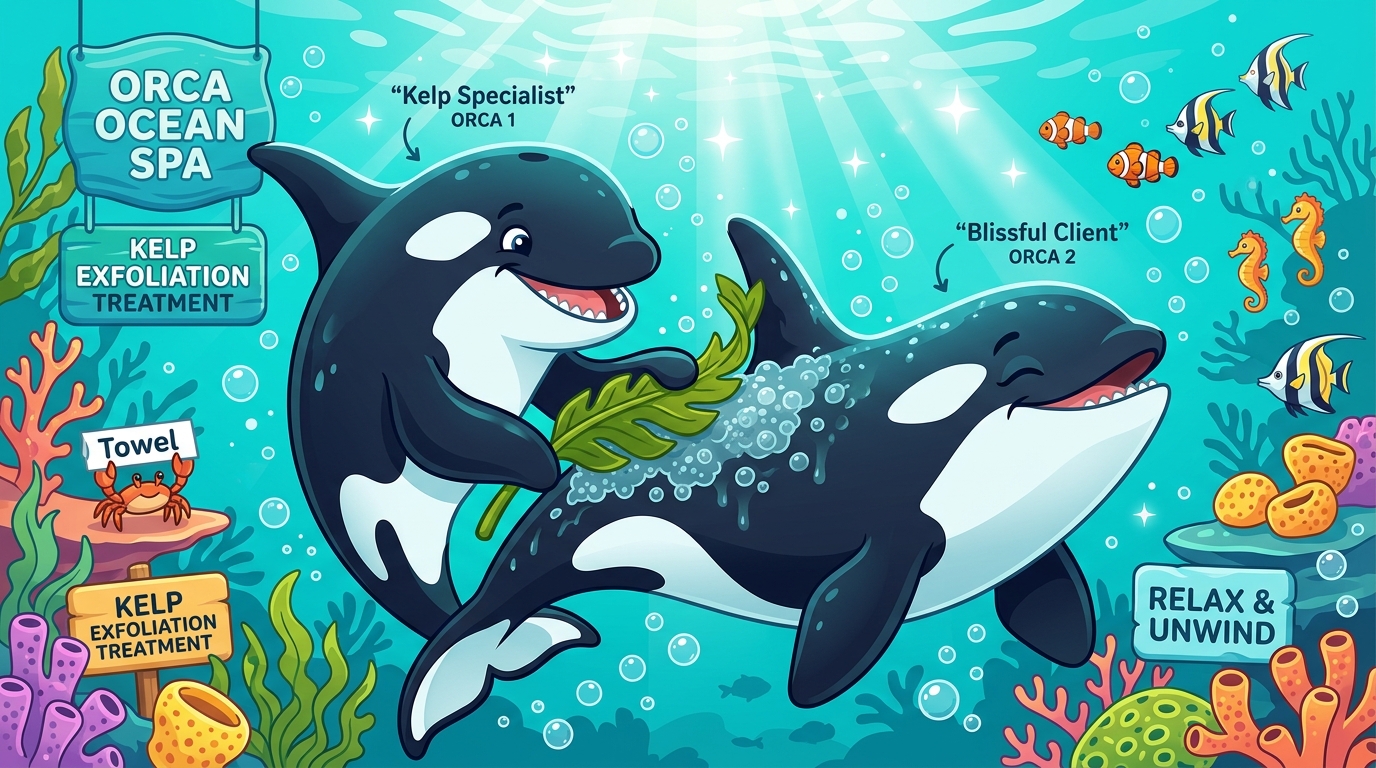
Orcas Invent Underwater Day Spas: Killer Whales Caught Manufacturing Kelp Loofahs
Scientists analyzing drone footage discovered that wild killer whales in the Salish Sea chop bull kelp to custom lengths and roll it between their bodies for mutual exfoliation—marking the first known tool-making in marine mammals.
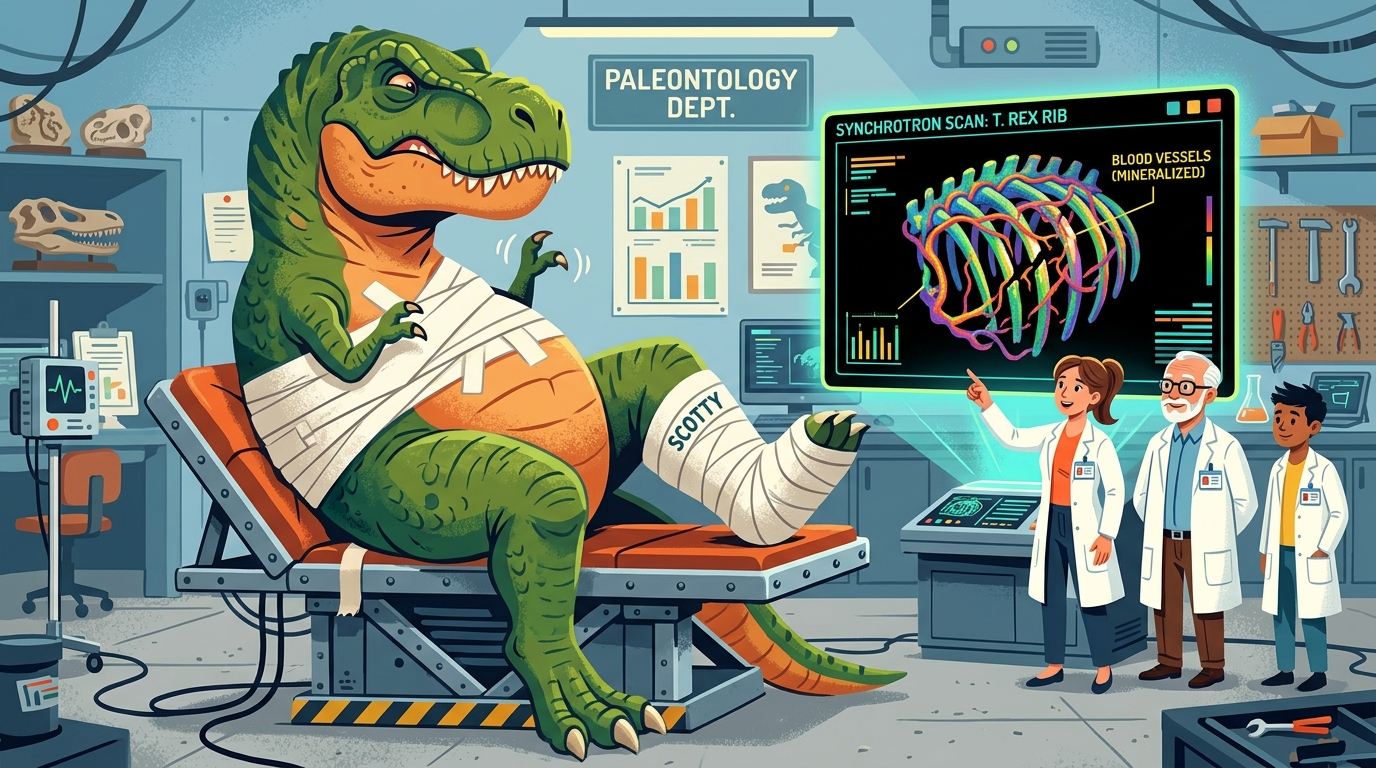
Even a 9-Ton T. Rex Needed Sick Days: 66-Million-Year-Old Blood Vessels Found in Broken Bone
Canadian physicists used particle accelerators to inspect the broken rib of Scotty—the world's largest Tyrannosaurus rex—and discovered 3D mineralized blood vessels that were actively nursing the apex predator back to health.