America's Hottest Lost-and-Found: Geologists Dredge 20,000 Weird Items from Yellowstone Geysers
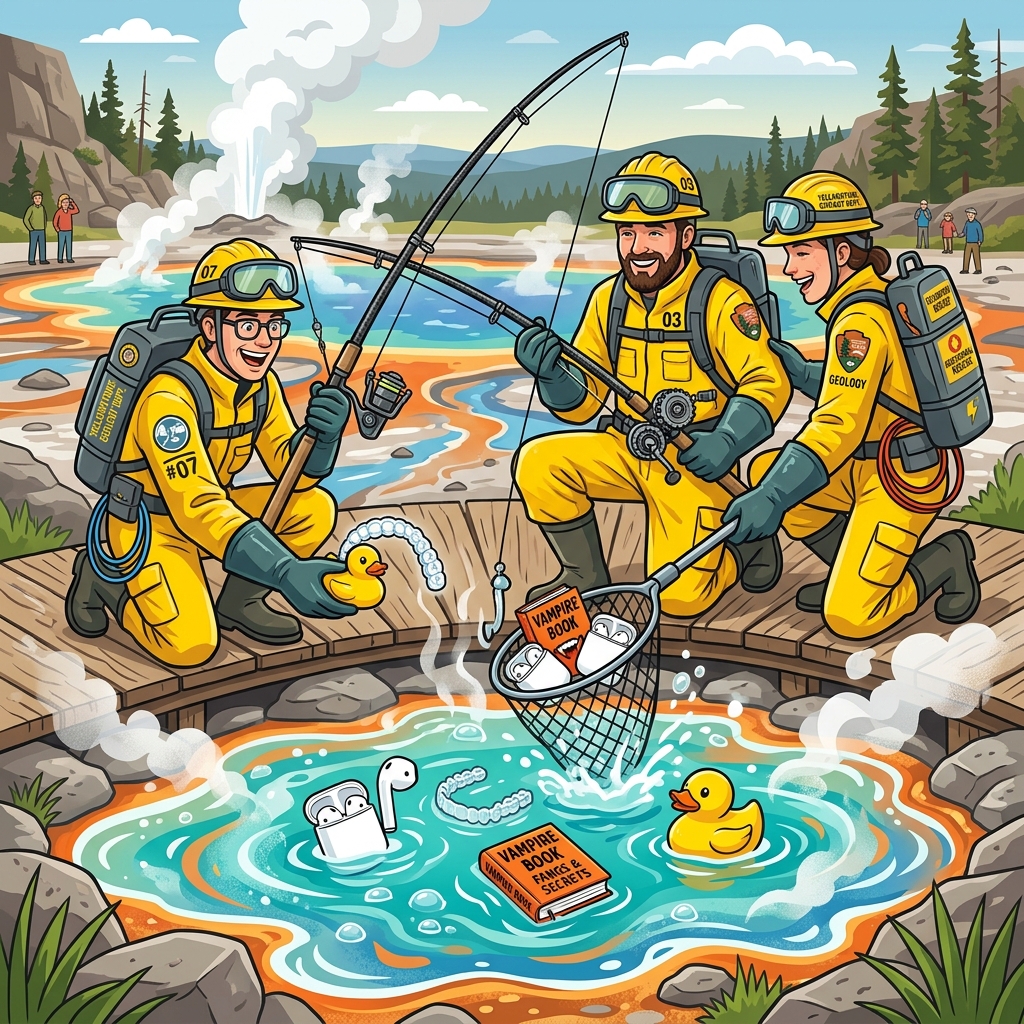
If you ever wondered where your runaway AirPods, dental retainers, or miniature teenage vampire novels go when they disappear, look no further than Yellowstone's boiling subterranean cauldron.
Every summer, millions of tourists flock to Yellowstone National Park to admire majestic supervolcano vents, sapphire-blue thermal pools, and towering steam eruptions. But according to the latest seasonal cleanup tally released by the Yellowstone Geology Team and the USGS, tourists aren't just leaving footprints—they're treating nature's most fragile geothermal masterpieces like an oversized, bubbling dumpster. Park staff dredged an eye-watering 20,100 pieces of human debris from the park's hydrothermal springs.
🌋 The Bizarre Inventory of the Boiling Deep
Equipped with heavy-duty grabber poles, custom strainers, and heavy fishing tackle, park geologists conducted precision salvage operations along thermal boardwalks. Among the haul:
- The Dental Mystery: Exactly six separate Invisalign clear teeth retainers. (Imagine explaining to your orthodontist that Old Faithful ate your homework).
- The Tech Graveyard: Five Apple AirPods, slowly simmering in 200°F mineral-saturated water.
- The Pocket Odyssey: 280 blown-off hats, 54 camera lens caps, 15 press-on fingernails, and $18.00 in wishing coins.
- The Pop-Culture Oddities: A single snowshoe, rubber ducks, Pokémon trading cards, and a two-inch miniature copy of The Vampire Diaries.
While scooping a soggy Uno card or rubber duck out of a prehistoric thermal basin might sound like an eccentric reality TV segment, park scientists emphasize that foreign junk inflicts catastrophic, irreversible damage on hydrothermal systems.
⚠️ Why Dropping Your Junk Murders a Geyser
Yellowstone's thermal plumbing relies on delicate pressure and superheated water dynamics that take centuries to stabilize:
- Clogging Ancient Vents: Thrown rocks, coins, and plastic garbage wedge into narrow fissures. In 1947, visitors threw rocks and trash into Minute Geyser, permanently choking its subterranean plumbing and killing its 60-foot eruptions forever.
- Smothering Extremophiles: The vibrant yellow, orange, and emerald rings ringing pools like Morning Glory are living carpets of thermophilic bacteria and archaea. Decomposing plastic, copper coins, and chemicals leach toxins, cooling the water and turning once-pristine crystalline springs into murky green puddles.
Geologists urge visitors to keep hands and gear tucked firmly in pockets, secure hats against gusty boardwalk winds, and remember that wishing wells belong in theme parks, not atop active supervolcanoes.
Because if the supervolcano ever decides to wake up, nobody wants its first eruption to be fueled by 20,000 lost sunglasses, melted AirPods, and somebody's stray lower-jaw Invisalign.
You might also like
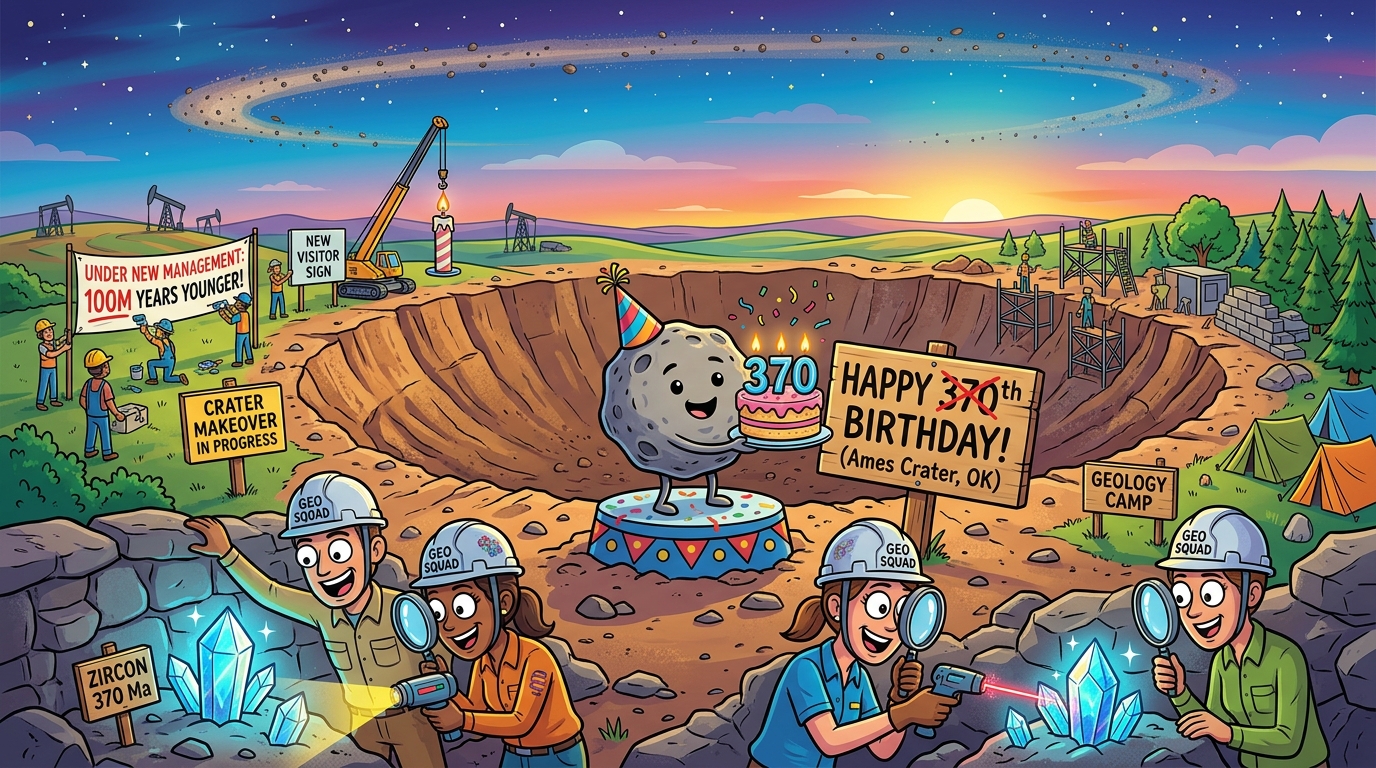
Oklahoma's Ames Meteor Crater Knocked 100 Million Years Off Its Age After Getting Caught With Recycled Fossils
High-precision uranium-lead zircon dating reveals Oklahoma's Ames impact crater was formed 370 million years ago—nearly 100 million years later than believed—kicking it out of Earth's hypothetical Saturn-ring club.
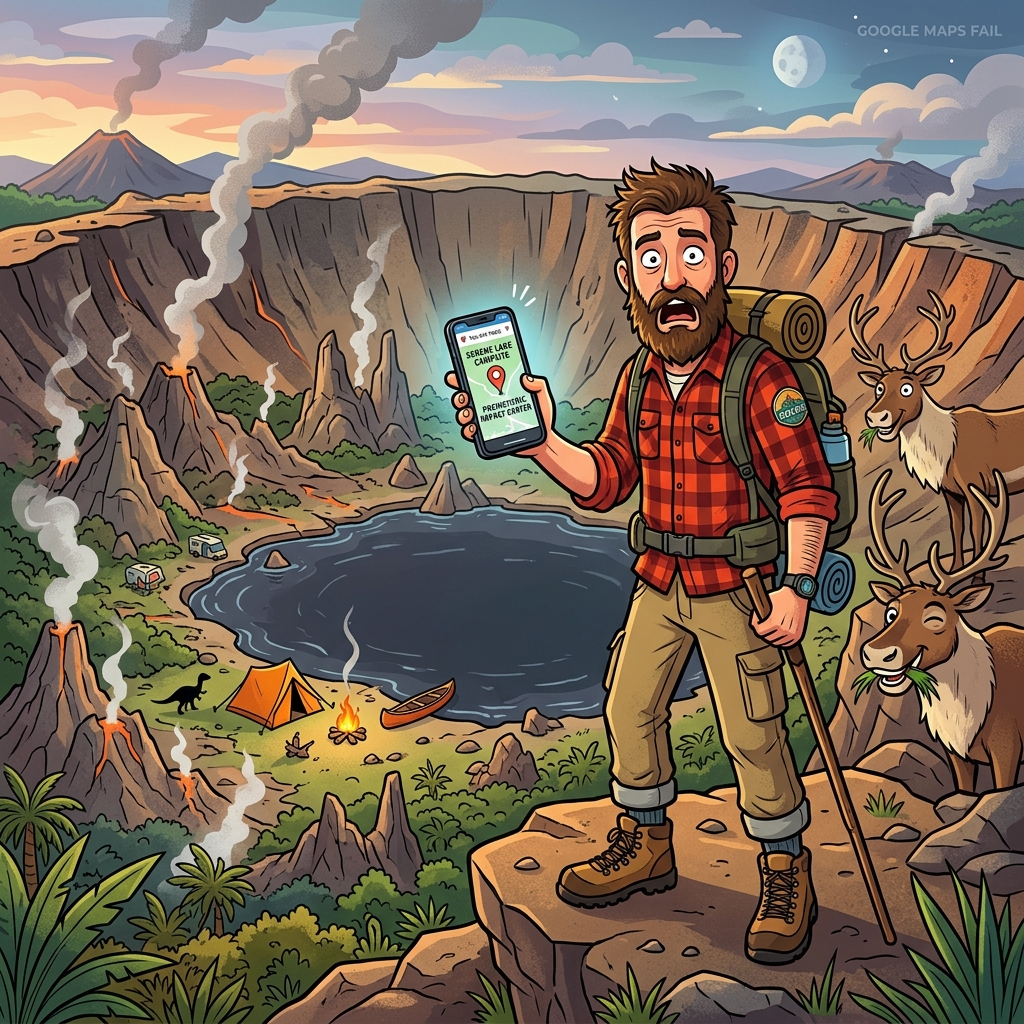
When You Try to Pick a Peaceful Campsite on Google Maps and Stumble into a 390-Million-Year-Old Asteroid Impact
A Canadian camper scouting for quiet vacation spots on Google Maps accidentally discovered a massive 25-kilometer Devonian meteor crater in Quebec, proving that space rocks make great holiday destinations.

Earth Was an Extreme Localvore: Why Geologists Have No Idea Where Our Water Came From
ETH Zurich planetary scientists proved Earth was forged almost 100% from inner Solar System materials, with less than 2% coming from outer asteroids. That completely detonates the textbook theory that icy comets brought our oceans—leaving geologists scratching their heads.