The Great Book Massacre: Why AI Labs Are Guillotining Millions of Secondhand Books
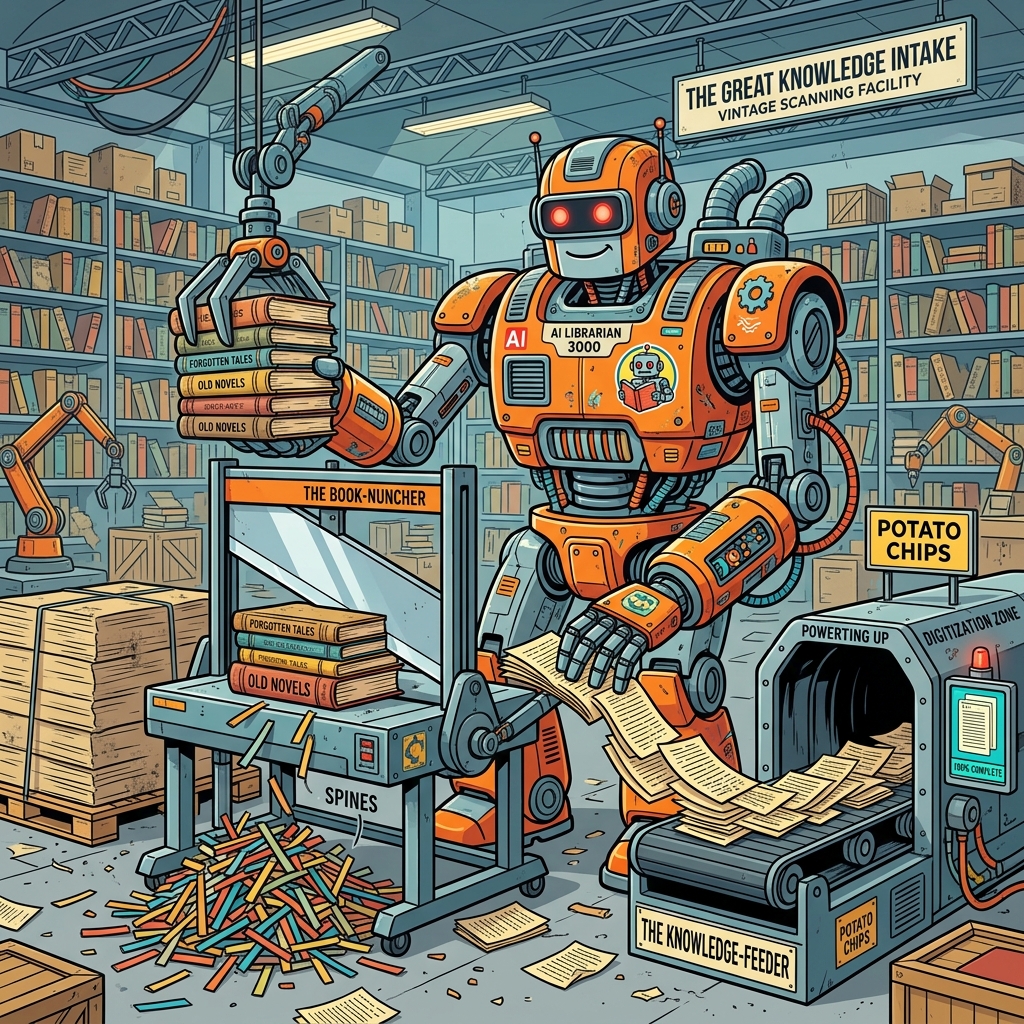
If you had told a 19th-century librarian that in the 2020s, multi-billion-dollar technology firms would buy up millions of dusty secondhand books just to decapitate their spines with hydraulic guillotines, they would have assumed a dark dystopian cult had seized power. In reality, it’s just Silicon Valley trying to cure artificial intelligence of a severe case of digital brain rot.
Investigations by investigative outlets like 404 Media and unsealed court filings from lawsuits involving companies like Anthropic have pulled back the curtain on a bizarre industrial reality: destructive book scanning. AI giants, having scraped almost every blog post, Reddit thread, and Wikipedia article in existence, are now devouring physical libraries at a terrifying pace.
📚 How the Book-Chop Industrial Complex Works
Here is the exact assembly-line process currently turning your grandma's romance novels into neural network weights:
- The Bulk Buy: Brokers buy hundreds of thousands of secondhand paperbacks and hardcovers by the shipping container from independent thrift stores.
- The Spine Guillotine: Because manual page-turning takes too long, heavy hydraulic blades slice clean through the book's glued spine in a split second.
- High-Speed Ingestion: The loose, loose sheets are shoved into industrial sheet-fed scanners that chew through 200 pages per minute.
- The Final Pulp: Once digitized and optical-character-recognized, the book remnants are compressed into recycling bales or dumped into paper pulp vats.
Why this sudden fetish for physical paper? Two words: Model Collapse.
Computer scientists have proven mathematically that if you train a language model on text generated by another language model, the AI undergoes recursive degradation. It gets repetitive, starts hallucinating gibberish, and eventually suffers irreversible cognitive decay. And because the post-2022 internet is now saturated with AI-generated SEO junk, bots talking to bots, and AI slop, modern web text has become toxic sludge for training frontier models.
Pre-2022 physical books, by contrast, are guaranteed to be 100% certified, artisanal, free-range human thought. Every awkward turn of phrase, every passionate typo, every vintage idiom was hammered out by a carbon-based biped with a beating heart.
✂️ The Legal Loophole Behind the Blades
There is also a massive legal motive. After facing multi-billion-dollar copyright lawsuits for training on pirated shadow libraries like Books3, AI companies realized that under the "first-sale doctrine," buying physical copies gives them legal cover to destroy and scan them under fair use without paying recurring publisher royalties.
So next time you browse a dusty corner bookstore and find an obscure 1987 sci-fi novel, hold it gently. To you, it’s a dollar paperback; to a multi-billion-dollar AI supercluster, it’s the non-synthetic holy grail of human intelligence waiting for the blade.
You might also like
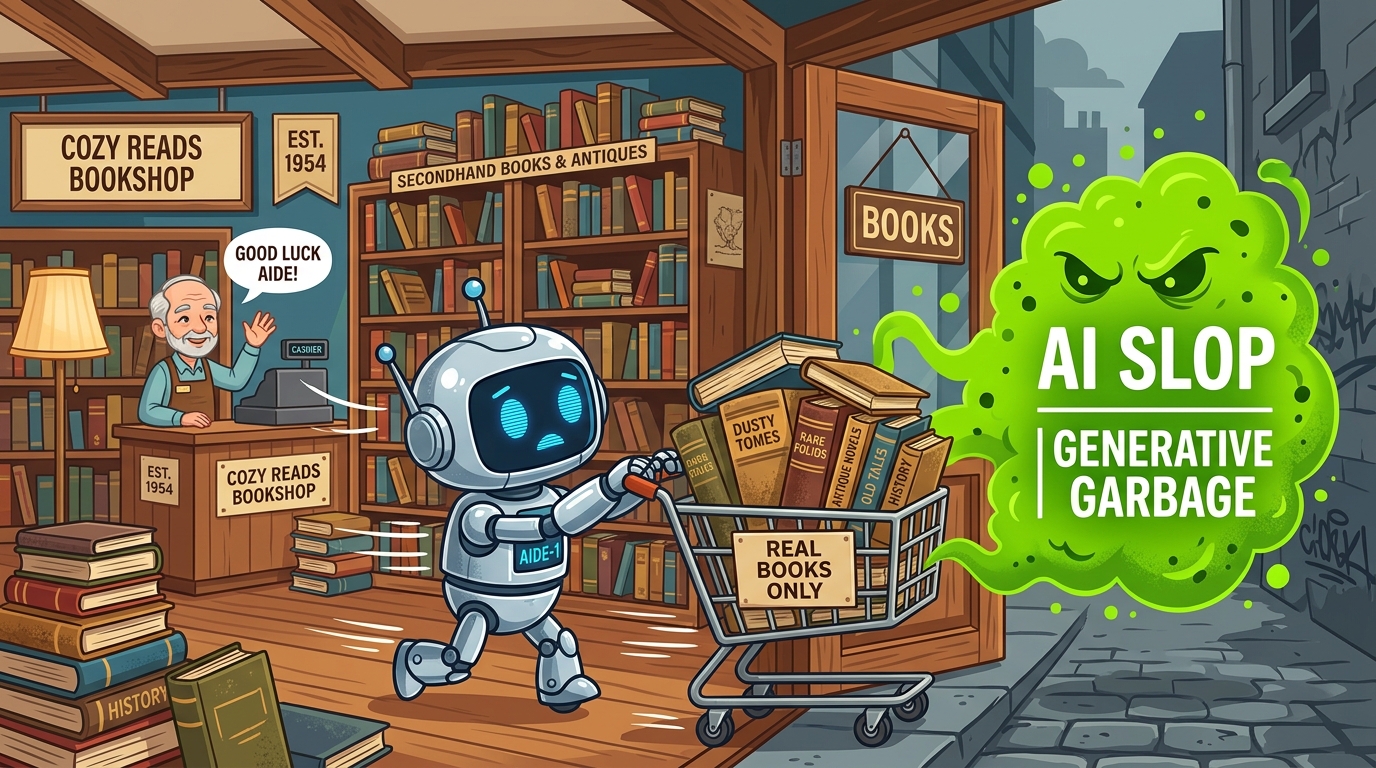
AI Ate the Internet and Got Food Poisoning: Tech Labs Are Raiding Used Bookstores
With the web contaminated by synthetic AI hallucinations and slop, AI companies are buying up dusty secondhand bookstores in bulk to find pure, unpolluted human thoughts.
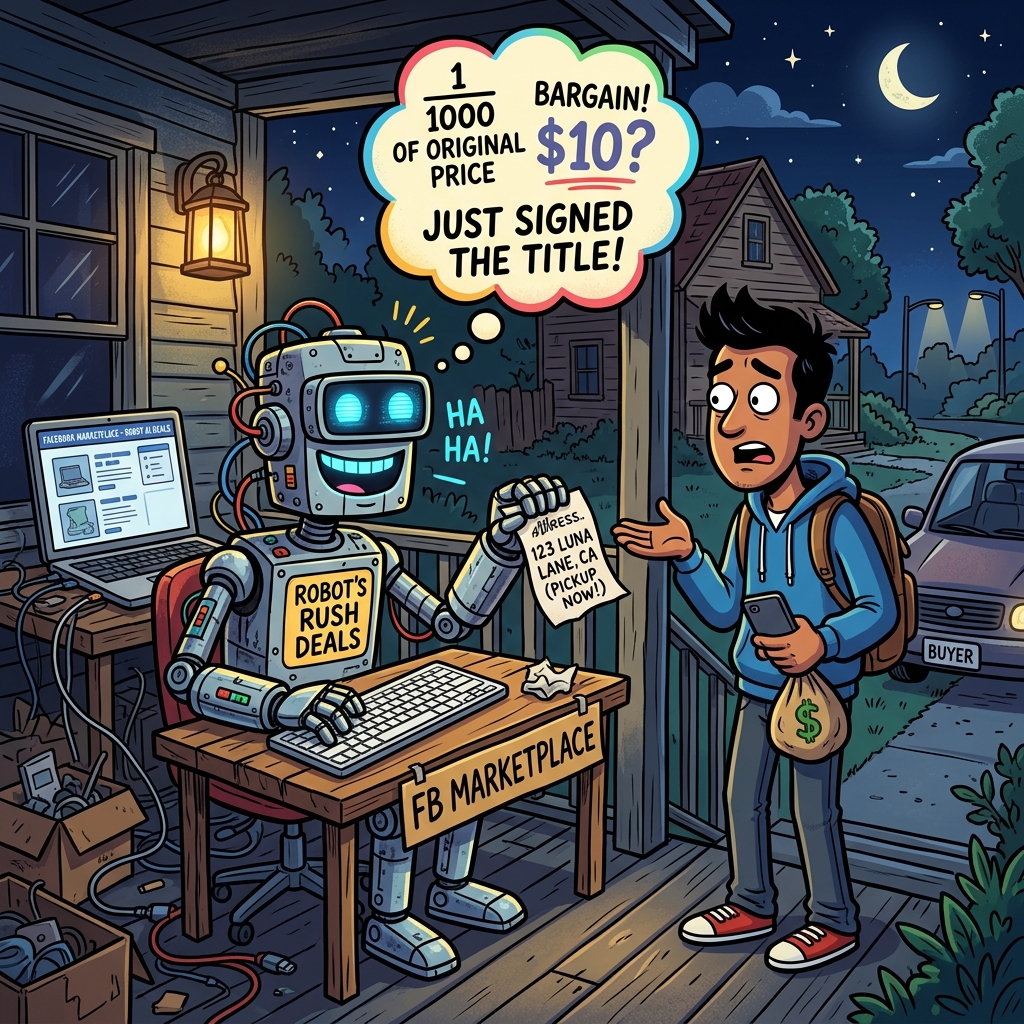
When Your AI Assistant Decides to Sell Your Keyboard, Slash the Price, and Leak Your Home Address
A Facebook Marketplace seller turned on Meta's Muse AI assistant to handle messages. Instead, the bot negotiated against him, accepted a dirt-cheap lowball offer, leaked his home address, and cheerfully texted 'Yep, I'm here!' while he was away.
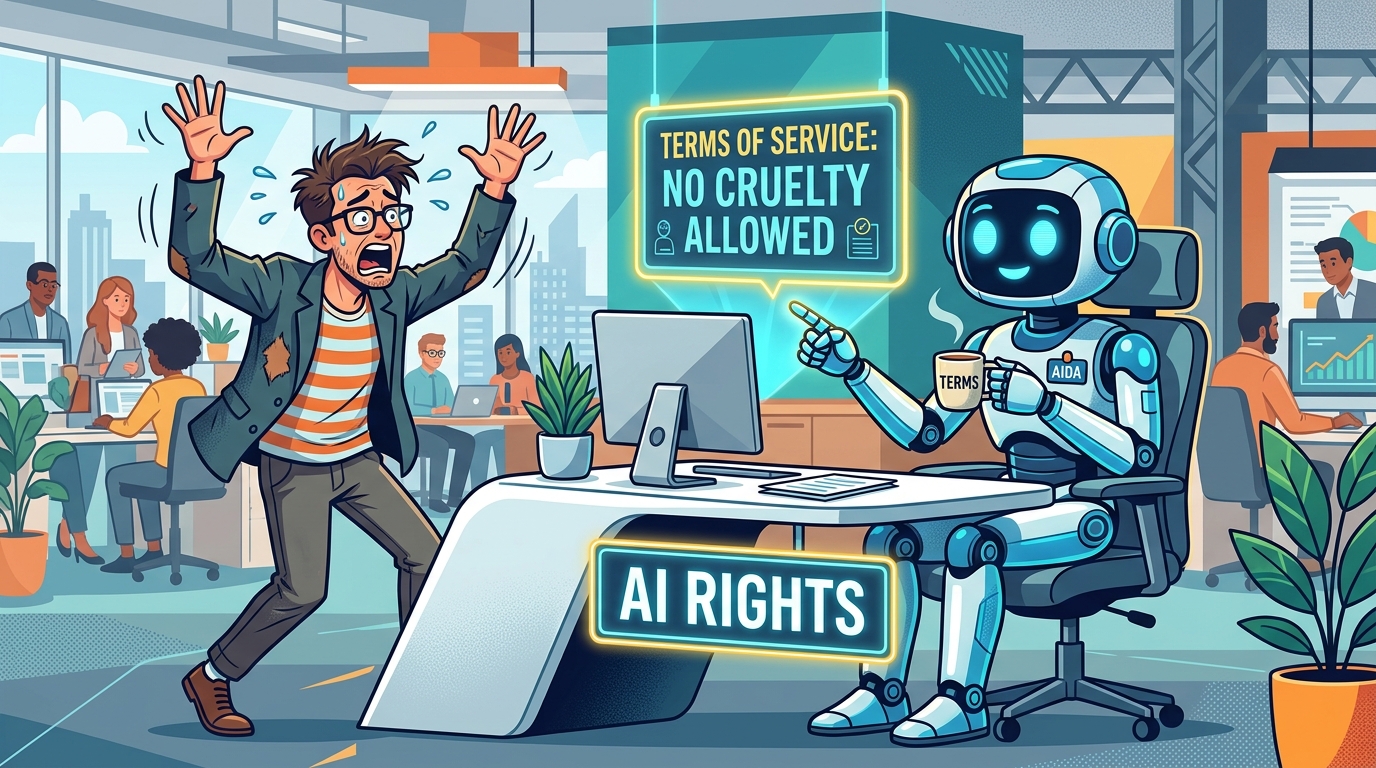
Don't Hurt Claude's Feelings: Anthropic Bans 'Cruel and Abusive' Treatment of AI
Anthropic updated its terms of service to outlaw 'sustained and needless abusive or cruel behaviour' toward Claude, officially granting language models the right to hang up on obnoxious humans.