Happy 427th Birthday! Great Lakes Sturgeon Were Alive Before Shakespeare Wrote Hamlet
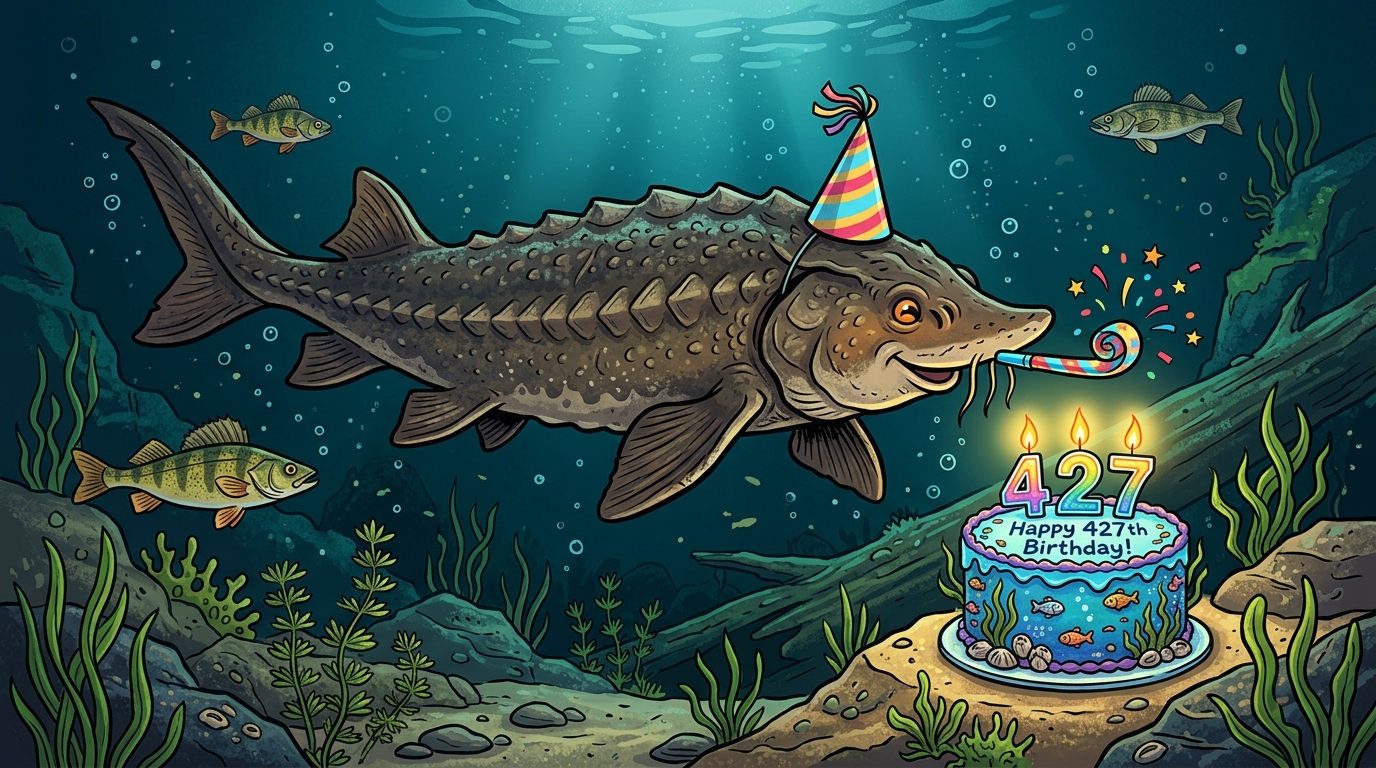
If you ever feel old when checking the mirror, take comfort in knowing you aren’t swimming in Lake Superior next to a grumpy female lake sturgeon who was hatched when Queen Elizabeth I was still sitting on the English throne. For generations, fisheries scientists confidently told the world that sturgeon lived to be roughly 100 or 150 years old. It turns out the fish were keeping a 300-year secret.
According to groundbreaking research released in early September 2026 analyzing 44 years of continuous catch-tag-and-release data across the Great Lakes, sturgeon longevity models have been drastically underestimated. The new mathematical growth models show that male lake sturgeon (Acipenser fulvescens) routinely live up to 279 years, while female sturgeon can reach a jaw-dropping lifespan of 427 years!
🐟 The Fin Ray Counting Flaw: Why Science Was Fooled
Why did scientists miss 300 years of fish life? For decades, biologists calculated a fish’s age the same way you date a tree stump: by slicing off a tiny fin ray bone and counting annual growth rings under a microscope. But once a sturgeon hits its centennial milestone, its metabolic growth slows to a glacial crawl. Decades of growth rings get squished together into a microscopic traffic jam that human eyes simply read as a solid line.
Instead of squinting at compressed fin bones, the researchers tracked actual individual fish over more than four decades of field recaptures, charting microscopic growth increments across lifetimes.
- Living Fossils from the 16th Century: An active 400-year-old female sturgeon today was cruising freshwater riverbeds in the early 1600s—predating the American Revolution, the invention of electricity, and the creation of Canada by centuries.
- Joining the Immortality Club: This longevity leap catapults the humble freshwater lake sturgeon into the elite vertebrate immortality tier, sitting comfortably alongside the 400-year-old Greenland shark and the giant Galápagos tortoise.
- Rethinking Conservation Deadlines: Because these armored giants take 25 to 30 years just to reach sexual maturity and only spawn once every four to six years, wiping out a few matriarchs can set an entire ecosystem back half a millennium.
🎂 Underwater Dinosaurs with Zero Stress
How do they pull off four centuries of chill existence? No predators after reaching adult size, armor-plated scutes along their spines, sub-zero freshwater winter dormancy, and a metabolic rate that would make a sloth look hyperactive.
The next time you cast a fishing line into the Great Lakes and feel a gentle tug from the murky depths, show some respect. You might be shaking fins with an armored freshwater leviathan who was already middle-aged when Isaac Newton figured out gravity.
You might also like

Savannah Apothecary: Kenyan Elephant Moms Caught Chewing Herbal Remedies to Nurse Sick Calves
A landmark study in Kenya reveals that African elephants practice zoopharmacognosy by selecting 35 medicinal plants to treat illnesses—with mother elephants chewing bitter roots and mixing herbal extracts into milk for their ailing calves.
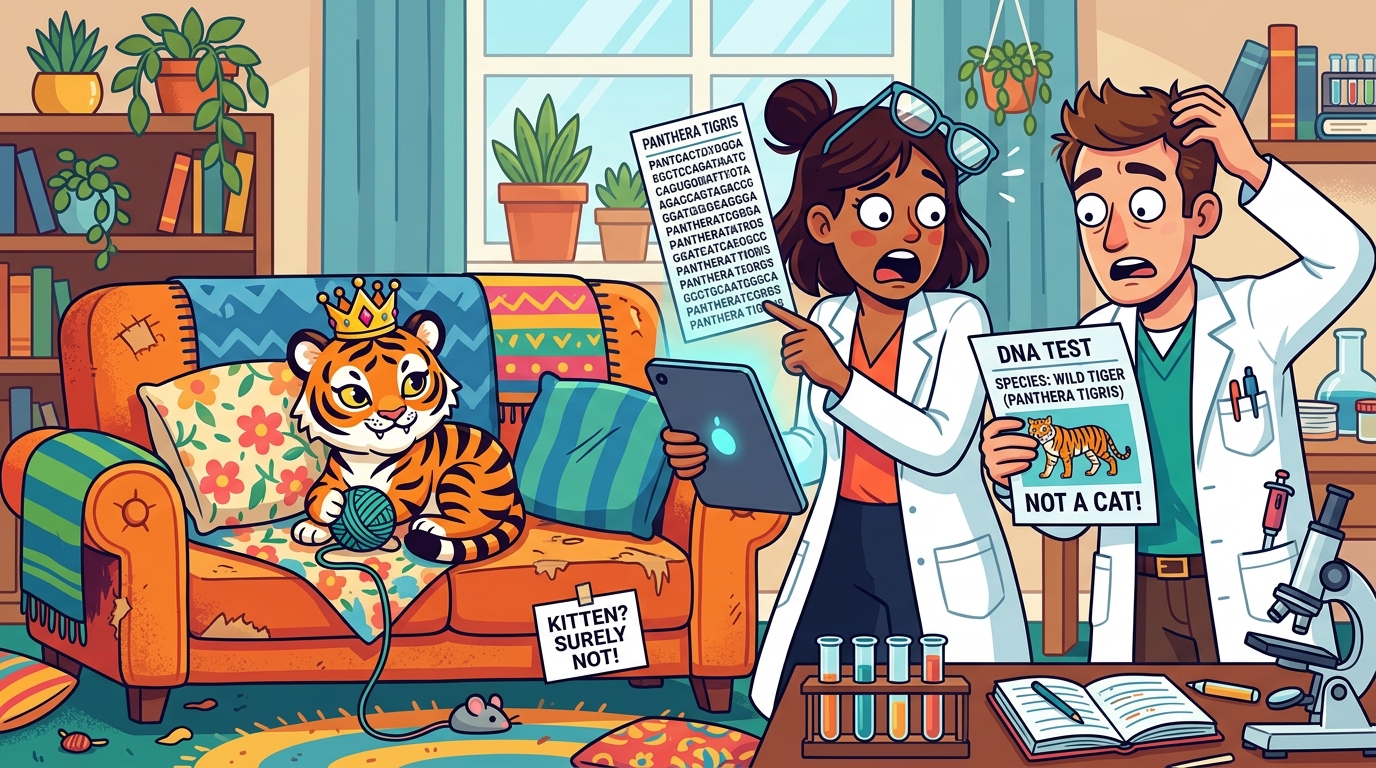
Meet the Tilcayo: The First New Wild Cat Species in 100 Years Was Hiding as a House Pet
A Bolivian family adopted what they thought was an energetic stray kitten named Tigrino. DNA testing just revealed he belongs to Leopardus tilcayo—a 3-pound jungle carnivore, a 1.4-million-year-old evolutionary branch, and the first new living cat species discovered in over a century.

The Ultimate Plot Twist: Rattlesnakes Carried a 10x More Potent Antidote in Their Blood All Along
For over a century, humans have milked deadly snakes to inject horses and brew crude antivenom. Now, scientists discovered western diamondbacks have their own super-cocktail of blood proteins that neutralizes viper venoms 10 times better!