The Milky Way Was Born Hungry: Hubble Finds 12-Billion-Year-Old Galactic Breakfast
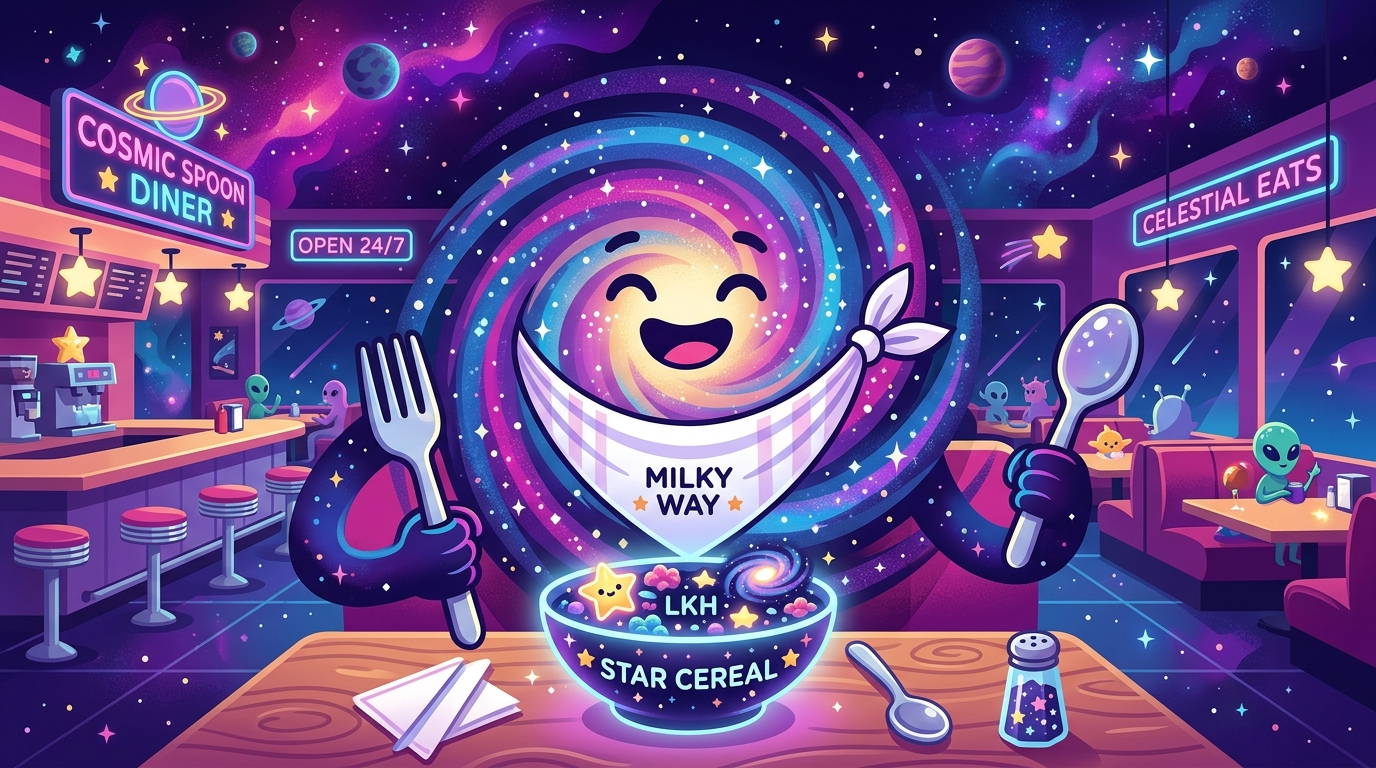
We like to think of the Milky Way as a serene, sparkling spiral of peaceful celestial beauty. But according to cosmic forensics, our home galaxy has actually been an aggressive, insatiable bully since it was a cosmic toddler.
In a study published in Nature Astronomy, an international team of astrophysicists led by Davide Massari at the Astrophysics and Space Science Observatory of Bologna used data from NASA’s Hubble Space Telescope to conduct an archaeological dig into deep space. What they found was the fossilized stellar skeleton of a baby galaxy devoured by our own 12 billion years ago.
🥣 Meet "LKH": The Galaxy That Became Breakfast
The digested victim has been cataloged as LKH (short for Low-Energy-Kraken-Heracles). Just 2 billion years after the Big Bang, when the Milky Way was still in its infancy, it pulled this unsuspecting dwarf galaxy into its gravitational maw, ripped its stars apart, and assimilated its mass to fuel its own growth.
This discovery rewrites our cosmic family tree by pushing back the Milky Way’s earliest known major collision by a staggering 1.8 billion years. Prior to this, scientists thought our galaxy’s first major feast was the famous Gaia-Sausage-Enceladus merger around 10 billion years ago.
🌟 Stardust Forensics: Globular Cluster Clues
How do you prove a crime committed 12 billion years ago without eyewitnesses? Massari's team analyzed globular star clusters—tightly packed spherical swarms of hundreds of thousands of ancient stars. By mapping their unique chemical compositions and eccentric orbital velocities, the researchers isolated star clusters whose "DNA" didn't match native Milky Way stars, proving they were the stolen jewelry of eaten dwarf galaxies.
And the feeding frenzy isn't over. Right now, the Milky Way is actively digesting the Sagittarius Dwarf Galaxy, with the massive Andromeda Galaxy scheduled to collide with us in about 4.5 billion years. In the cosmic restaurant, you either eat or get put on the lunch menu.
You might also like
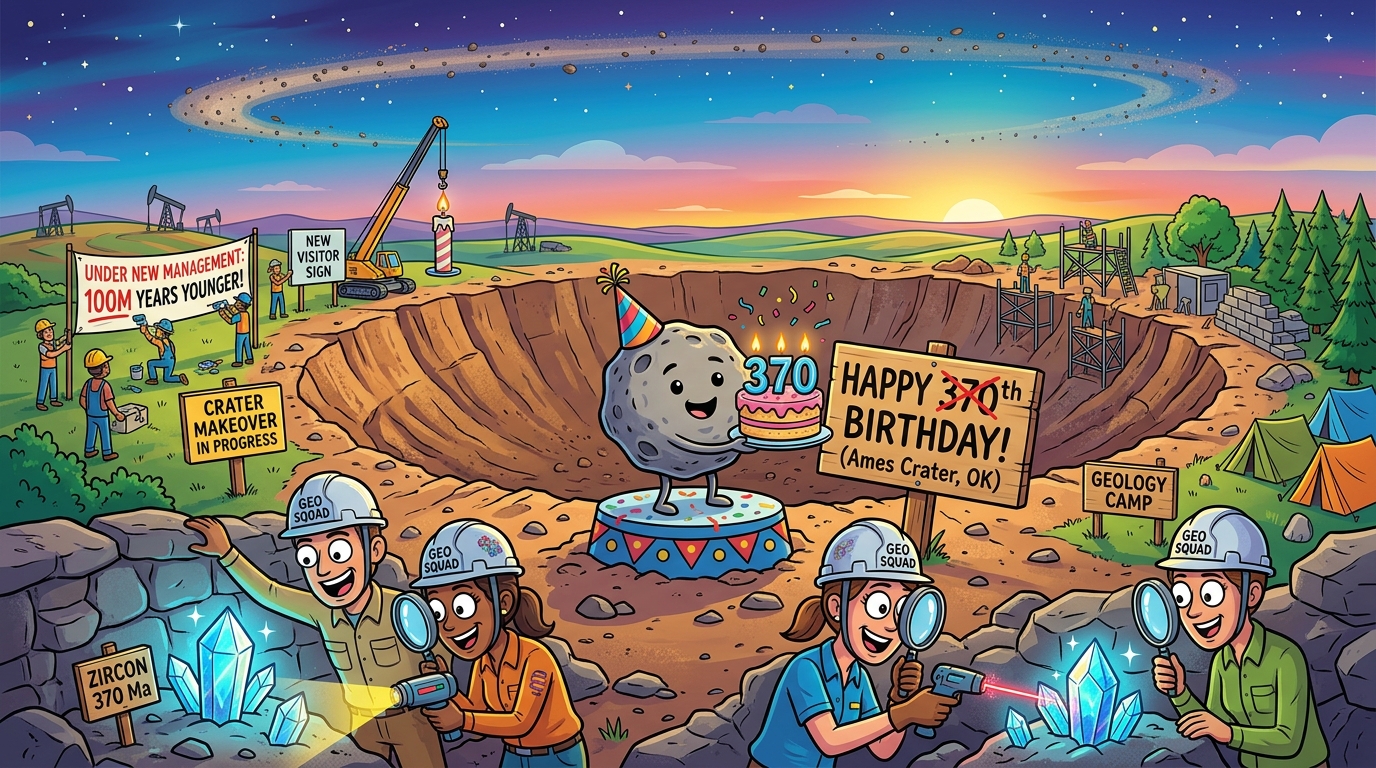
Oklahoma's Ames Meteor Crater Knocked 100 Million Years Off Its Age After Getting Caught With Recycled Fossils
High-precision uranium-lead zircon dating reveals Oklahoma's Ames impact crater was formed 370 million years ago—nearly 100 million years later than believed—kicking it out of Earth's hypothetical Saturn-ring club.
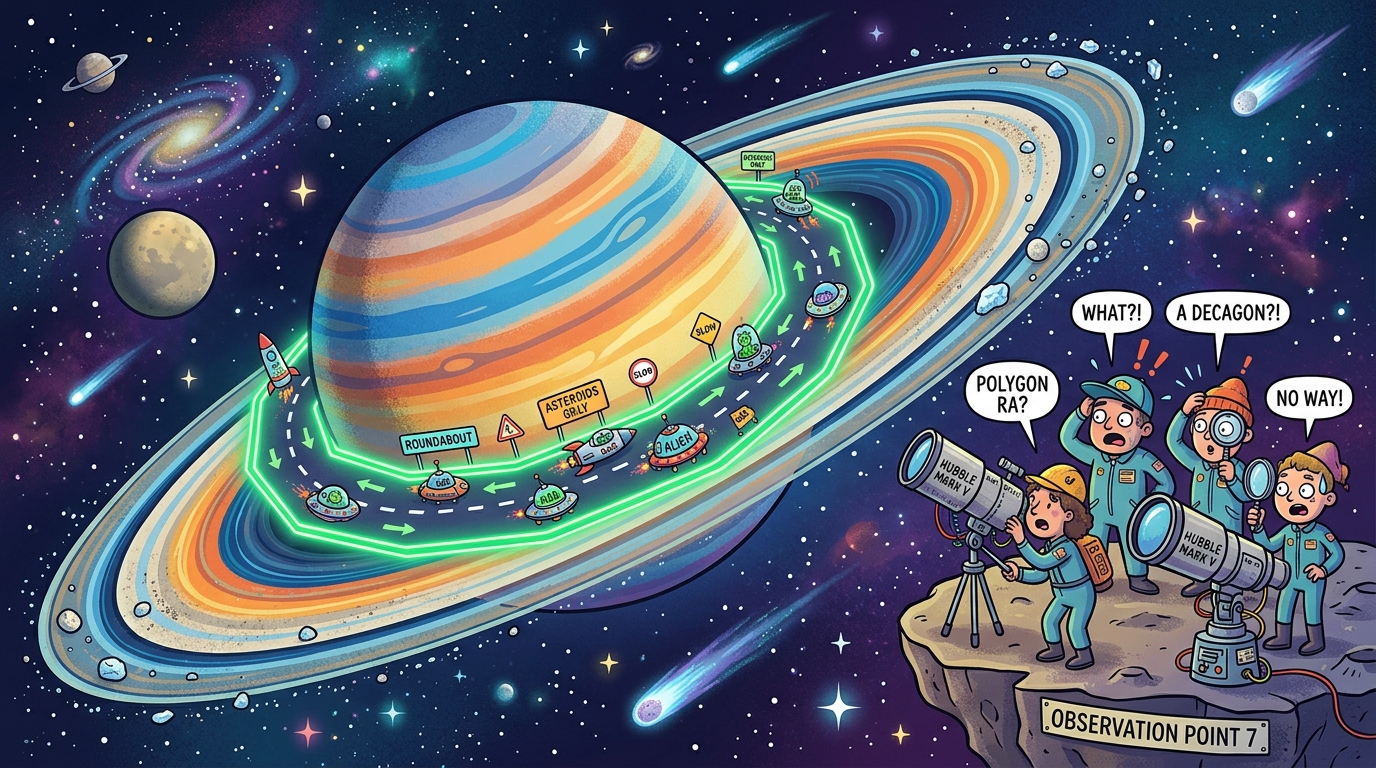
Saturn Got Bored With Its Hexagon, So Its South Pole Spun Up a 10-Sided Decagon
Hubble astronomers discovered a giant 10-sided atmospheric wave cruising around Saturn's south pole at 10 km/h, with each side stretching longer than planet Earth.
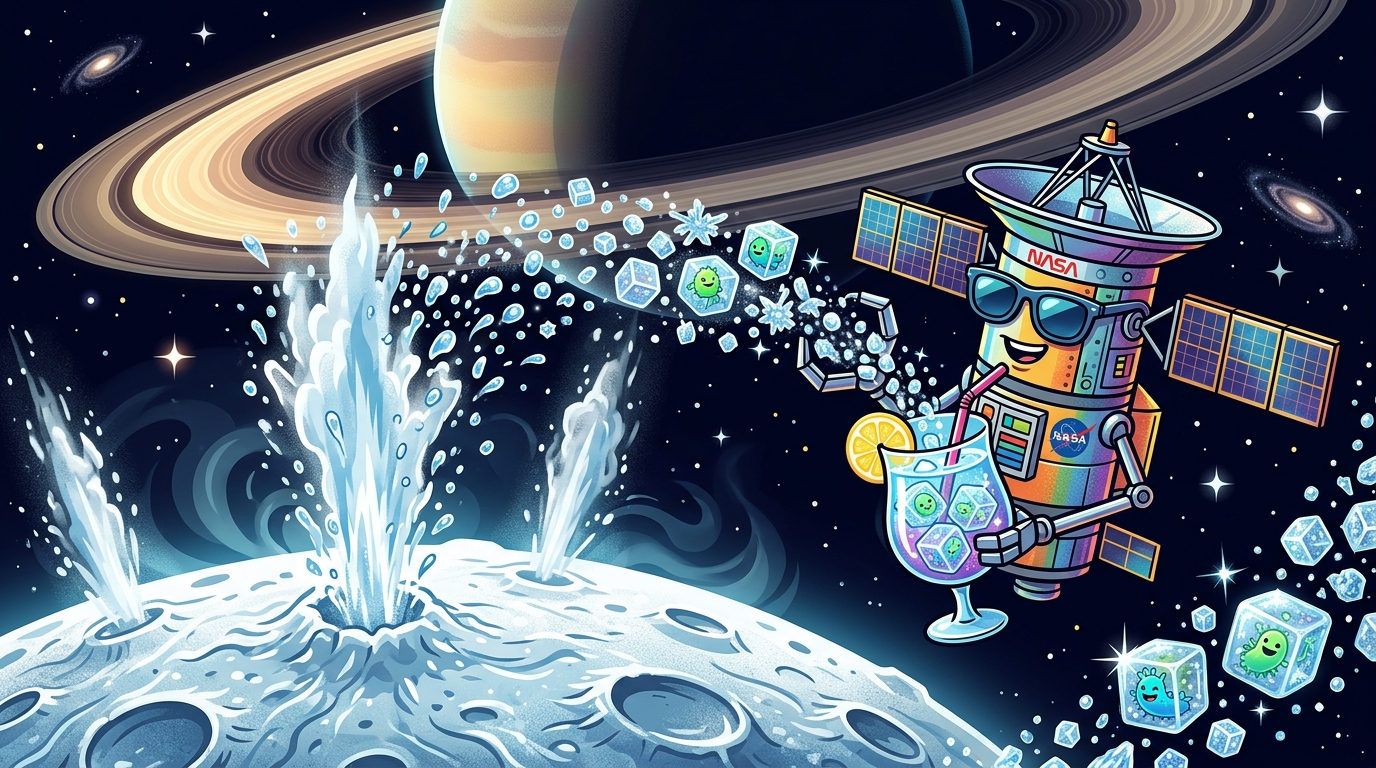
Enceladus Is Running an Interstellar Smoothie Bar That Pre-Sorts Alien Life for NASA
Saturn's icy moon doesn't just spew water into space—it slowly freezes, crashes, and shatters ocean droplets into pre-concentrated ice grains so future probes won't have to dig through cosmic slush.