Taming the 50,000-Year Beast: How Chaos and Disorder Smashed Semiconductor's Worst Greenhouse Gas
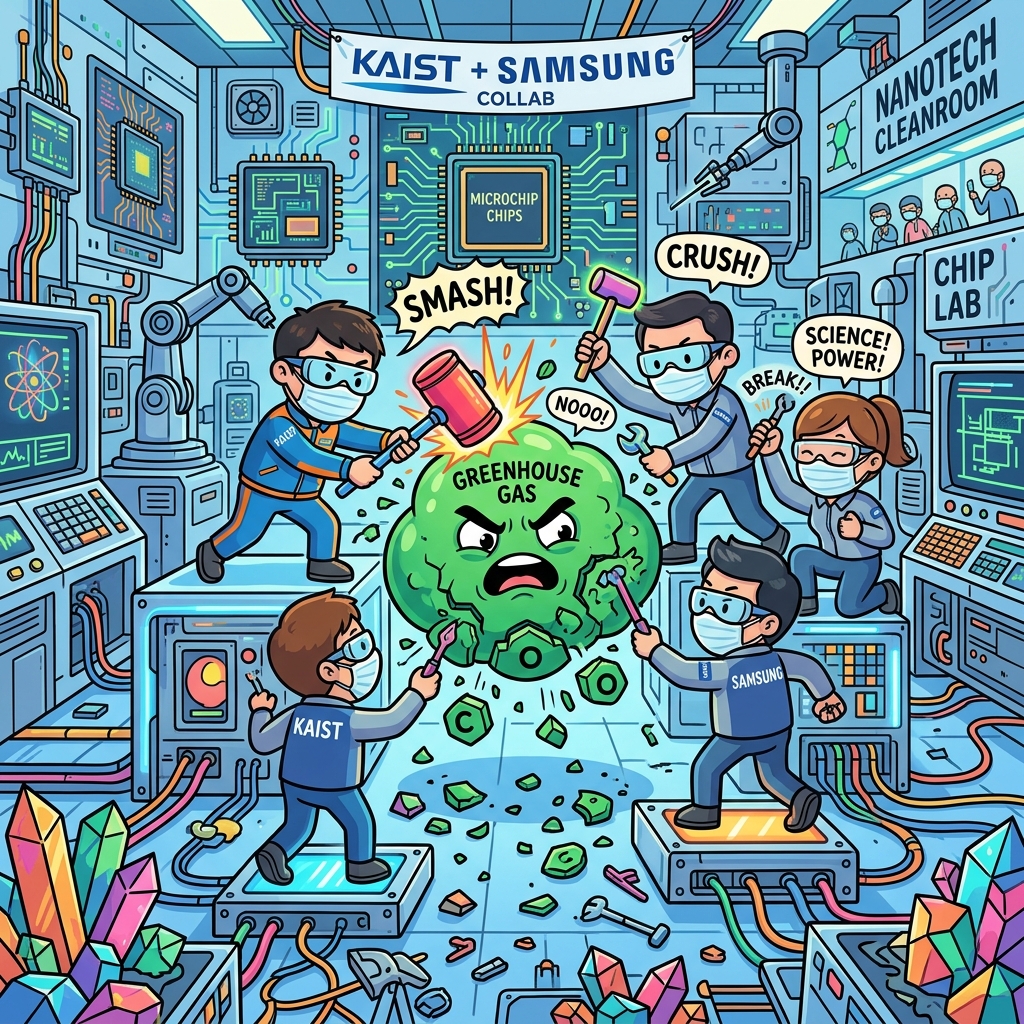
If you think nuclear waste or plastic grocery bags are stubborn, meet tetrafluoromethane (CF₄). Used in microchip dry etching, this chemical cockroach boasts an atmospheric lifetime of 50,000 years. To put that into perspective, the last time a molecule of CF₄ was floating around when Neanderthals were still drawing stick figures on cave walls!
To make matters worse, CF₄ has a global warming potential more than 6,000 times greater than carbon dioxide. Breaking its super-strong carbon-fluorine bonds is like trying to convince a toddler to eat broccoli—it requires scorching temperatures, and most catalysts choke and die within hours.
💥 Fighting Chaos with Chaos: Entropy Stabilization
In a groundbreaking joint announcement, Professor Minkee Choi’s team from the Korea Advanced Institute of Science and Technology (KAIST), alongside Samsung Electronics, revealed a radically counterintuitive solution: harnessing the "power of disorder." Instead of trying to build neatly aligned, pristine crystal lattices, the researchers stirred a chaotic soup of multiple metal atoms together into an entropy-stabilized catalyst.
By maximizing configurational entropy, the jumbled metal atoms lock each other into place through pure thermodynamic stubbornness:
- 2.3x Decomposition Power: The new disordered catalyst breaks down CF₄ 2.3 times faster than previous cutting-edge industrial catalysts.
- Surviving the 800°C Crucible: Where conventional catalysts disintegrate or deactivate in scorching reaction chambers, the entropy-stabilized material retained a whopping 92% of its catalytic activity even after 150 hours of continuous hellfire at 800°C.
- Direct Microchip Impact: Semiconductor fabrication plants consume thousands of tons of fluorinated gases annually to carve microscopic circuits into silicon. This breakthrough delivers an ultra-durable scrub brush for high-volume fabs.
🔬 The Ultimate Cleanroom Lifehack
Mother Nature usually punishes messiness, but in solid-state chemistry, mixing five different metal atoms into an atomic traffic jam turns out to be the ultimate armor.
Thanks to KAIST and Samsung, the semiconductor industry may finally have an atomic hammer strong enough to squash its longest-lasting climate ghost.
You might also like
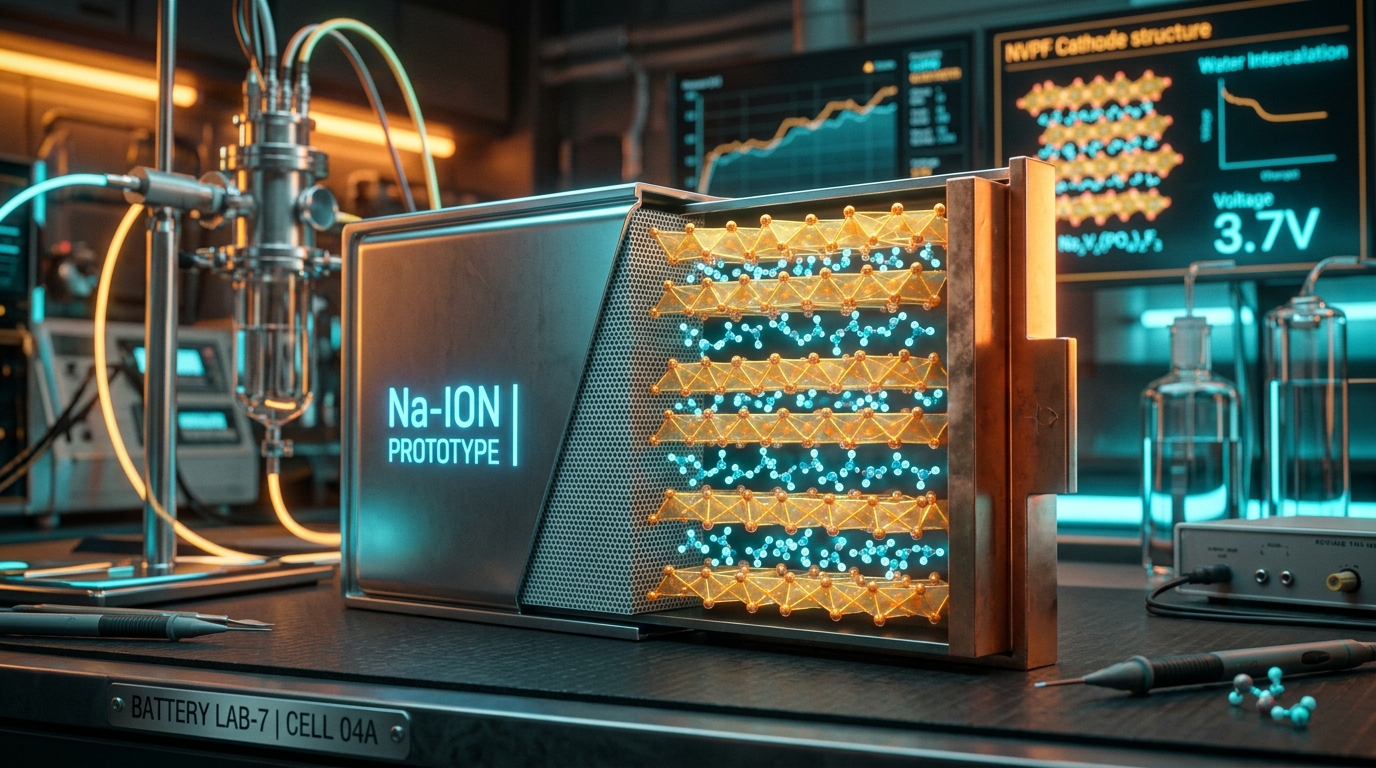
The Ultimate Battery Paradox: Surrey Engineers Discover Leaving Water Inside Sodium Batteries Doubles Their Power
For decades, battery manufacturers treated water like literal poison. Now, materials scientists at the University of Surrey have proven that trapping water molecules inside sodium battery cathodes acts like an atomic superhighway, nearly doubling energy output!

The 99% Power Discount: Penn State Fuses Synthetic DNA into Microchips to Cure AI's Energy Crisis
AI data centers are threatening to suck entire power grids dry. Penn State engineers had a wild idea: splice synthetic DNA doped with silver into perovskite semiconductors to slash memory power 100-fold!
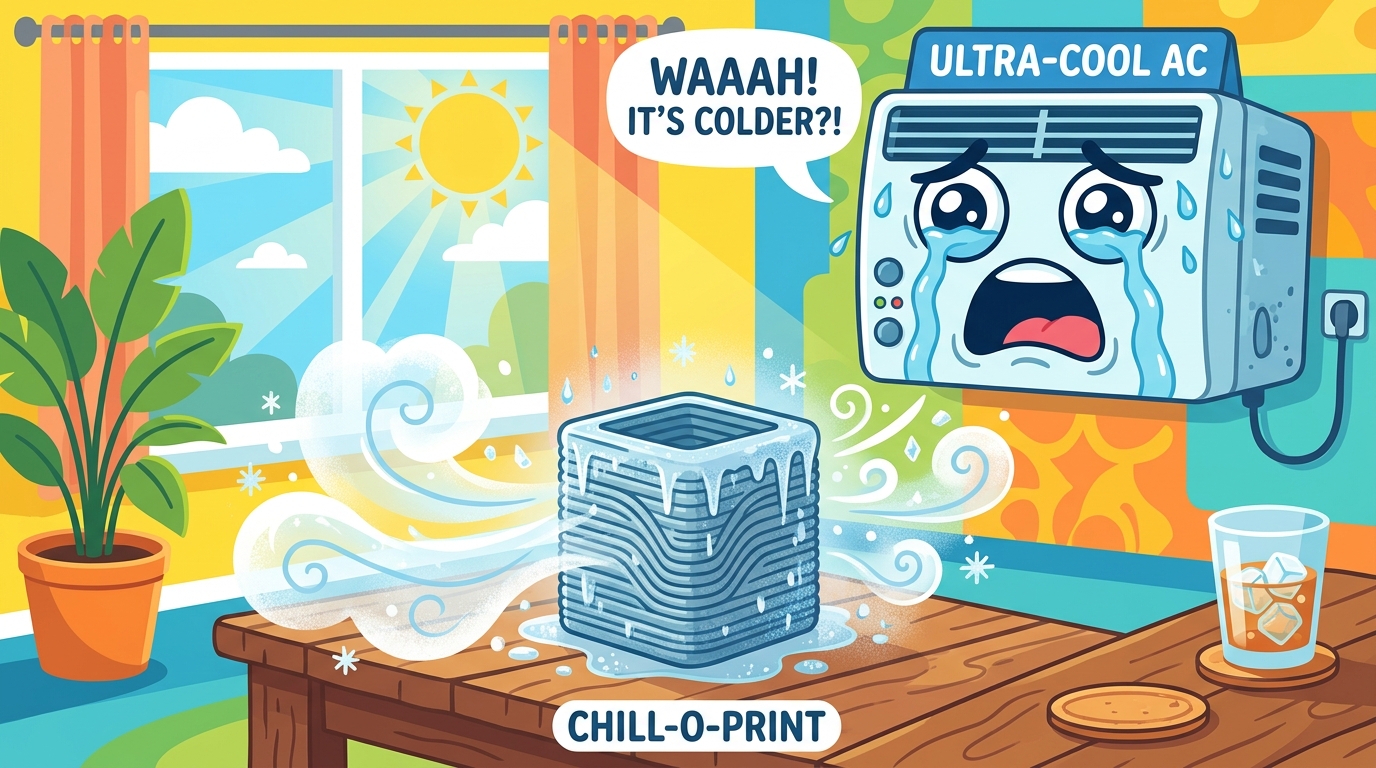
Austrian Engineers 3D-Print Zero-Power Clay Cubes That Chill Rooms by 7°C
Researchers at TU Graz combined clay, sawdust, and fungal mycelium to 3D-print high-tech evaporative cooling blocks that drop indoor temperatures by 7°C without using a single watt of electricity.