Eat Magnets, Live Forever: How Chinese Scientists Gave Microscopic Worms a 43% Longevity Boost
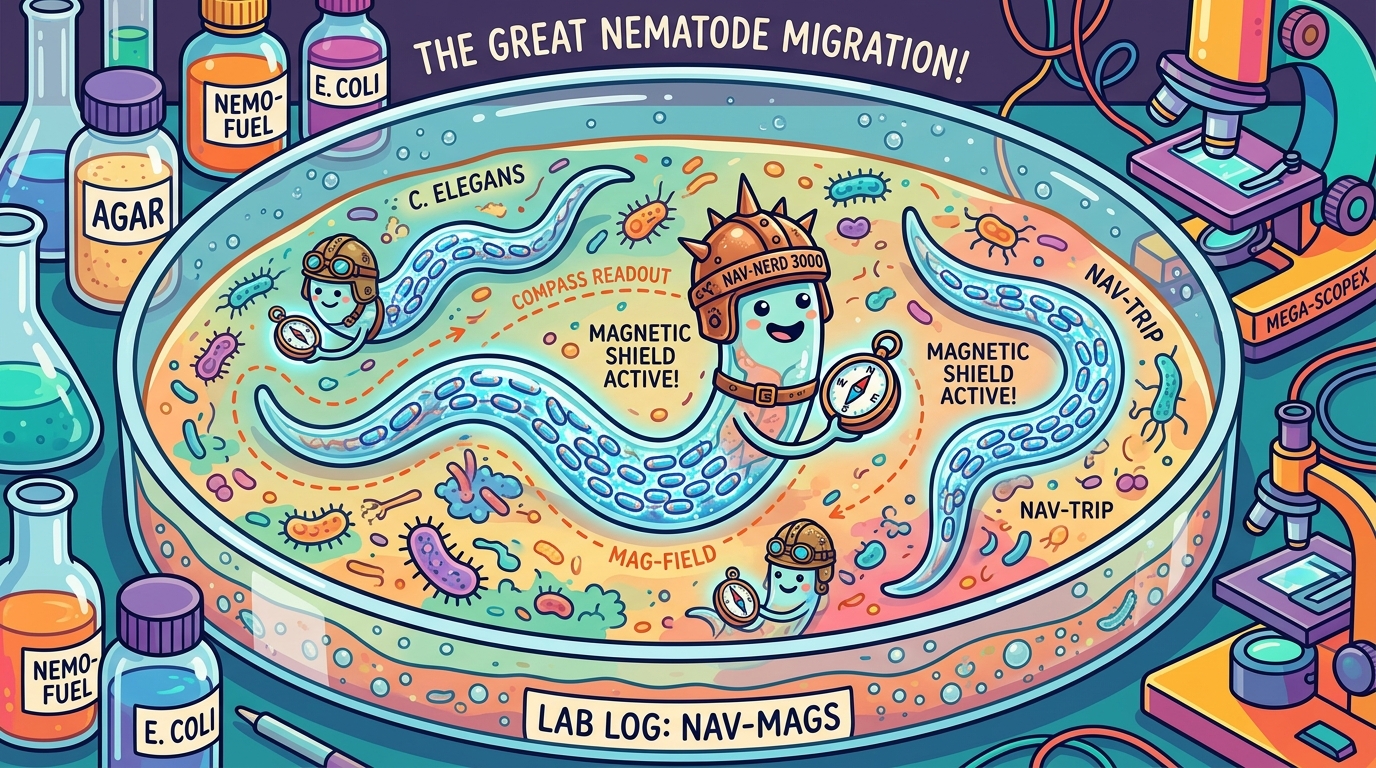
Silicon Valley tech billionaires spend millions of dollars transfusing teenage blood, popping experimental peptides, and sleeping in pressurized hyperbaric pods just to shave off an extra biological year. Meanwhile, humble millimeter-long roundworms are living 43% longer simply by munching on literal living magnets.
In an extraordinary study published in Free Radical Biology and Medicine, a research team led by Prof. An Xu at the Hefei Institutes of Physical Science, Chinese Academy of Sciences, revealed a bizarre new fountain of youth: feeding the model nematode Caenorhabditis elegans a diet fortified with Magnetospirillum magneticum AMB-1—a naturally occurring bacterium that synthesizes tiny magnetic iron crystals inside its body.
🧲 Inside the High-Tech Worm Buffet
How did turning a worm's digestive tract into a compass needle translate into a 43.39% lifespan extension? The mechanics come down to precision bio-cleanup:
- The 43% Jump: Worms fed AMB-1 enjoyed an astonishing 43.39% increase in average longevity compared to control groups snacking on plain laboratory E. coli.
- Youthful Agility: Ancient, geriatric worms on the magnetic diet didn't just survive; they retained crisp swimming locomotion, pristine neuromuscular reflexes, and intact intestinal barriers well into old age.
- The "Magnetome" Requirement: When scientists fed worms mutant strains of the same bacteria lacking functional magnetic crystals, the lifespan extension completely vanished. Magnetism wasn't a side effect—it was the active engine.
The secret weapon behind this microbial superpower is a direct strike against ferroptosis—a sinister form of programmed cell death driven by iron accumulation and toxic lipid peroxidation. As organisms grow older, loose ferrous iron (Fe²⁺) runs rampant in their tissues, sparking runaway oxidative reactions that shred cell membranes like rusty razor blades.
Enter Magnetospirillum magneticum. These cunning microbes pack specialized intracellular organelles known as magnetosomes—membrane-bound nanostructures filled with crystalline magnetite. When ingested by the worms, the bacteria act as living nano-vacuums, gobbling up unstable ferrous iron from the gut environment and locking it away into harmless magnetic crystals.
⚡ The Ferroptosis Shield: Biological Rust-Proofing
Instead of relying on fragile antioxidant vitamins that oxidize before doing any good, the magnetic bacteria provide mechanical, cellular rust prevention:
- Iron Sequestration: By locking loose iron into magnetic mineral cages, reactive oxygen species (ROS) levels plummet across all major tissues.
- Membrane Preservation: With lipid peroxidation halted, vital intestinal cell membranes remain resilient, preventing leakiness and age-related gut decay.
- No Free Radical Storms: The worms essentially gained an internal titanium coat, neutralizing cellular rust before it could even start.
Before you rush off to swallow a handful of refrigerator magnets with your morning coffee, scientists caution that humans are slightly more complex than a 1,000-cell nematode. But as researchers look toward the future of targeted probiotics and bioengineered micro-cleanup crews, one thing is certain: the future of anti-aging might not be found in expensive serums, but in miniature microbes sporting built-in magnetic navigation systems.
You might also like
The Great Molecular Arm Wrestle: Why the 2026 Nobel Prize in Chemistry Won't Shake Your Right Hand
The 2026 Nobel Prize in Chemistry honors Henri B. Kagan and Kenso Soai for cracking homochirality—explaining how a microscopic nudge can cause one mirror-image molecule to mercilessly bully its twin out of existence.
Textbooks Were Wrong: Your Brain Is Actually Two Separate Organs Glued Together
A groundbreaking Stanford Medicine study published in Nature Neuroscience revealed that the human brain isn't a single master organ. It's actually two ancient nervous systems from totally different evolutionary origins that fused together like reluctant biological roommates.
Savannah Apothecary: Kenyan Elephant Moms Caught Chewing Herbal Remedies to Nurse Sick Calves
A landmark study in Kenya reveals that African elephants practice zoopharmacognosy by selecting 35 medicinal plants to treat illnesses—with mother elephants chewing bitter roots and mixing herbal extracts into milk for their ailing calves.