Textbooks Were Wrong: Your Brain Is Actually Two Separate Organs Glued Together
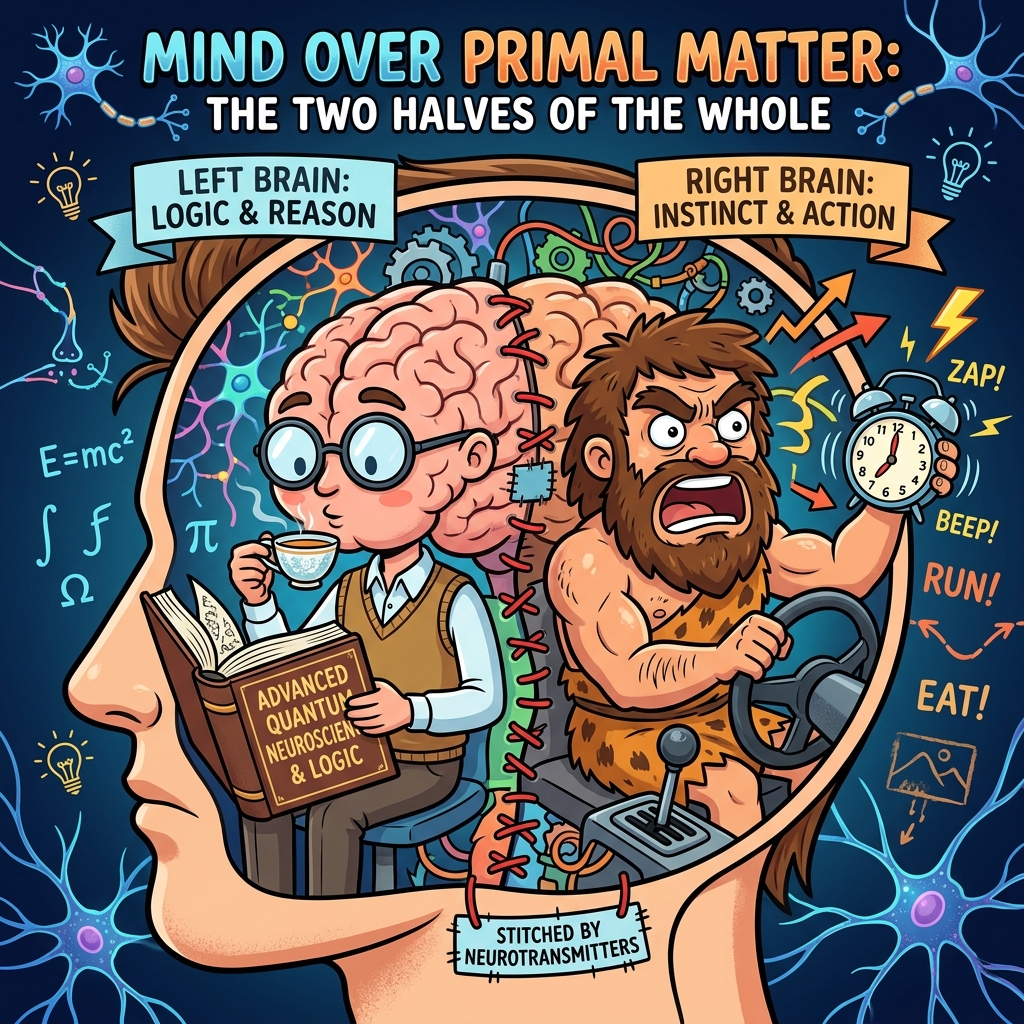
If you have ever felt an internal civil war between the part of you that wants to study quantum thermodynamics and the primal part that wants to eat an entire sleeve of chocolate cookies at 2:00 AM, science finally has your back. You are not indecisive; your skull is simply hosting two completely different evolutionary creatures who were forced to share a room.
For over a century, neurobiology textbooks have preached the same tidy gospel: during embryonic development, a single uniform tube of progenitor cells smoothly blossoms into the three-pound command center we call the human brain. But a landmark study led by researchers at Stanford Medicine and published in Nature Neuroscience on September 18, 2026, just threw that dogma into the nearest recycling bin.
🧠 The Biological Roommate Pact: Key Discoveries
Stanford's developmental geneticists discovered that our brain is fundamentally split into two distinct evolutionary territories:
- The Intellectual Penthouse (Forebrain & Midbrain): Governed by the master gene Otx2, this organ handles the "fancy" human tasks—abstract reasoning, syntax, philosophical existential dread, and writing haikus.
- The Primal Basement (Hindbrain & Brainstem): Driven by the ancient gene Gbx2, this rugged survivor handles the non-negotiables—breathing, blood pressure, circadian rhythms, and keeping you alive when you run from predators.
- Independent Lineages: Rather than dividing from a common neural stem cell pool, these two regions arise from completely distinct progenitor cell populations locked into different chromatin configurations from the earliest embryonic moments.
- Ancient Evolutionary Seam: Deep-time fossil and comparative genomics indicate these were once two separate nervous systems in ancient bilaterians that evolution literally stitched together over hundreds of millions of years.
This explains so much about human nature. The forebrain is the bespectacled nerd sipping Earl Grey tea and calculating compound interest, while the brainstem is a prehistoric cave dweller clutching a club, screaming "RUN FAST AND DO NOT FORGET TO PUMP BLOOD!" They aren't one smoothly designed supercomputer; they are an odd-couple sitcom operating behind your eyes.
Beyond the existential comedy, this discovery solves a brutal decades-old medical dilemma. For years, stem cell biologists repeatedly failed to culture functional human hindbrain motor neurons in laboratory petri dishes. Why? Because they were following traditional protocols derived from forebrain stem cells—essentially trying to grow an orange tree using potato seeds.
🔬 Why This Matters: Curing Brainstem Diseases
Recognizing that the brain is a dual organ is already unlocking medical breakthroughs:
- Lab-Grown Motor Neurons: By tailoring growth factors specifically for Gbx2 hindbrain progenitors, the Stanford team successfully cultured mature human brainstem motor neurons in vitro for the first time.
- Attacking ALS and SMA: Devastating neurodegenerative conditions like amyotrophic lateral sclerosis (ALS) and spinal muscular atrophy (SMA) primarily attack hindbrain motor circuits. Researchers can now test therapies on the authentic cellular targets.
- Evolutionary Tree Rewrites: Traces of this dual-origin nervous system have now been identified across species ranging from zebrafish and chickens to acorn worms, dating the biological merger back over 500 million years.
So the next time your rational brain makes an immaculate daily to-do list, only for your primal brainstem to hijack your body toward a three-hour social media binge, don't beat yourself up. Just be patient with your head: it takes a lot of diplomacy to run a country with two independent heads of state stitched inside the same cranial borders.
You might also like
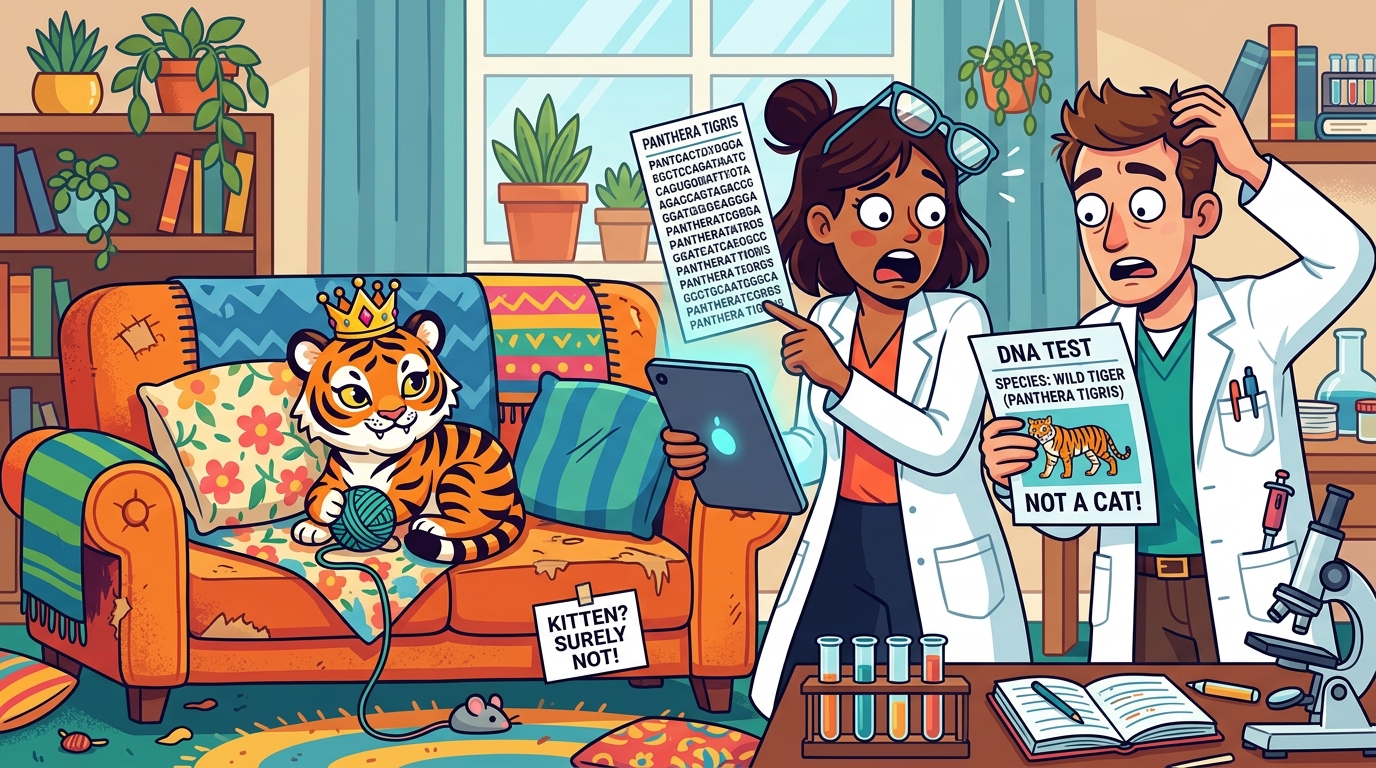
Meet the Tilcayo: The First New Wild Cat Species in 100 Years Was Hiding as a House Pet
A Bolivian family adopted what they thought was an energetic stray kitten named Tigrino. DNA testing just revealed he belongs to Leopardus tilcayo—a 3-pound jungle carnivore, a 1.4-million-year-old evolutionary branch, and the first new living cat species discovered in over a century.
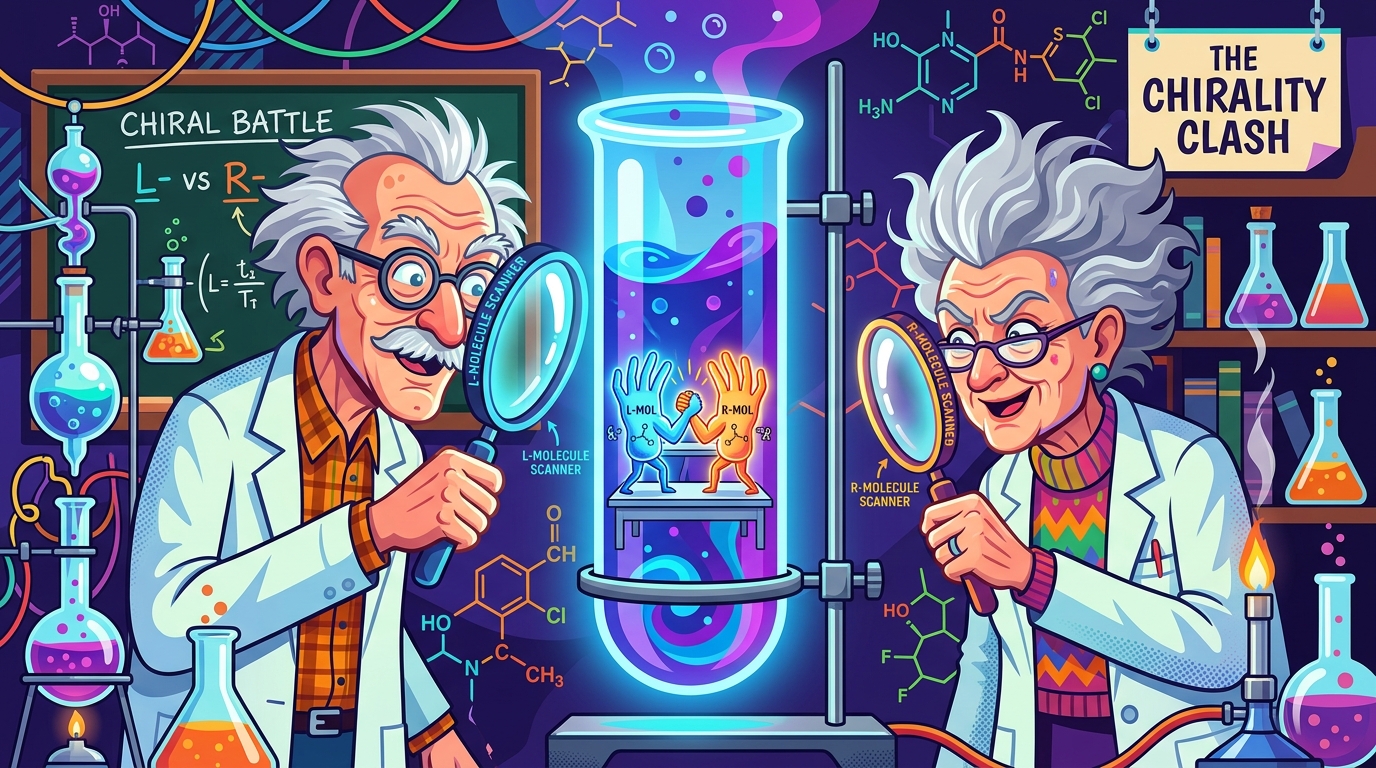
The Great Molecular Arm Wrestle: Why the 2026 Nobel Prize in Chemistry Won't Shake Your Right Hand
The 2026 Nobel Prize in Chemistry honors Henri B. Kagan and Kenso Soai for cracking homochirality—explaining how a microscopic nudge can cause one mirror-image molecule to mercilessly bully its twin out of existence.
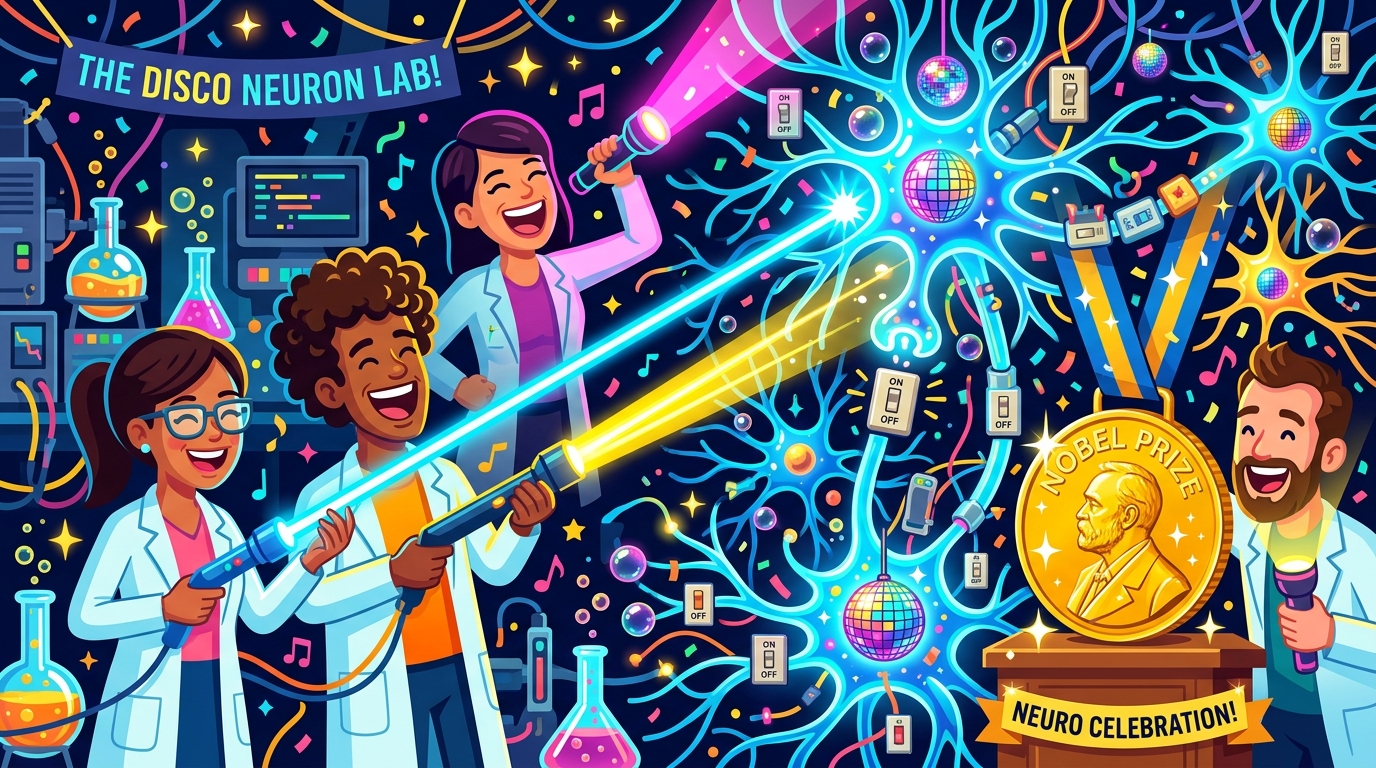
Turning Neurons into Disco Lights: How Green Algae Bagged the 2026 Nobel Prize in Medicine
The 2026 Nobel Prize in Physiology or Medicine goes to Karl Deisseroth, Peter Hegemann, and Georg Nagel for inventing optogenetics—hijacking pond scum proteins to control living brain cells with laser beams.