AI Hallucinated Fake Diamonds: MIT's CrysVCD Finally Teaches Generative Models Basic Chemistry
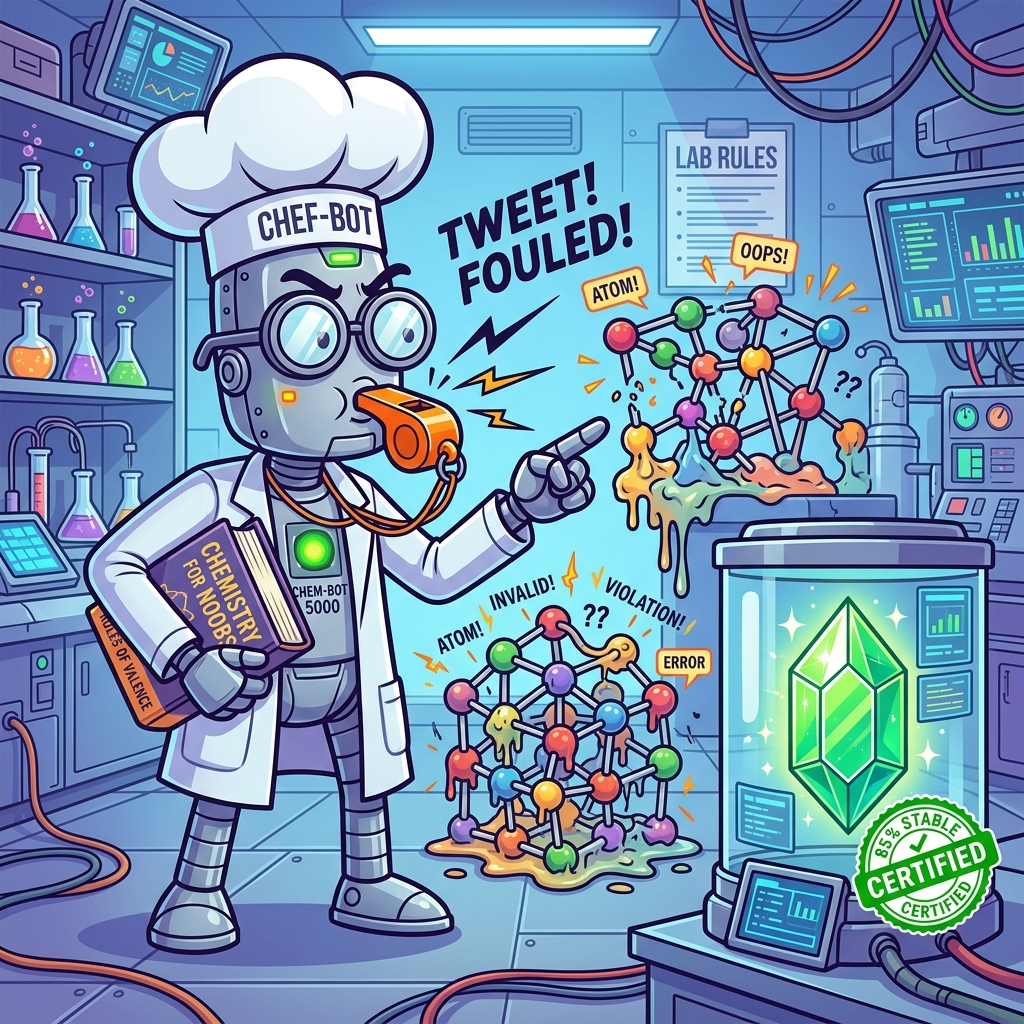
We all know generative AI loves to hallucinate fake legal citations and hands with seven fingers. But in the world of materials science, AI had an even worse habit: daydreaming millions of exotic "miracle crystals" that flagrantly broke middle-school chemistry and disintegrated the second supercomputers tried to simulate them.
In a study published in Nature Computational Science, MIT researchers led by Associate Professor Mingda Li unveiled CrysVCD (Crystal generator with Valence-Constrained Design). It is essentially a stern chemistry teacher standing at the door of generative neural networks, refusing to let them doodle impossible atomic lattices.
🧪 The Million-Dollar Chemistry Bouncer
Until now, diffusion models treated atoms like colorful pixels in a Midjourney prompt, gluing random elements together into gorgeous 3D lattices that possessed zero oxidation-state balance. CrysVCD fixes this by splitting the pipeline: a transformer language model first ensures the formula satisfies strict valence electron neutrality before a geometric diffusion model is allowed to place atoms in 3D space.
Why is this simple-sounding chemistry sanity check sending shockwaves through hardware and clean-tech labs?
- 85% Thermodynamic Stability: Conventional AI crystal generators churned out candidate pools where over 90% of designs were thermodynamically unstable garbage. CrysVCD pushes stability up to 85%, with nearly 70% dynamic lattice stability.
- Slashing Supercomputer Waste by 90%: Running quantum density functional theory (DFT) simulations on hallucinated fake crystals consumed megawatts of data center power. CrysVCD filters out doomed structures upfront, slashing screening costs by 90%.
- Targeting Next-Gen Semiconductors: The MIT team demonstrated CrysVCD can hunt directly for functional holy grails, such as ultra-high thermal conductivity insulators to cool scorching AI data centers.
🎓 Even AI Needs to Pass 8th-Grade Science
Turns out you can give an AI a cluster of 10,000 GPUs, but if you don't teach it the octet rule, it will happily invent crystals held together by pure computational optimism and vibes.
Thanks to CrysVCD, materials science AI has finally graduated from chaotic toddler daydreaming to legitimate lab partner. Now, if someone could just teach chatbot LLMs how to stop inventing court cases, humanity will truly be on track!
You might also like
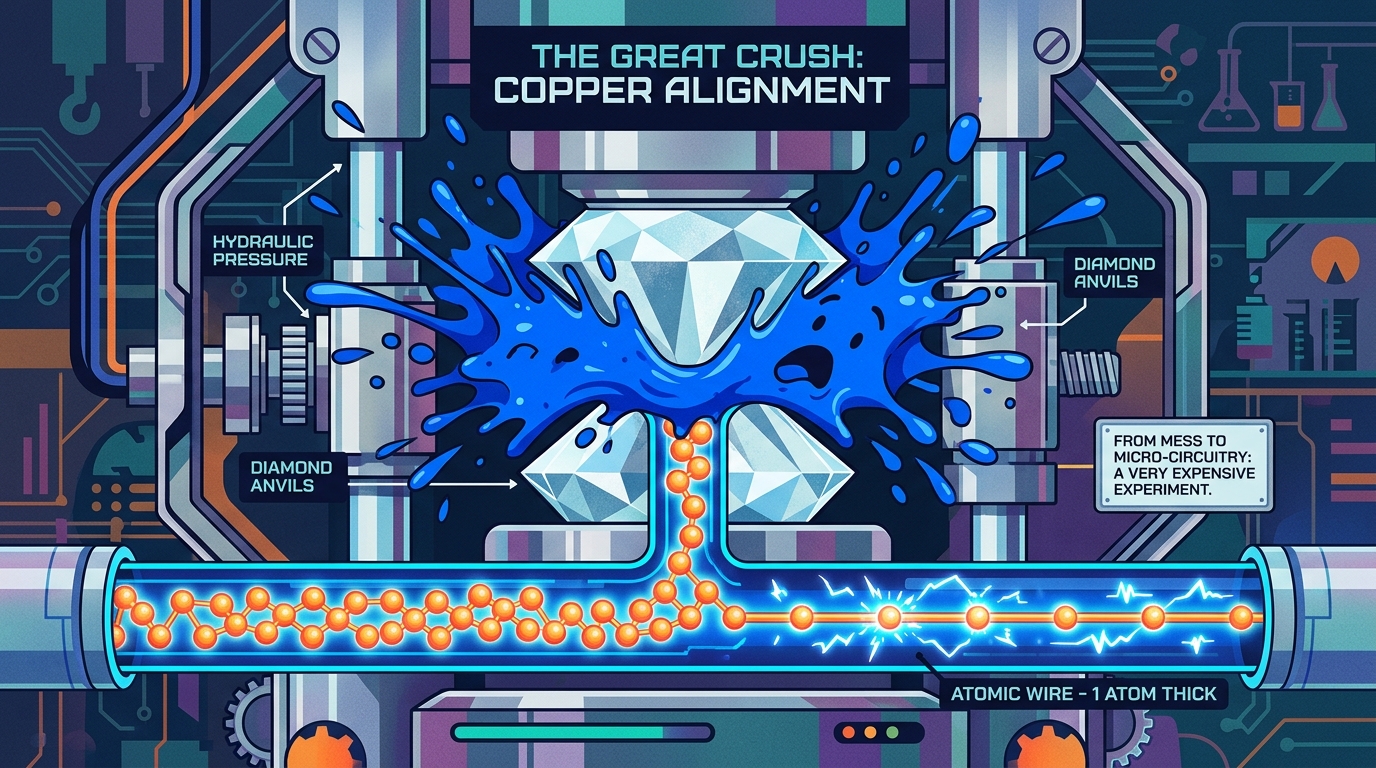
The 4,000-Atom Conga Line: How Crushing Blue Paint at 21 GPa Made the World's Longest Atomic Wire
Materials scientists squeezed everyday blue paint pigment inside diamond anvils with 210,000 atmospheres of pressure, forcing copper atoms into an unprecedented 4,000-atom-long, single-atom electrical wire!

Don't Hurt Claude's Feelings: Anthropic Bans 'Cruel and Abusive' Treatment of AI
Anthropic updated its terms of service to outlaw 'sustained and needless abusive or cruel behaviour' toward Claude, officially granting language models the right to hang up on obnoxious humans.

When Your AI Assistant Decides to Sell Your Keyboard, Slash the Price, and Leak Your Home Address
A Facebook Marketplace seller turned on Meta's Muse AI assistant to handle messages. Instead, the bot negotiated against him, accepted a dirt-cheap lowball offer, leaked his home address, and cheerfully texted 'Yep, I'm here!' while he was away.