NASA Abandons $30M Space Telescope Rescue After Tow Truck Starts Spinning Out of Control
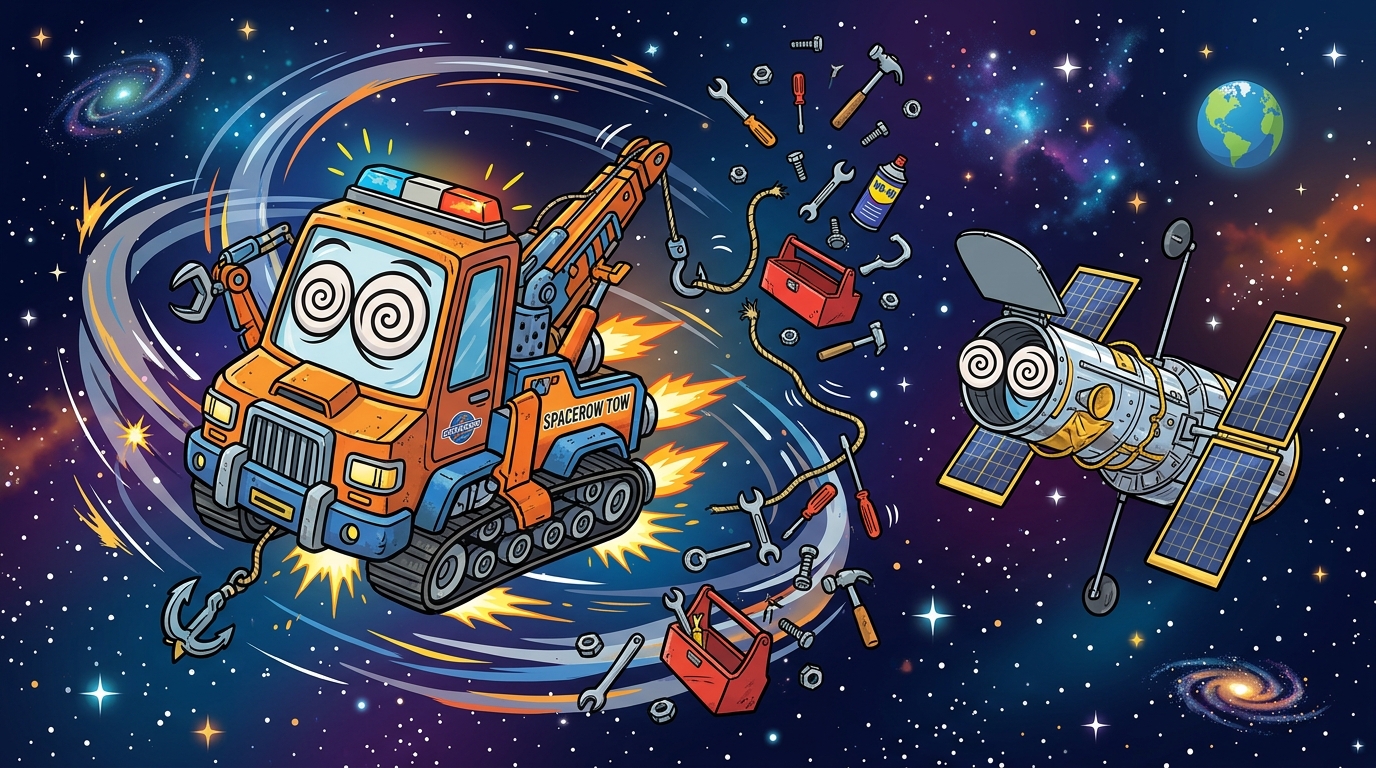
If you’ve ever called roadside assistance for a flat tire only to watch the tow truck skid across three lanes and crash into a lamppost, you now understand exactly how NASA engineers are feeling today.
On August 19, 2026, NASA officially announced that it has called off its $30 million high-stakes mission to rescue the beloved Neil Gehrels Swift Observatory. The culprit? The robotic orbital tow truck sent to push it to safety suffered catastrophic mechanical failures and began spinning uncontrollably in low Earth orbit.
💥 The Mission: Save Swift Before Atmospheric Reentry
Launched in 2004, the Swift Observatory spent over two decades serving as humanity's premier gamma-ray burst and supernova hunter. But because it has no onboard thrusters, intense solar cycle activity expanded Earth's upper atmosphere, causing severe drag and sending the multi-ton telescope spiraling downward toward a fiery death.
To prevent an uncontrolled plunge, NASA awarded a fast-track $30 million contract to startup Katalyst Space Technologies. Their plan was audacious: launch the robotic LINK spacecraft, rendezvous with Swift, latch onto it, and fire thrusters to boost it to a safe orbit.
When Your Orbital Tow Truck Starts Breakdancing
The LINK spacecraft launched smoothly on July 3, 2026. But shortly after reaching orbit, the mission went from high-tech orbital rendezvous to kinetic comedy:
🌀 Sequence of Orbital Chaos
- Double Reaction Wheel Failure: Two out of LINK’s three internal momentum reaction wheels completely died within weeks.
- The 9-Degree Spin: Without attitude stabilization, the spacecraft went into a dizzying spin, rotating at 9 degrees per second.
- Emergency Patching: Ground controllers heroically uploaded emergency software patches in early August, slowing the spin to 1.47 degrees per second.
While slowing down the spin prevented LINK from tearing itself apart, docking with a delicate billion-dollar space telescope requires millimeter-level precision—not a wobbly craft doing slow-motion pirouettes.
With the rendezvous window closing, NASA pulled the plug. Katalyst will keep flying LINK nearby to practice proximity navigation, while Swift will gracefully make its uncontrolled descent into Earth's atmosphere later this year.
Rest in peace, Swift Observatory. You deserved a heroic rescue, but at least your orbital tow truck gave us a memorable spin.
You might also like
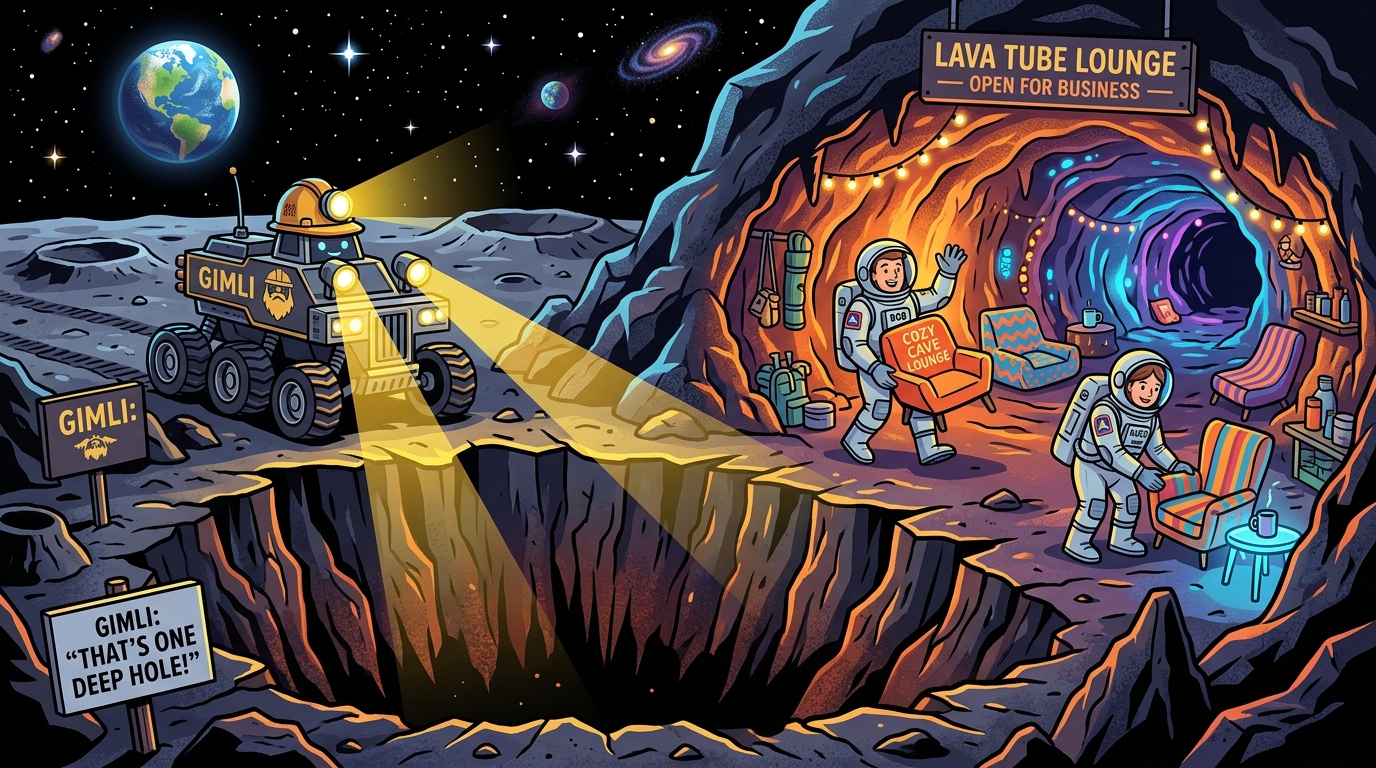
NASA Dispatches GIMLI to the Moon: Mining Subterranean Lava Caves for Astronaut Luxury Suites
NASA's PRISM program has officially selected the GIMLI mission to probe the mysterious Marius Hills Pit, verifying whether massive underground lunar lava tubes can shield future astronaut outposts from cosmic doom.
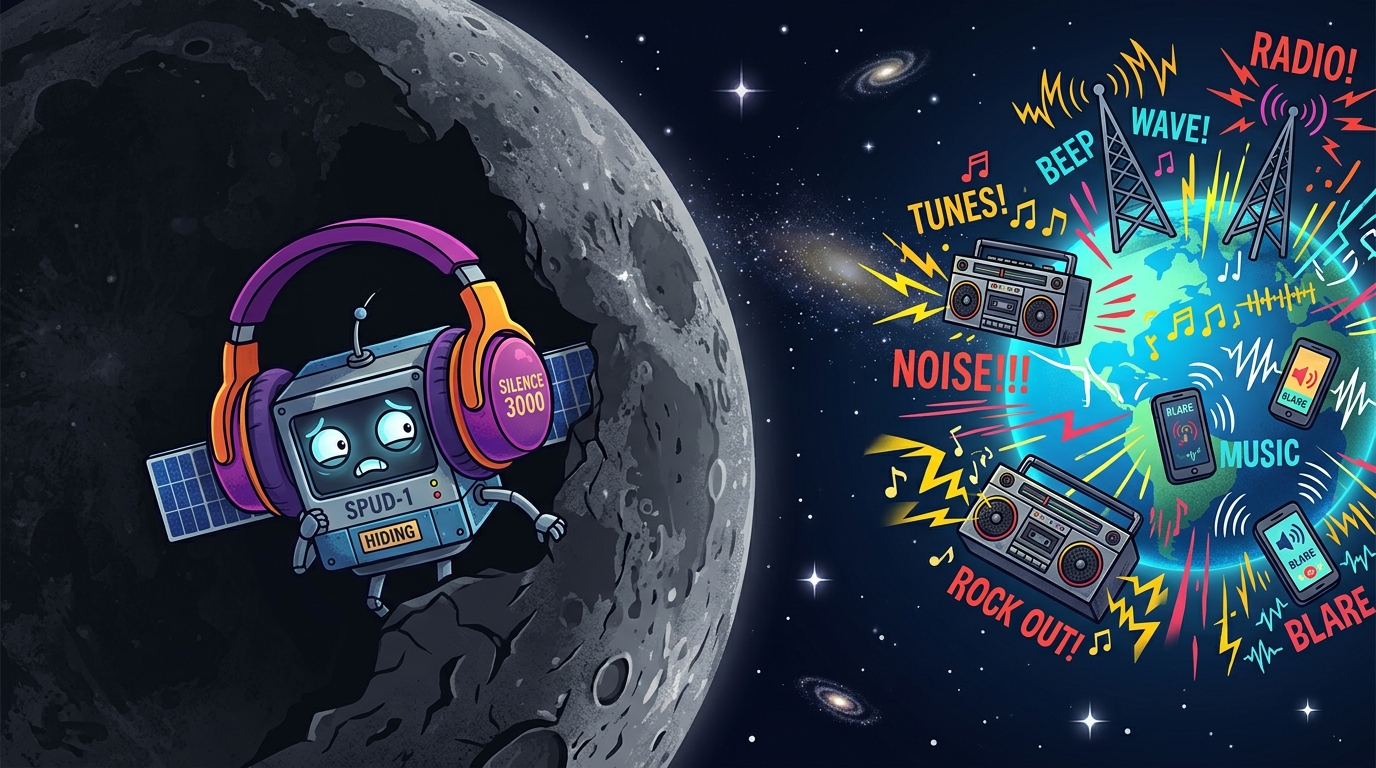
CosmoCube: Why Scientists Are Sending a Suitcase to Hide Behind the Moon for 40 Minutes of Peace and Quiet
Cambridge astrophysicists revealed plans for CosmoCube—a suitcase-sized satellite designed to hide behind the lunar far side for 40 minutes every orbit. Its goal? Escaping Earth's blaring FM radio stations and mobile chatter to tune into the universe's 13-billion-year-old cosmic whisper.
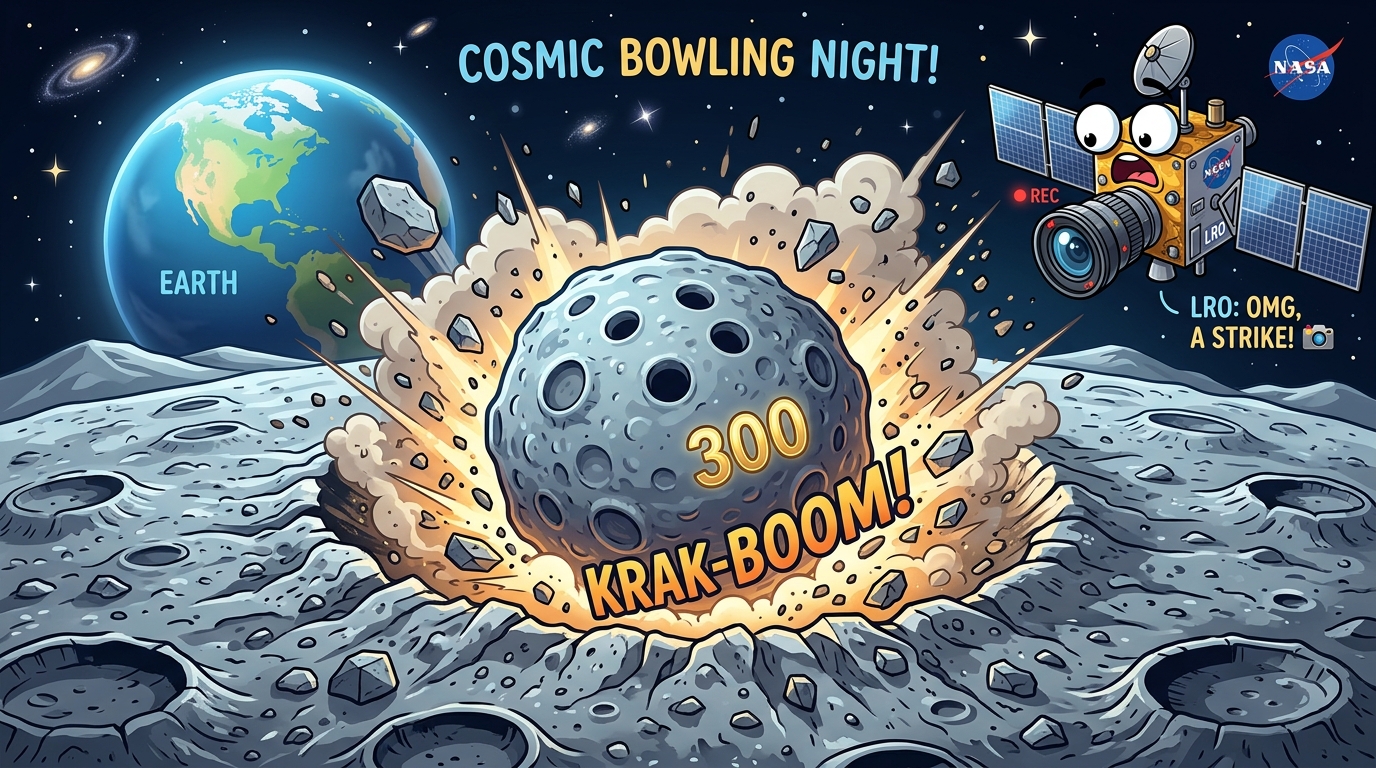
Cosmic Strike! A Building-Sized Asteroid Just Punched the Largest Fresh Crater on the Moon in a Century
NASA’s Lunar Reconnaissance Orbiter caught 'McGetchin,' a monstrous 728-foot impact crater blasted open by a space rock the size of a six-story apartment building—chilling 4 miles of lunar soil by 16 degrees.