Turning Neurons into Disco Lights: How Green Algae Bagged the 2026 Nobel Prize in Medicine
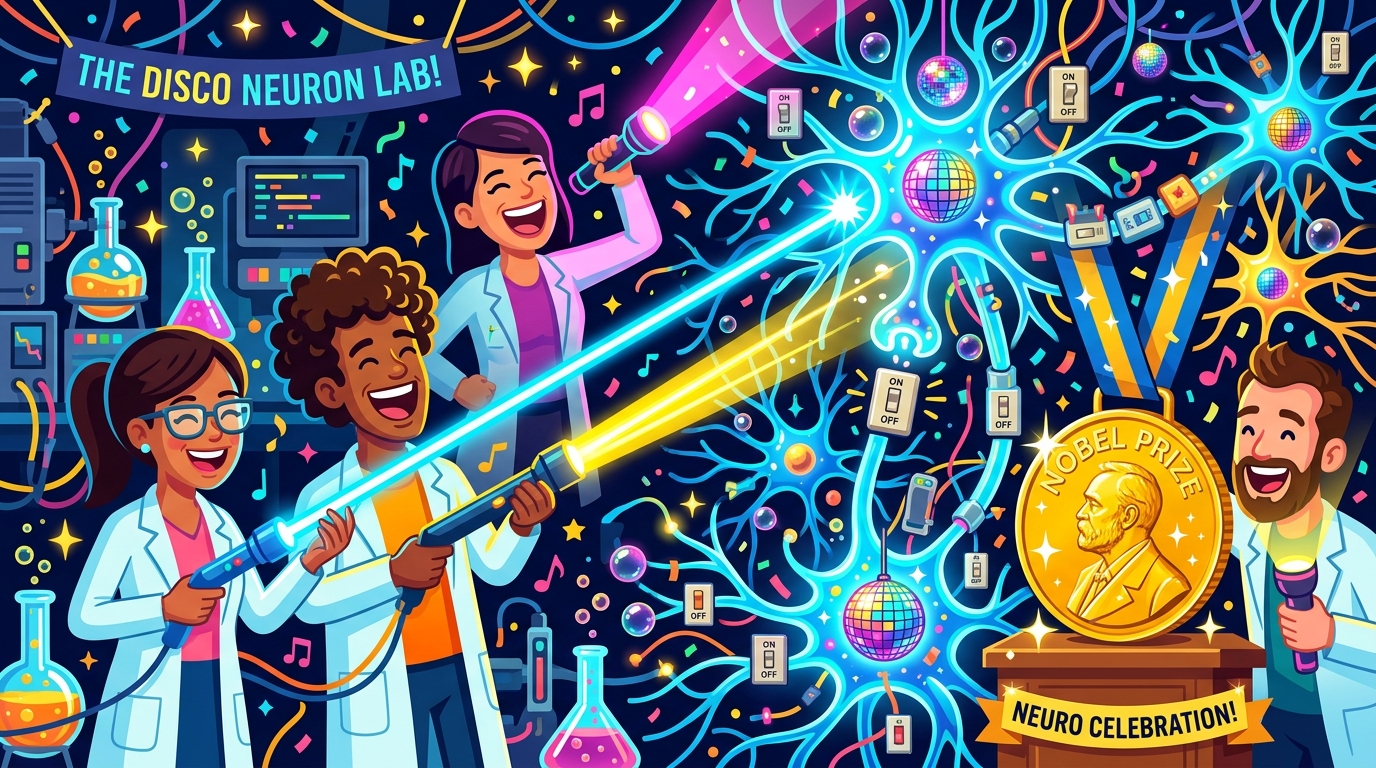
If you had told a 19th-century neurologist that the key to unlocking the human subconscious would come from pond slime and miniature fiber-optic disco lasers, they probably would have had you fitted for a straitjacket.
Yet on October 5, 2026, the Nobel Assembly at the Karolinska Institutet awarded the 2026 Nobel Prize in Physiology or Medicine to Karl Deisseroth (Stanford University), Peter Hegemann (Humboldt University of Berlin), and Georg Nagel (University of Würzburg) for doing precisely that. Their revolutionary field—optogenetics—literally turns biological brain cells into light switches, allowing researchers to flip individual neurons on and off with laser pointers.
🌿 From Pond Scum to Brain Surgery
Every great scientific breakthrough needs an unlikely hero. In optogenetics, that hero is Chlamydomonas reinhardtii, a humble single-celled green alga floating aimlessly in freshwater puddles:
- The Algal Eye: Back in the late 1990s and early 2000s, biophysicists Peter Hegemann and Georg Nagel discovered that these pond-dwelling algae navigate toward sunlight using light-sensitive ion channels called channelrhodopsins. When struck by blue light, the proteins snap open and conduct ions across the membrane.
- The Mad Scientist Spark: While most people would just see interesting algae biology, Karl Deisseroth and his team at Stanford saw a biological light switch waiting to be hacked into mammalian brains.
- Rewiring Neurons: By engineering harmless viruses to deliver the algal light-sensor genes directly into specific types of brain cells, Deisseroth managed to make mammalian neurons express channelrhodopsin. Shine a blue laser through an optical fiber? The neuron fires instantly. Switch off the light? It goes silent.
Before optogenetics, trying to understand neural circuitry was like attempting to fix a Swiss mechanical watch with a sledgehammer. Neuroscientists had electrodes, which stimulated every neuron within a millimeter radius like an indiscriminate electrical grenade, or drugs, which flooded the entire bloodstream and took minutes or hours to act.
With optogenetics, scientists suddenly gained millisecond-precision control over exact neuron subtypes. Want to know which fifty neurons trigger aggressive behavior in a mouse? Turn on the light. Want to silence an epileptic seizure before it spreads? Zap the inhibitory circuit with yellow light using halorhodopsin.
💡 12 Million Kronor for Rewiring the Mind
The trio will share the 12 million Swedish kronor ($1.15M USD) prize, cementing optogenetics as one of the most transformative biotechnological revolutions of the 21st century:
- Decoding Fear, Memory, and Addiction: Optogenetics has cracked open the neurobiological code behind Parkinson's disease, clinical depression, chronic pain, and post-traumatic stress disorder, letting researchers trace the exact synaptic highways of human emotion.
- Restoring Vision: Early clinical trials are already using optogenetic gene therapies to inject light-sensitive algal proteins directly into the retinas of blind patients, converting surviving retinal cells into functional artificial photoreceptors.
- The Ultimate Mind Control: While Hollywood loves dreaming up evil mind-control lasers, real neuroscientists are using them to figure out why we remember where we left our keys—and how to heal the brain when those circuits fail.
So next time you look at green pond scum, show some respect: it provided the biological firmware that just won the world's most prestigious science prize and taught our own brains how to dance under disco lights.
You might also like
The Great Molecular Arm Wrestle: Why the 2026 Nobel Prize in Chemistry Won't Shake Your Right Hand
The 2026 Nobel Prize in Chemistry honors Henri B. Kagan and Kenso Soai for cracking homochirality—explaining how a microscopic nudge can cause one mirror-image molecule to mercilessly bully its twin out of existence.

Fishing for Cosmic Ghosts at the South Pole: How a Giant Ice Cube Won the 2026 Nobel Prize in Physics
The 2026 Nobel Prize in Physics goes solely to Francis Halzen for melting 86 giant holes into two miles of Antarctic ice, turning the frozen continent into the world's weirdest telescope to catch elusive cosmic neutrinos.
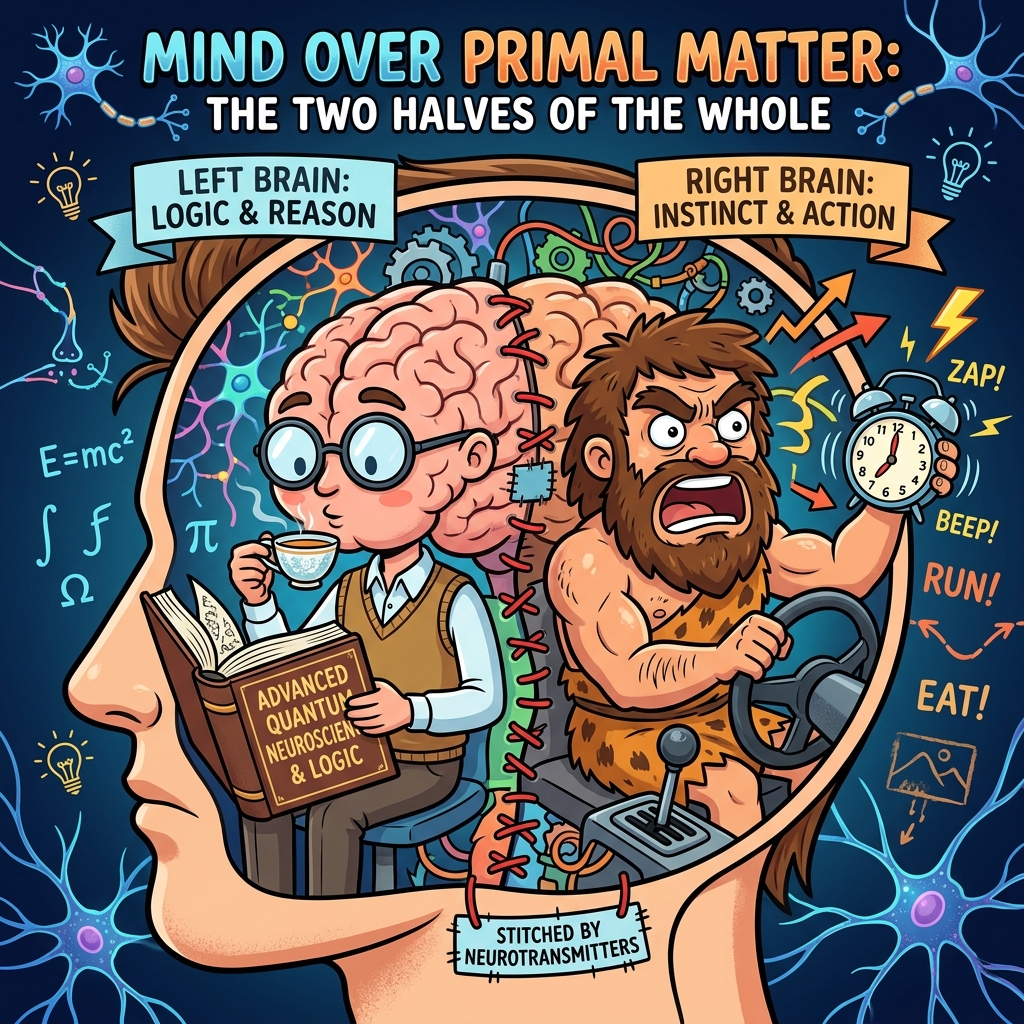
Textbooks Were Wrong: Your Brain Is Actually Two Separate Organs Glued Together
A groundbreaking Stanford Medicine study published in Nature Neuroscience revealed that the human brain isn't a single master organ. It's actually two ancient nervous systems from totally different evolutionary origins that fused together like reluctant biological roommates.