60,000-Year-Old Ostrich Eggs Prove Cavemen Invented Graphic Design Systems

Before there was Figma, Adobe Creative Cloud, or Canva, early humans were already obsessing over grid alignment, repeating pattern intervals, and visual hierarchy. They just used ostrich eggshells instead of OLED monitors.
According to a quantitative cognitive study led by the University of Bologna and published in PLOS ONE, 60,000-year-old engraved ostrich eggshell fragments recovered from archaeological sites in South Africa and Namibia display the world's earliest evidence of a structured "visual design grammar."
🥚 Wireframing on Water Canteens
Prehistoric humans used giant ostrich eggshells as portable water bottles. But rather than leaving them blank, engravers used stone tools to carve rule-based geometric patterns—including parallel hatchings, 90-degree grid intersections, and repeating rotational motifs.
The researchers analyzed 112 shell fragments and found that over 80% exhibited strict spatial regularities. The engravers didn't just scratch randomly while sitting around the campfire; they pre-planned the entire spatial layout in their minds before touching tool to shell.
🎨 Prehistoric Brand Identity?
Lead researcher Silvia Ferrara described the findings as a "visual grammar in embryo." These standardized geometric markings may have served as group identifiers, ownership tags, or symbolic communication systems across Middle Stone Age bands.
So the next time your design team argues over 8px grid systems or icon consistency, remember: humanity's passion for structured visual design isn't a modern tech trend—it's a 60,000-year-old human instinct carved into an eggshell.
You might also like

Seasoned for Eternity: Proteomics Reveals Ancient Egyptians Glued Mummies with Sesame and Moringa Seeds
A breakthrough proteomics study in Science Advances discovered that ancient Egyptian artisans didn't just use animal glue on sacred mummy masks—they whipped up high-tech adhesives spiced with sesame and moringa seeds.
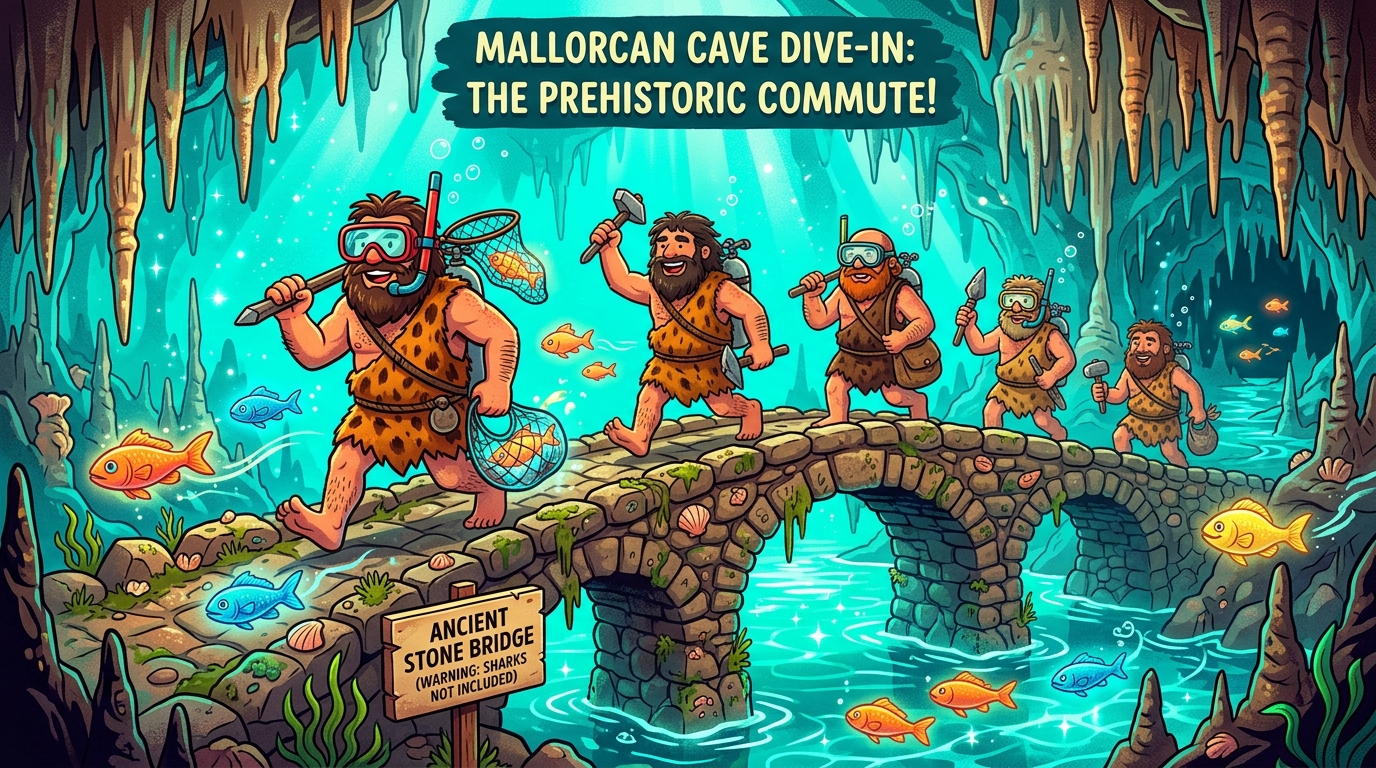
Submerged 6,000-Year-Old Stone Bridge in Spanish Cave Rewrites Mediterranean Human History
A 25-foot submerged limestone bridge in Mallorca's Genovesa Cave proves humans built sophisticated island infrastructure 6,000 years ago—a millennium earlier than textbooks claimed.

The Sickle and the Padlock: Scientists Solve the Tragic Mystery of Poland's 'Vampire' Zosia
When archaeologists in Pień uncovered the 17th-century grave of a young woman with a sharp iron sickle across her neck and a padlock on her big toe, sensational headlines screamed 'Vampire!' Now modern forensics revealed the heartbreaking truth behind the superstition.