The Sickle and the Padlock: Scientists Solve the Tragic Mystery of Poland's 'Vampire' Zosia
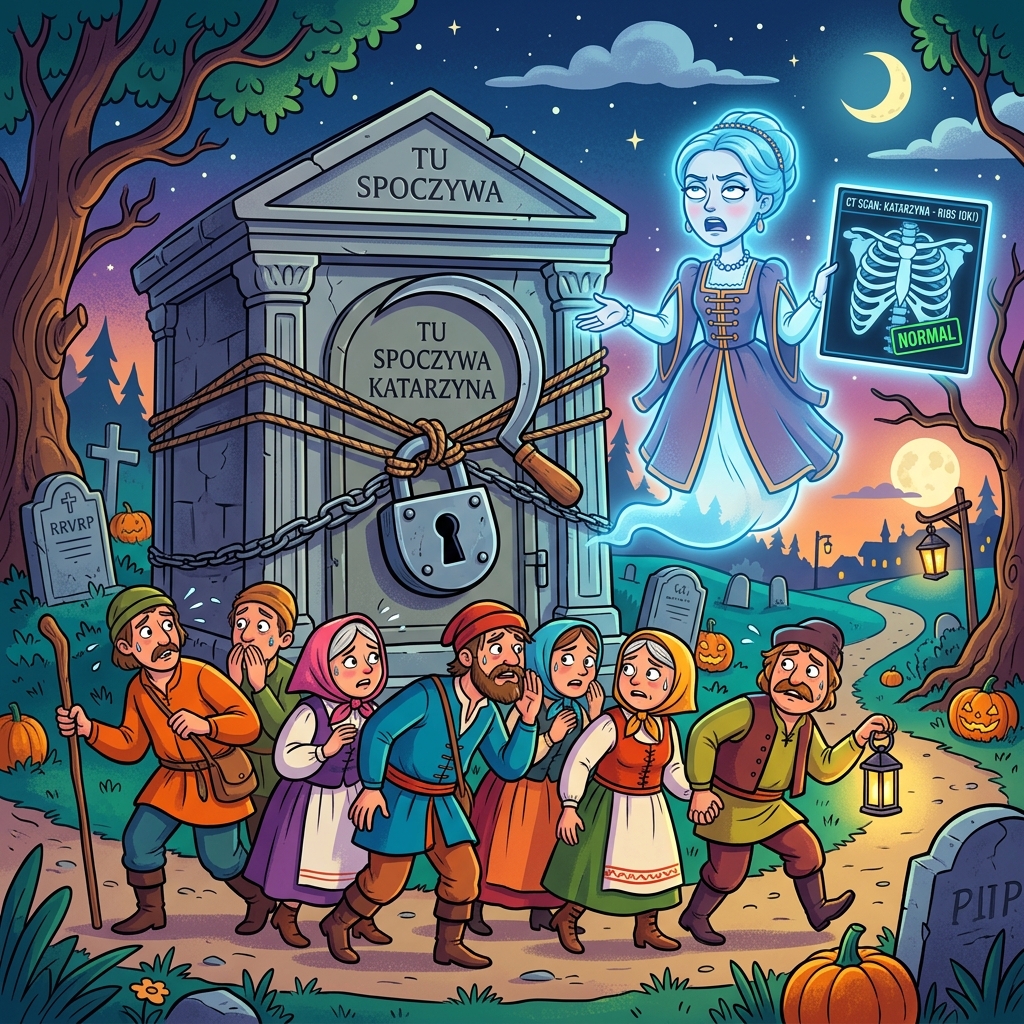
In 2022, an archaeological team digging in the quiet Polish village of Pień made an unsettling discovery that instantly ignited global headlines: the 350-year-old skeleton of a teenage noblewoman pinned into the earth with an iron sickle positioned directly over her neck and a triangular padlock clamped onto her left big toe. The medieval instructions were unmistakable: if she attempted to rise from the grave, the blade would decapitate her. But as modern medicine and forensic DNA just revealed, her only crime was suffering from a medical condition her superstitious neighbors couldn't comprehend.
Led by Professor Dariusz Poliński from Nicolaus Copernicus University in Toruń, a multidisciplinary team of archaeologists, anthropologists, and forensic reconstruction artists—including famed Swedish sculptor Oscar Nilsson—spent years piecing together the life, face, and tragic demise of the girl now known worldwide as "Zosia."
🩸 The Anatomy of 17th-Century Superstition
High-resolution CT scans and ancient DNA sequencing destroyed the "blood-sucking demon" tabloid myths:
- High-Status Origins: Zosia was buried with a fine silk headdress interwoven with silver threads, indicating she was a wealthy, high-status noblewoman, not an outcast peasant.
- The Hidden Tumor: CT scans of her sternum revealed a conspicuous bone lesion—a painful chest tumor (likely a hemangioma or chronic osteomyelitis) that would have caused severe physical pain, fainting spells, and breathing difficulties.
- Pale Skin & Chronic Illness: Her chronic chest pain and fainting spells were interpreted by 17th-century villagers as signs of demonic possession or vampiric thirst.
- Double Anti-Vampiric Insurance: The sickle over her throat was designed to cut her head off if she sat up, while the padlock on her toe symbolized the final closing of her earthly journey.
Poland during the mid-1600s was in the grip of the "Swedish Deluge"—a devastating era of war, famine, and outbreaks of plague. In small rural communities, unexpected deaths and lingering chronic illnesses were frequently blamed on the supernatural. When Zosia died around age 18 to 20, her grieving family paid for luxury burial attire, but her terrified neighbors insisted on grim anti-demonic insurance policies.
The forensic facial reconstruction by Oscar Nilsson strips away three centuries of gothic horror, revealing a delicate young woman with fair skin, blue eyes, and high cheekbones. Far from a monster, Zosia was simply an unwell teenager who lived at the wrong time in history.
🔒 Medieval WebMD Was Brutal
Today, if you have chest pains and look pale, a doctor prescribes medication and rest. In 1650, your neighbors looked at your symptom list and said: "Yep, definitely a creature of the night. Grab the sickle and the padlock, just in case."
Thanks to modern science, Zosia's story has finally shifted from a spooky campfire legend to a poignant reminder of how fear and ignorance once weaponized disease against the vulnerable. Her padlock has finally been picked by the truth.
You might also like

Submerged 6,000-Year-Old Stone Bridge in Spanish Cave Rewrites Mediterranean Human History
A 25-foot submerged limestone bridge in Mallorca's Genovesa Cave proves humans built sophisticated island infrastructure 6,000 years ago—a millennium earlier than textbooks claimed.

Why Thousands of Ancient Skeletons Have Intact Brains: The Science of Accidental Bio-Plastics
Archaeologists have cataloged over 4,400 ancient human brains that survived for millennia while every other organ rotted away. A new molecular study reveals how wet decay turns neural tissue into indestructible biological polymers.
Catching a 300lb Boulder: Archaeologists Find First Verified Victim of the 'Warwolf' Trebuchet
Bioarchaeologists examining a 700-year-old skeleton from Stirling Castle found 167 brutal bone fractures—the first physical evidence of a direct hit from King Edward I's mega-trebuchet.