Why Baby Snakes Do the Twist: Embryos Forced into Clockwise Coils by Slower-Growing Guts
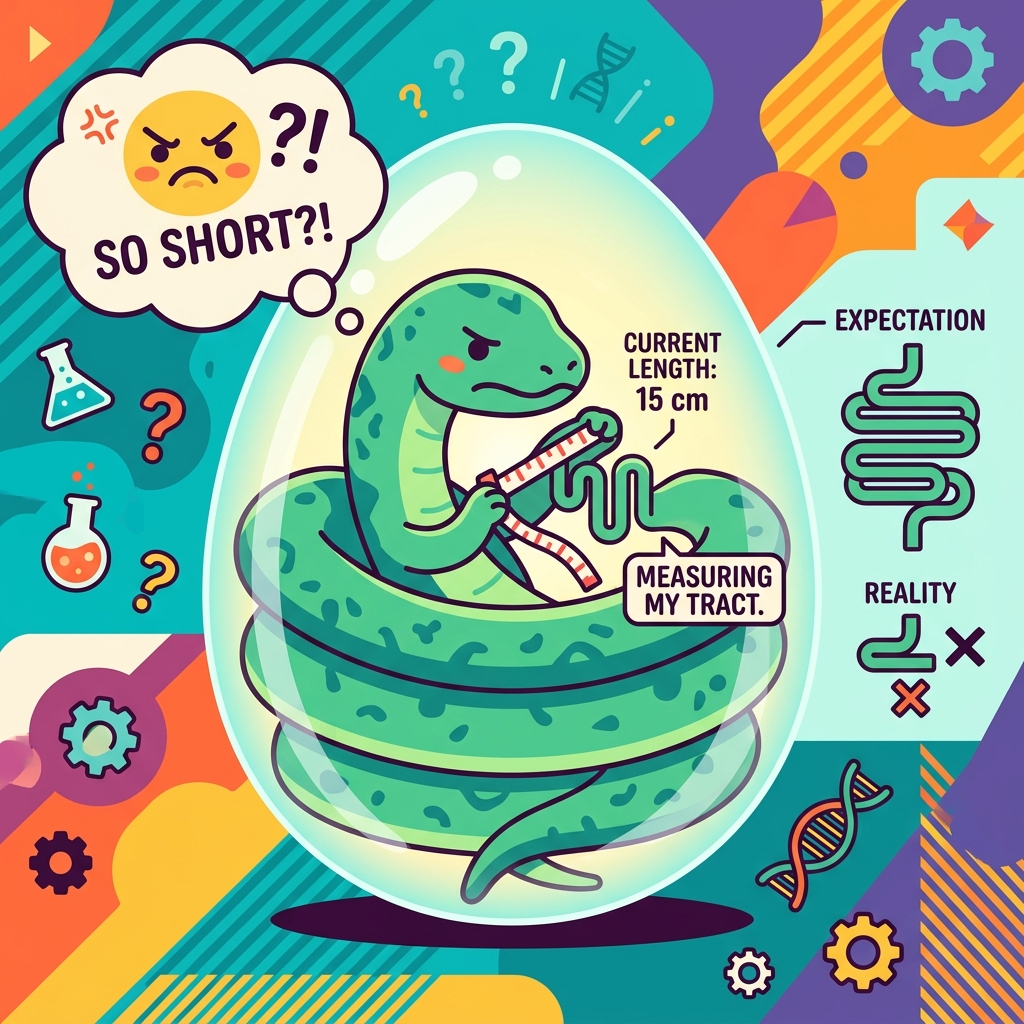
Have you ever tried stuffing a garden hose into a tight shoebox? Mother Nature faced the exact same packaging crisis when inventing snakes—and the secret trick baby snakes use to fit inside their eggs is a masterpiece of biomechanical acrobatics.
In a study published in Current Biology, an international research team led by Dr. Tetsuto Miyashita from the Canadian Museum of Nature examined over 900 embryos across 39 species of snakes and limbless reptiles. Using high-resolution CT imaging, the scientists solved a centuries-old biological riddle: why do snake embryos almost universally coil in a strict right-handed (clockwise) spiral?
🥚 The "Visceral Pillar" Tug-of-War
The mystery boils down to an evolutionary growth mismatch. Early in embryonic development, a baby snake's spine and body axis undergo explosive elongation, while its digestive tract grows far more slowly. This short, taut gut—dubbed the visceral pillar—acts as a rigid internal tether anchored to the underside of the embryo, forcing the rapidly lengthening body to buckle into a tight loop.
Why always to the right? The direction of the twist comes down to spatial geometry within the egg:
- Yolk Placement: In early snake embryos, the massive nutrient yolk is anchored asymmetrically on the left side of the developing body.
- The Path of Least Resistance: As the lengthening spinal column buckles against the taut gut tether, the physical presence of the yolk pushes the expanding body to veer rightward, generating a reliable, clockwise spiral.
- Mathematical Packing Efficiency: Without this precise mechanical buckling, a snake embryo would kink haphazardly or snap under compressive strain inside its shell. Coiling neatly like a clock spring allows the snake to pack maximum body length into minimum egg volume.
🐍 Nature's Ultimate Origami Hack
Rather than requiring complex genetic programming for every vertebra, evolution achieved perfect embryonic packing through pure physics—leveraging mechanical tension and uneven growth rates to fold a giant predator into a pocket-sized egg.
The next time you struggle to fold a fitted bedsheet, remember: even baby snakes need a mechanical growth-tether hack just to tuck themselves into bed!
You might also like
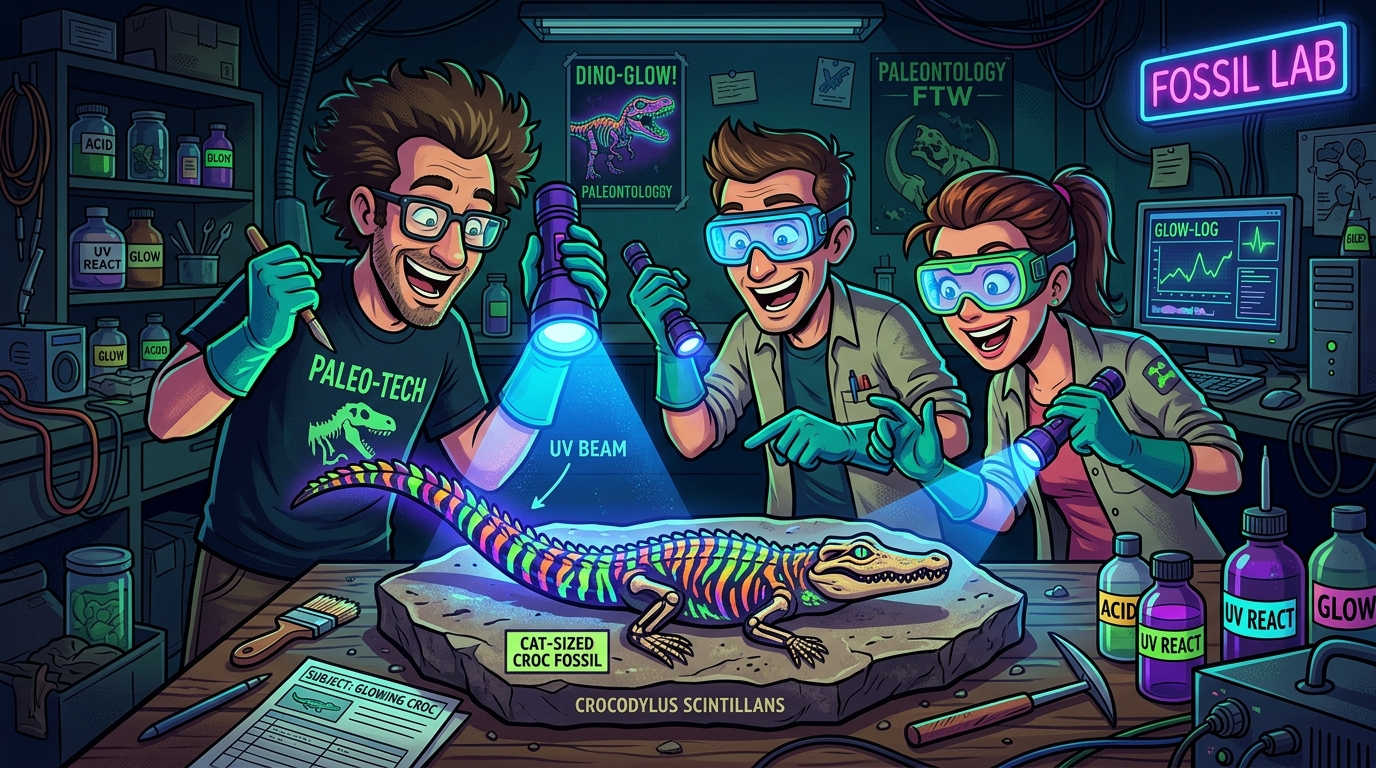
Jurassic Rave Party: UV Blacklight Reveals 125-Million-Year-Old Tiger Stripes on Cat-Sized Fossil Crocodile
Scientists shined an ultraviolet blacklight on a 125-million-year-old Spanish fossil and uncovered prehistoric tail stripes and hidden soft tissues, proving ancient miniature crocodiles rocked disruptive camo fashion long before humans did.
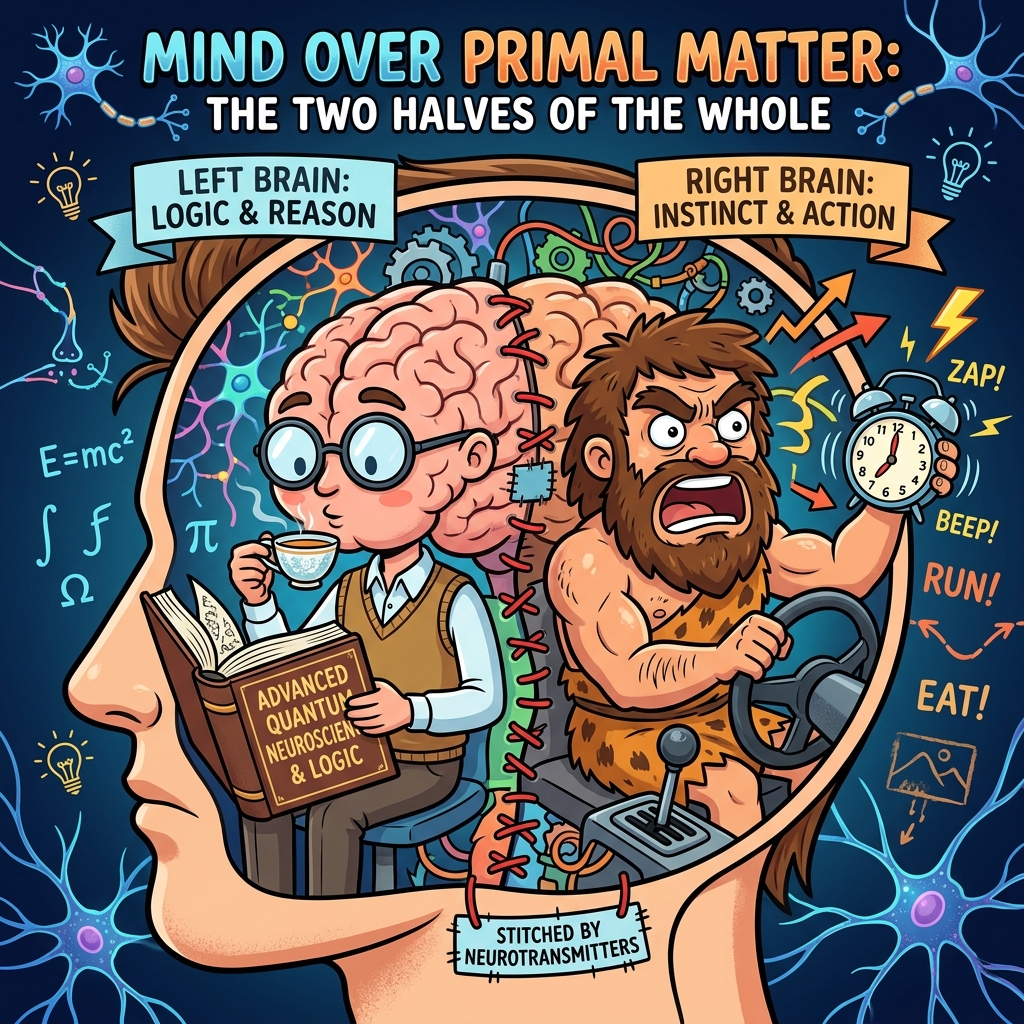
Textbooks Were Wrong: Your Brain Is Actually Two Separate Organs Glued Together
A groundbreaking Stanford Medicine study published in Nature Neuroscience revealed that the human brain isn't a single master organ. It's actually two ancient nervous systems from totally different evolutionary origins that fused together like reluctant biological roommates.
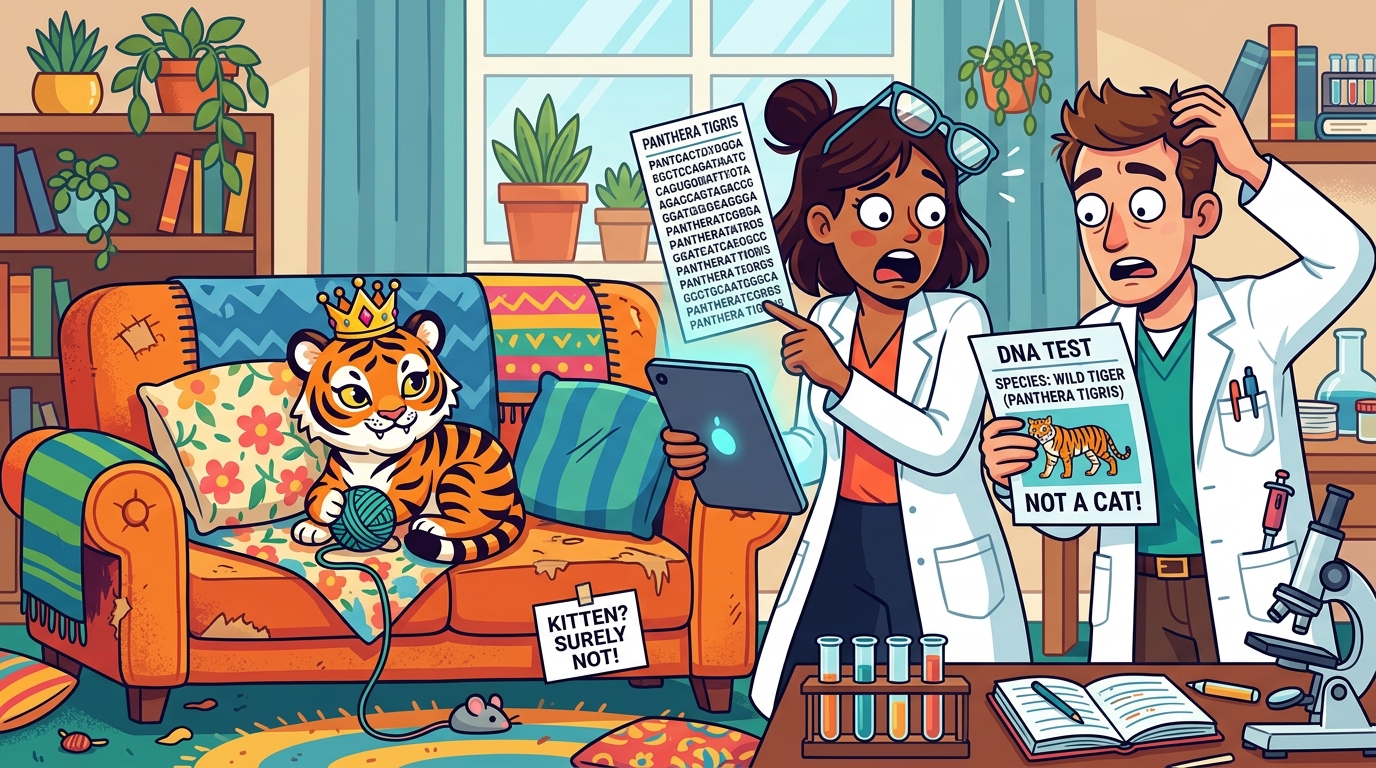
Meet the Tilcayo: The First New Wild Cat Species in 100 Years Was Hiding as a House Pet
A Bolivian family adopted what they thought was an energetic stray kitten named Tigrino. DNA testing just revealed he belongs to Leopardus tilcayo—a 3-pound jungle carnivore, a 1.4-million-year-old evolutionary branch, and the first new living cat species discovered in over a century.