AI Catches Rogue Supermassive Black Hole Wandering the Suburbs and Eating a Star
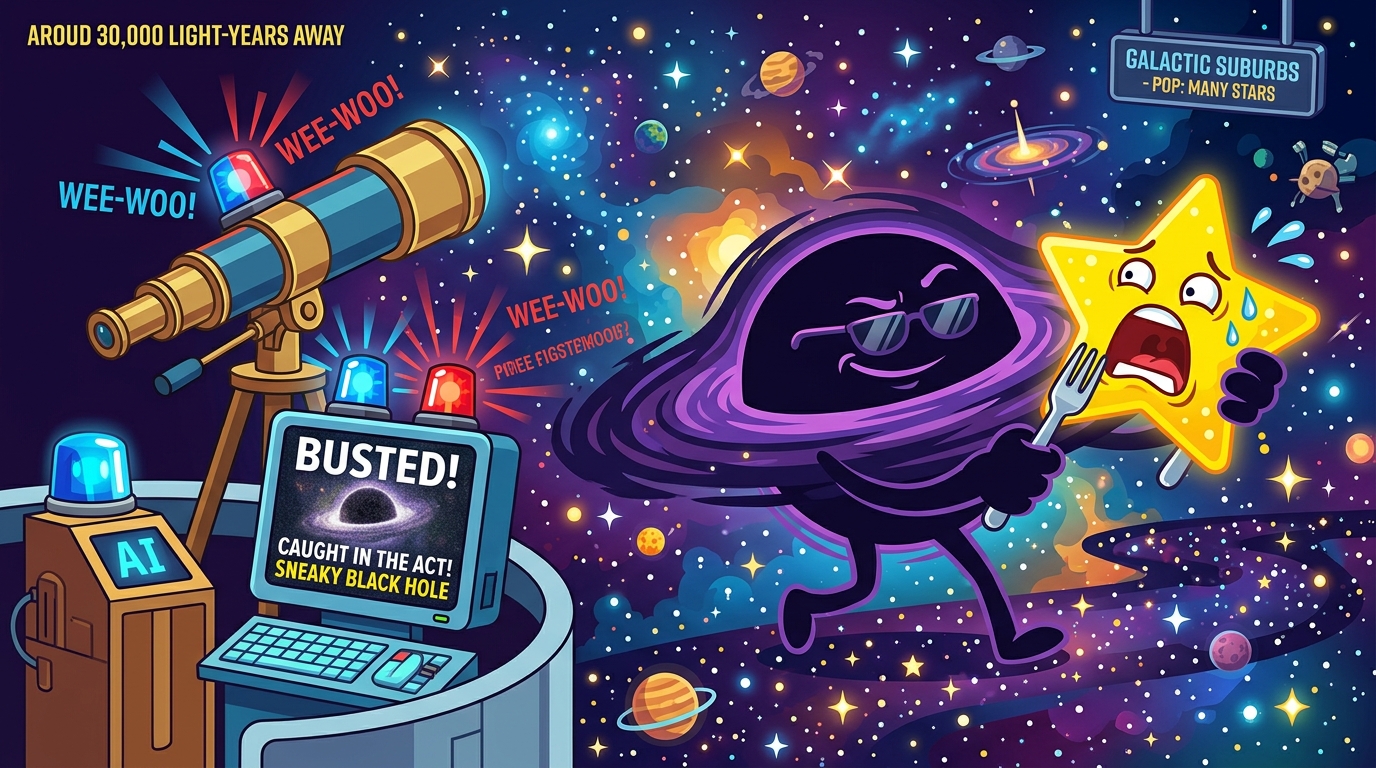
Most supermassive black holes behave like responsible anchors of cosmic civilization, sitting politely in the downtown core of their home galaxies. But astronomers have just busted a million-solar-mass rogue beast loitering 30,000 light-years away in the quiet galactic suburbs—caught red-handed only because it couldn't resist tearing apart an innocent star for a midnight snack.
Published in The Astrophysical Journal Letters, an international team of astrophysicists used an AI anomaly-detection algorithm to unmask TDE 2025abcr—the most distant offset Tidal Disruption Event (TDE) ever recorded. The cosmic crime scene occurred in galaxy WISEA J014656.04-152214.7, where a wandering supermassive black hole briefly outshone its entire host galaxy in ultraviolet light as it spaghettified a star.
🌌 30,000 Light-Years from Home: How Did It Get There?
To put this distance in perspective: 30,000 light-years is further than the distance between our Sun and the center of the Milky Way. Astrophysicists suspect this cosmic drifter was either the core of a dwarf galaxy cannibalized during a past galactic merger, or got slingshotted into the boonies by gravitational recoil following a chaotic three-way black hole dance.
What makes this discovery a watershed moment for observational astronomy?
- AI as a Cosmic Detective: Scanning petabytes of sky survey data, AI algorithms can now spot sudden optical and UV flares that human eyes would take months to sift through, alerting observatories like NASA’s Neil Gehrels Swift Telescope within hours.
- The Invisible Wandering Population: For decades, theoretical models suggested that millions of unanchored black holes wander invisibly through intergalactic space. Because they are completely dark until they feed, we could never prove how common they were.
- The Fate of the Star: When the doomed star crossed the black hole's tidal radius, extreme gravitational tidal forces stretched it into a stream of superheated plasma, with half the star's mass falling into an ultra-luminous accretion disk and the rest flung into deep space.
🔭 What Comes Next?
With next-generation survey facilities like the Vera C. Rubin Observatory and NASA's Roman Space Telescope coming online, astrophysicists expect AI systems to discover hundreds of wandering black holes caught in the act of stellar snacking.
So the next time you look up at a seemingly quiet corner of the night sky, remember: there might just be a million-sun vacuum cleaner lurking in the dark, waiting for an unsuspecting star to wander into its dining room!
You might also like
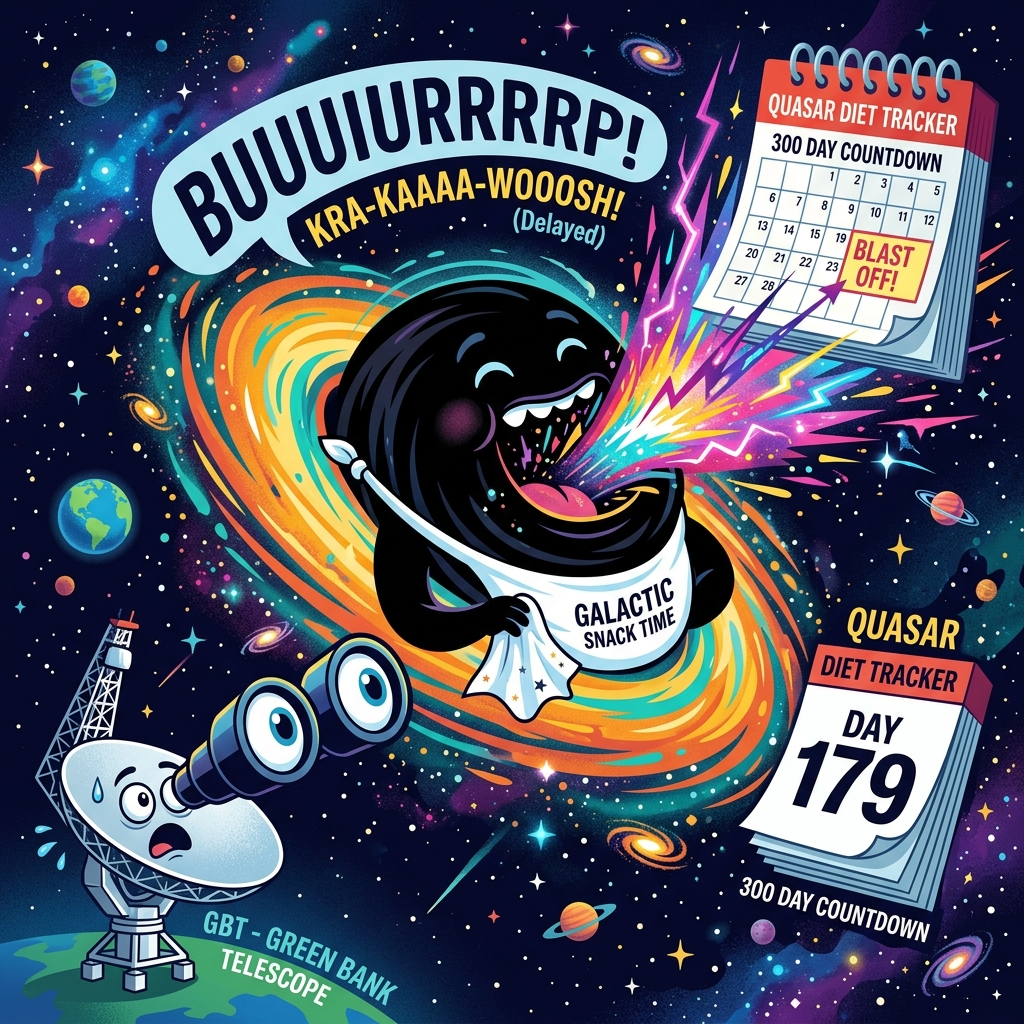
Cosmic Indigestion: Giant Black Hole Unleashes Delayed Radio Burp 300 Days After Feasting
Astronomers caught a monster 800-million-solar-mass black hole eating like a toddler: first it flashes an intense X-ray burp, and then 300 days later it finally fires out a relativistic radio jet cannonball.
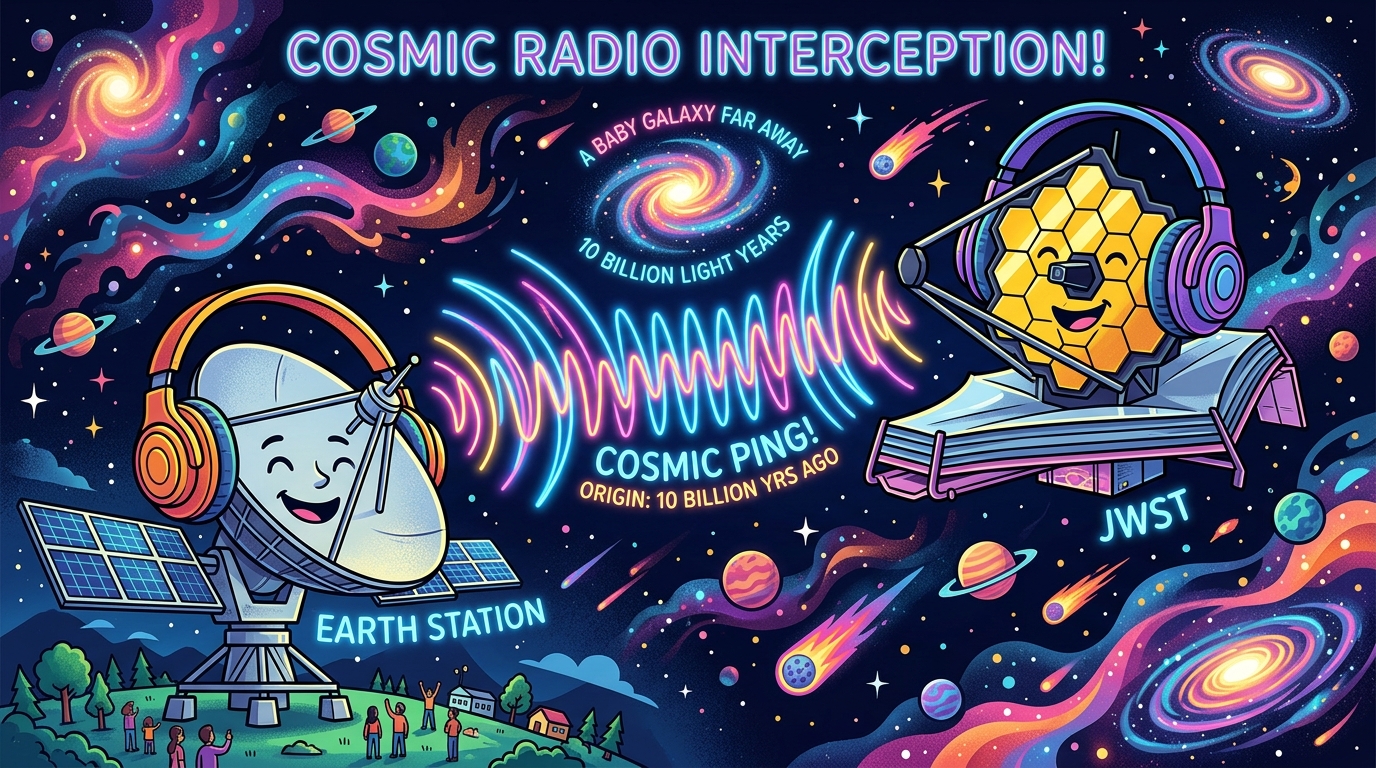
The 10-Billion-Year-Old Voicemail: Webb and MeerKAT Catch the Most Distant Radio Flash in Cosmic History
Astronomers have detected FRB 20240304B, a fast radio burst that traveled over 10 billion years across the universe, shattering cosmic distance records and proving ancient baby galaxies loved loud fireworks.
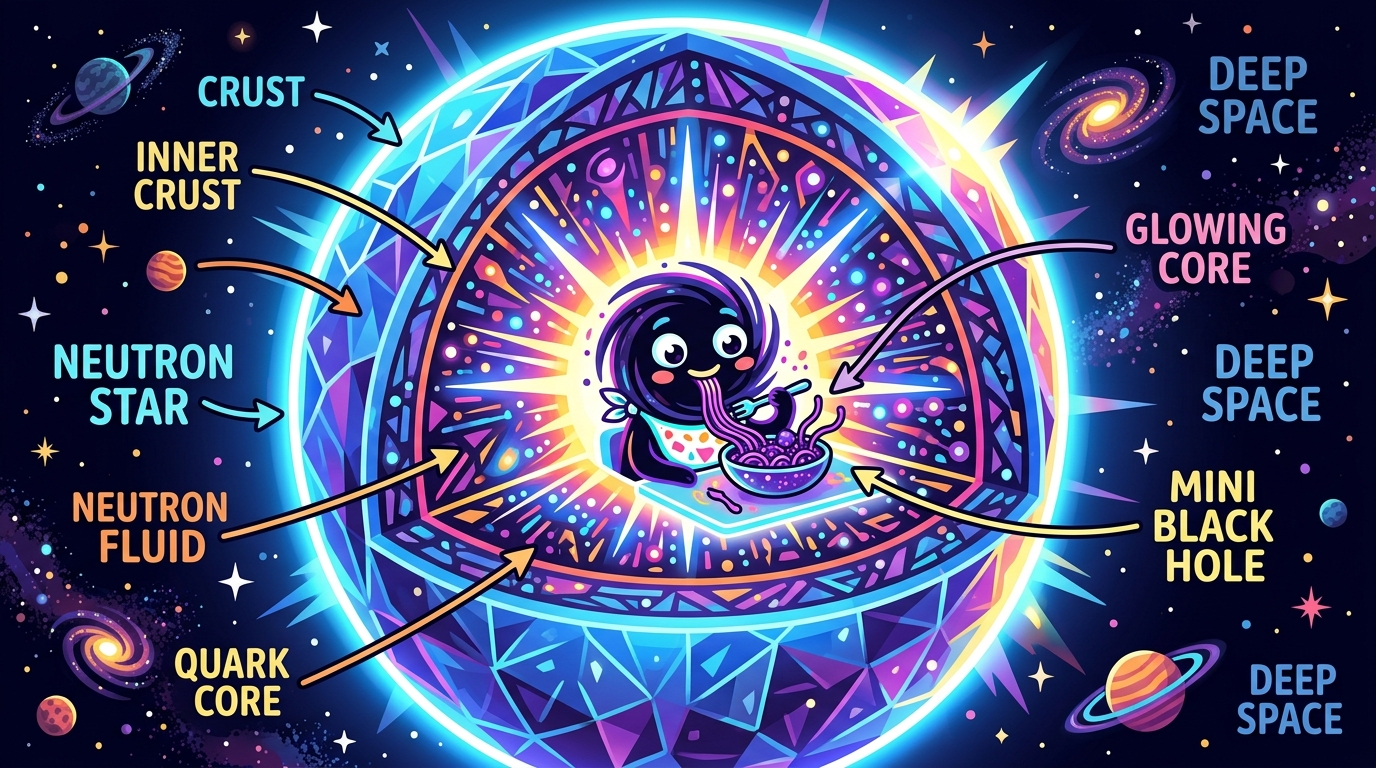
Cosmic Tapeworms: How 40-Ton Mini Black Holes Nest Inside Dead Stars and Gorge on Dark Matter
Theoretical physicists uncovered a bizarre astrophysical phenomenon: tiny 40-ton black holes could form inside dense neutron stars, surviving Hawking radiation by continuously devouring captured dark matter like celestial parasites!