Your Brain's Nightly Cleanup Has a Speed Limit: AI Maps Glymphatic Fast & Slow Lanes
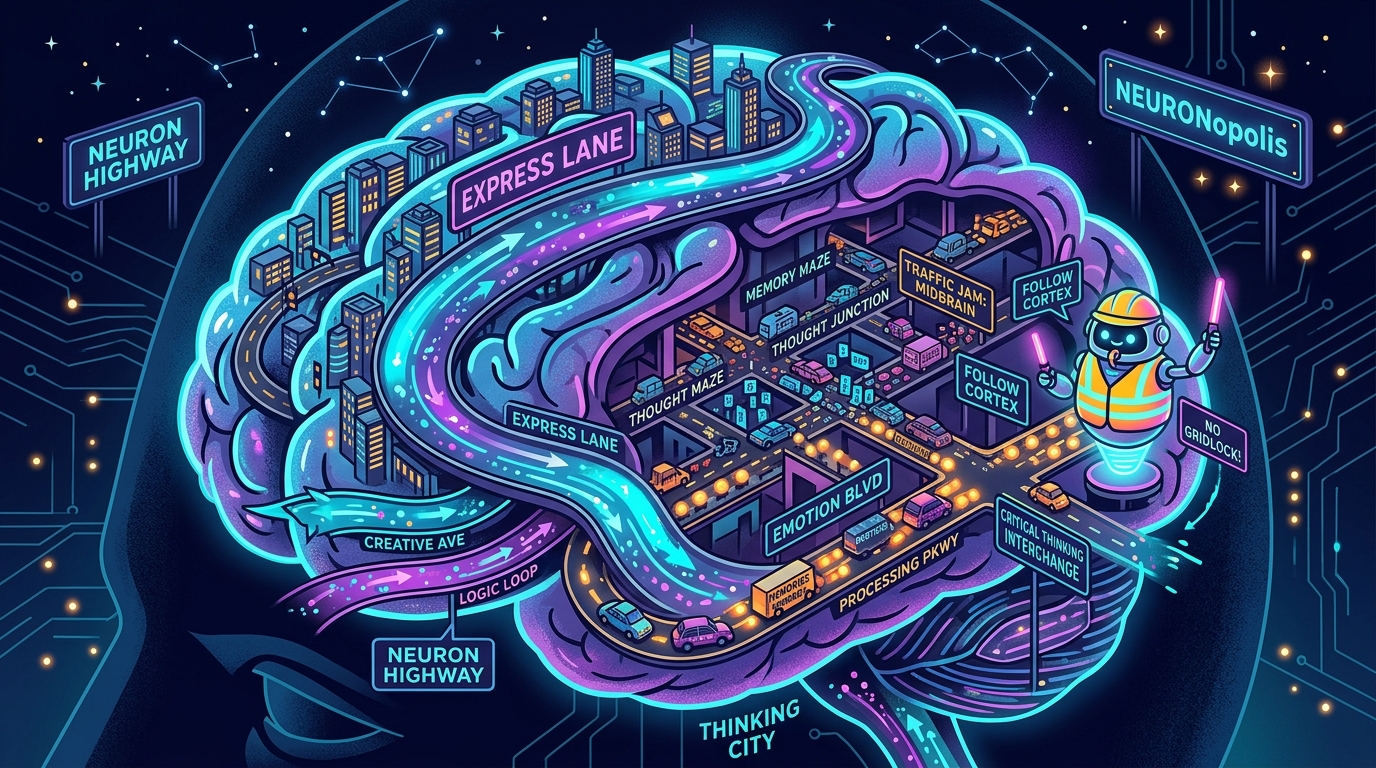
Ever wake up after a bad night of sleep feeling like your head is packed with wet cement? It turns out your intuition is surprisingly accurate. Your brain's nightly plumbing system literally has an express highway on top and a 50x gridlock zone deep inside.
In a breakthrough study published in the Proceedings of the National Academy of Sciences (PNAS), biomedical engineers from the University of Rochester combined high-resolution two-photon microscopy with physics-informed neural networks (PINNs) to create the first 3D velocity vector map of the brain's glymphatic system.
🧠 The Brain's Midnight Highway System
When you fall into deep, non-REM sleep, channels around blood vessels expand, allowing cerebrospinal fluid (CSF) to rush through and flush away metabolic waste like amyloid-beta and tau proteins. But until now, measuring how fast this fluid actually moves through microscopic brain crevices was virtually impossible without disturbing the tissue.
By embedding Navier-Stokes fluid mechanics directly into AI models, the researchers discovered a dramatic split in fluid speeds:
- The Outer Cortex Express Lane: CSF zips along large surface arteries at brisk speeds of several tens of micrometers per second.
- The Deep Parenchyma Gridlock: As fluid dives into deeper neural tissue, resistance surges and speeds plunge up to 50 times slower, transitioning into a slow percolation.
🛌 Why This Matters For Your Next Good Night's Sleep
Because deep tissue clearance is so sluggish, any microvascular stiffening from chronic sleep deprivation, aging, or hypertension turns that 50x slowdown into an outright blockage—allowing neurotoxic plaques to accumulate over decades.
So if you needed another excuse not to doomscroll until 3 AM, remember: your brain's internal street sweepers need hours of uninterrupted time to finish their deepest routes.
You might also like
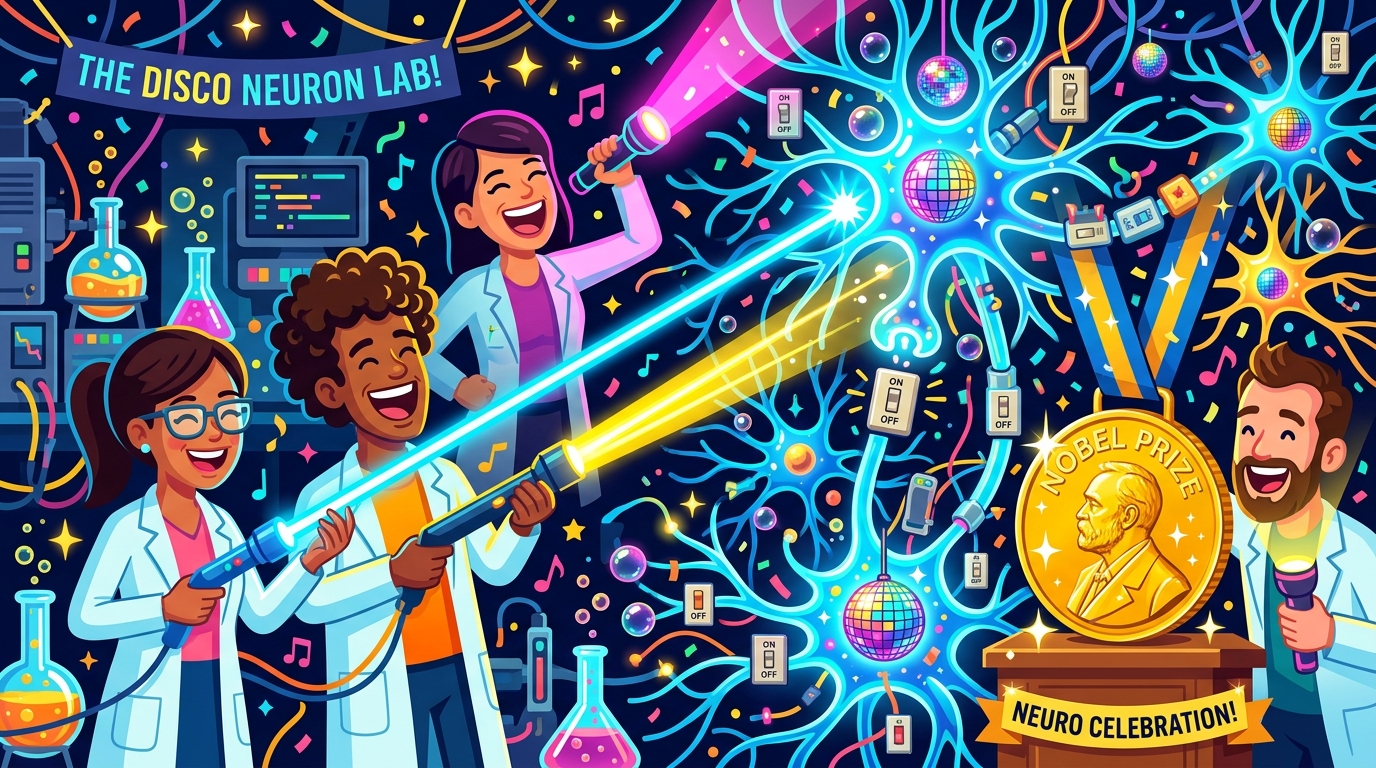
Turning Neurons into Disco Lights: How Green Algae Bagged the 2026 Nobel Prize in Medicine
The 2026 Nobel Prize in Physiology or Medicine goes to Karl Deisseroth, Peter Hegemann, and Georg Nagel for inventing optogenetics—hijacking pond scum proteins to control living brain cells with laser beams.
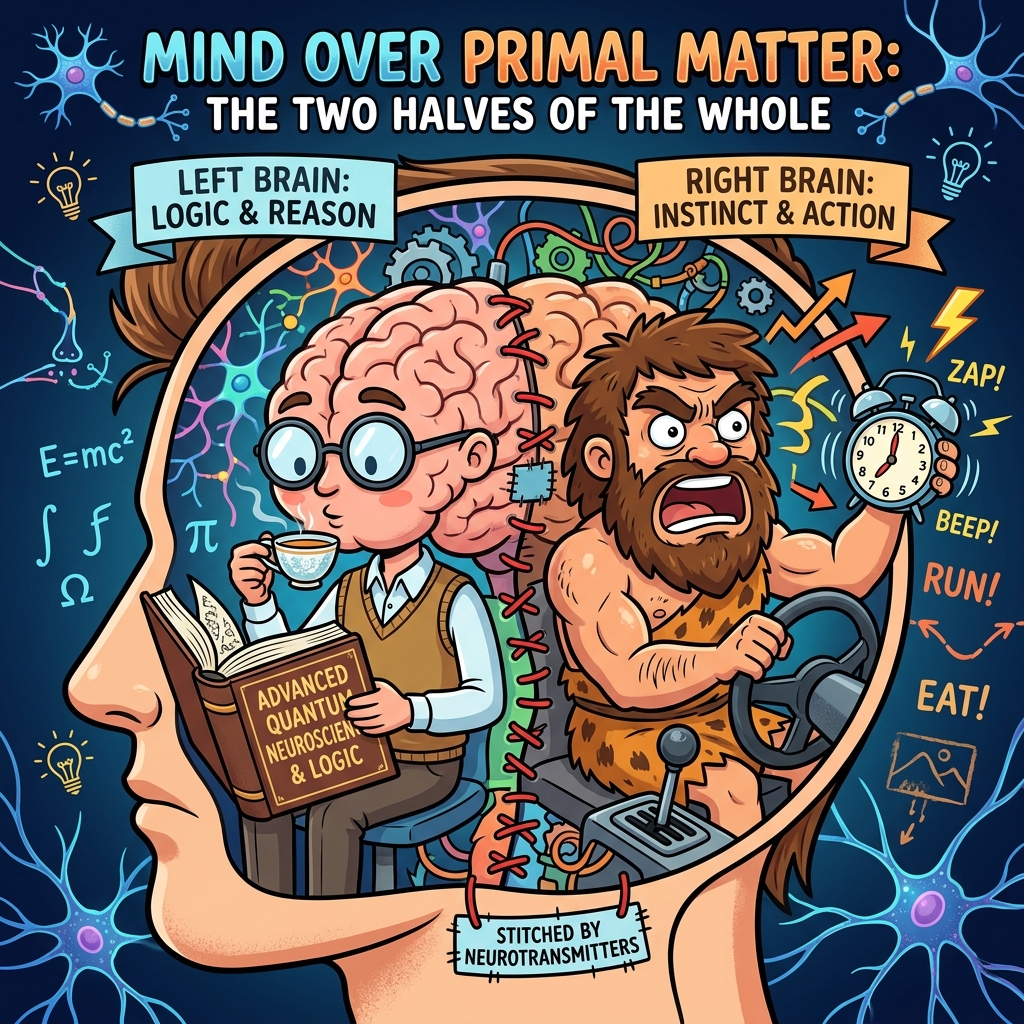
Textbooks Were Wrong: Your Brain Is Actually Two Separate Organs Glued Together
A groundbreaking Stanford Medicine study published in Nature Neuroscience revealed that the human brain isn't a single master organ. It's actually two ancient nervous systems from totally different evolutionary origins that fused together like reluctant biological roommates.
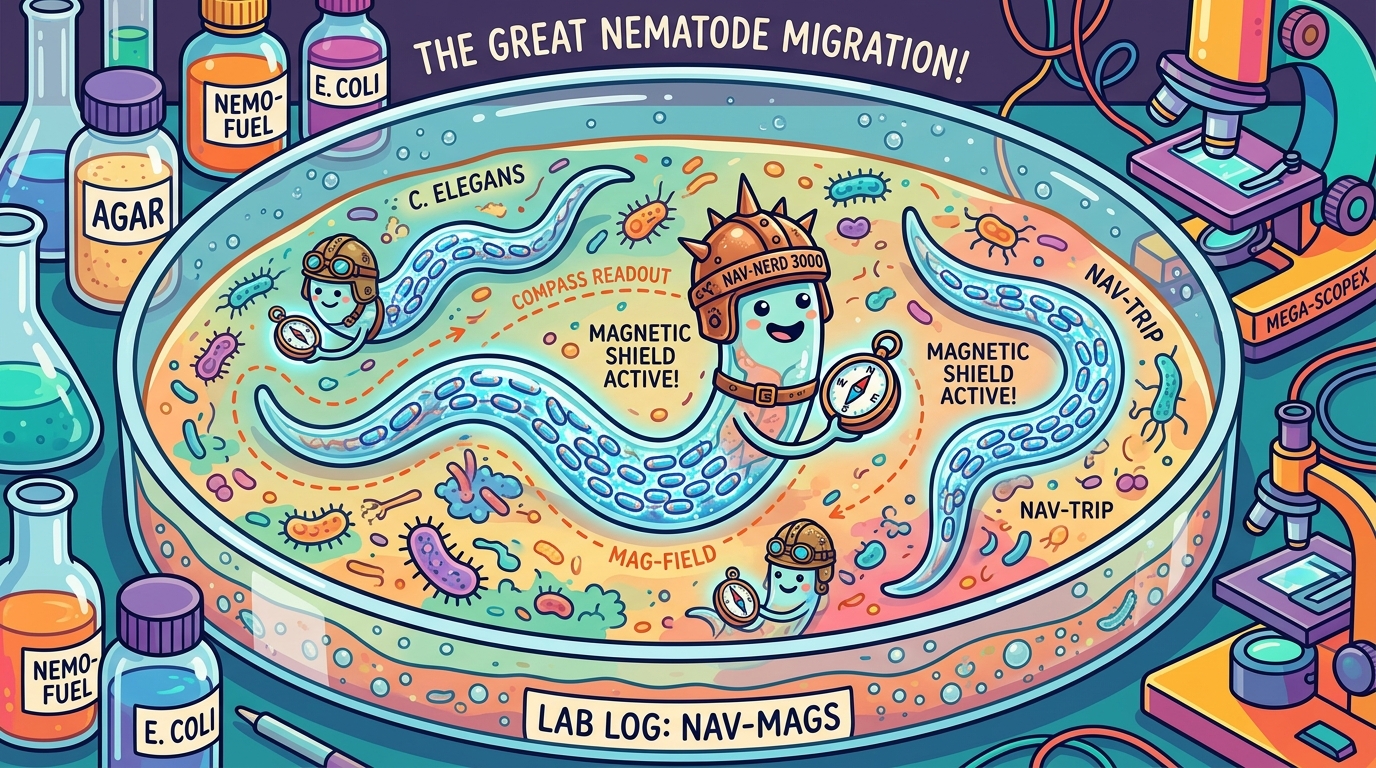
Eat Magnets, Live Forever: How Chinese Scientists Gave Microscopic Worms a 43% Longevity Boost
Scientists at the Chinese Academy of Sciences fed C. elegans nematodes magnetotactic bacteria, extending their lifespan by 43.4%. By using intracellular magnetosomes to vacuum up toxic reactive iron, the bacteria halt ferroptosis and turn gut biomes into youth-preserving compasses.