Jesus, Take the Wheel... No Wait, Let the Mushroom Drive: Cornell Builds Fungi-Powered Robots

When roboticists talk about giving machines "organic intelligence," most people assume they mean building brain-inspired microchips or training trillion-parameter neural nets. But researchers at Cornell University decided that silicon was overrated. Instead, they bought some king oyster mushrooms from the grocery store, grew their root-like mycelium networks directly into 3D-printed robot chassis, and literally let the fungus take the wheel.
Published in Science Robotics, this groundbreaking study from Cornell’s Organic Robotics Lab—in collaboration with the University of Florence—unveiled the world’s first fungal biohybrid robots. The team built two fully functional prototypes: a soft, five-legged starfish crawler and a rugged wheeled rover, both steered entirely by the raw electrophysiological brainpower of a mushroom.
🍄 How to Turn an Oyster Mushroom into a Cybernetic Chauffeur
Here is how biological mycelium became a cybernetic autopilot:
- The Living Microchip: King oyster mushroom mycelium (Pleurotus eryngii) naturally generates spontaneous electrical action potentials—rhythmic electrical pulses eerily similar to animal neurons.
- Direct Tissue Integration: Researchers 3D-printed custom scaffolds embedded with microelectrodes and let the mycelium grow through the structure like living wiring.
- The Electrical Translator: A custom microcontroller reads the fungal spikes and translates the frequency and amplitude of electrical bursts into motor actuation commands.
- Light-Seeking Reflexes: When engineers shone ultraviolet light near the robot, the mushroom panicked slightly, spiking its electrical chatter and steering the robot away or toward the stimulus.
Why use mushrooms instead of traditional microcontrollers? In a word: environmental resilience.
Previous attempts at "biohybrid" robots tried using living animal muscle tissue or cultured mammalian heart cells. The problem? Animal cells are giant divas. If the temperature fluctuates by half a degree or the pH isn't pristine, they die within hours.
Fungi, by contrast, are evolutionary tanks. They thrive in darkness, endure wide temperature swings, tolerate radiation, eat rotting garbage for breakfast, and can stay alive for weeks with virtually zero maintenance. Furthermore, mycelium is naturally sensitive to soil nutrients, heavy metal toxins, and moisture, making them ideal biological sensors for agricultural monitoring.
🚗 Uber, But Your Driver Is a Portobello
"Hey Siri, who's driving the autonomous rover?"
"A very enthusiastic edible fungus named Gary. He doesn't know where he's going, but he really, really dislikes ultraviolet light."
The Cornell team envisions swarms of these mushroom-piloted rovers roaming farmland in the future, autonomously testing soil chemistry, detecting synthetic fertilizer runoff, and naturally biodegrading into compost when their mission is done. Until then, you might want to look twice at the king oyster mushrooms in your stir-fry: you might be eating a licensed commercial pilot.
You might also like
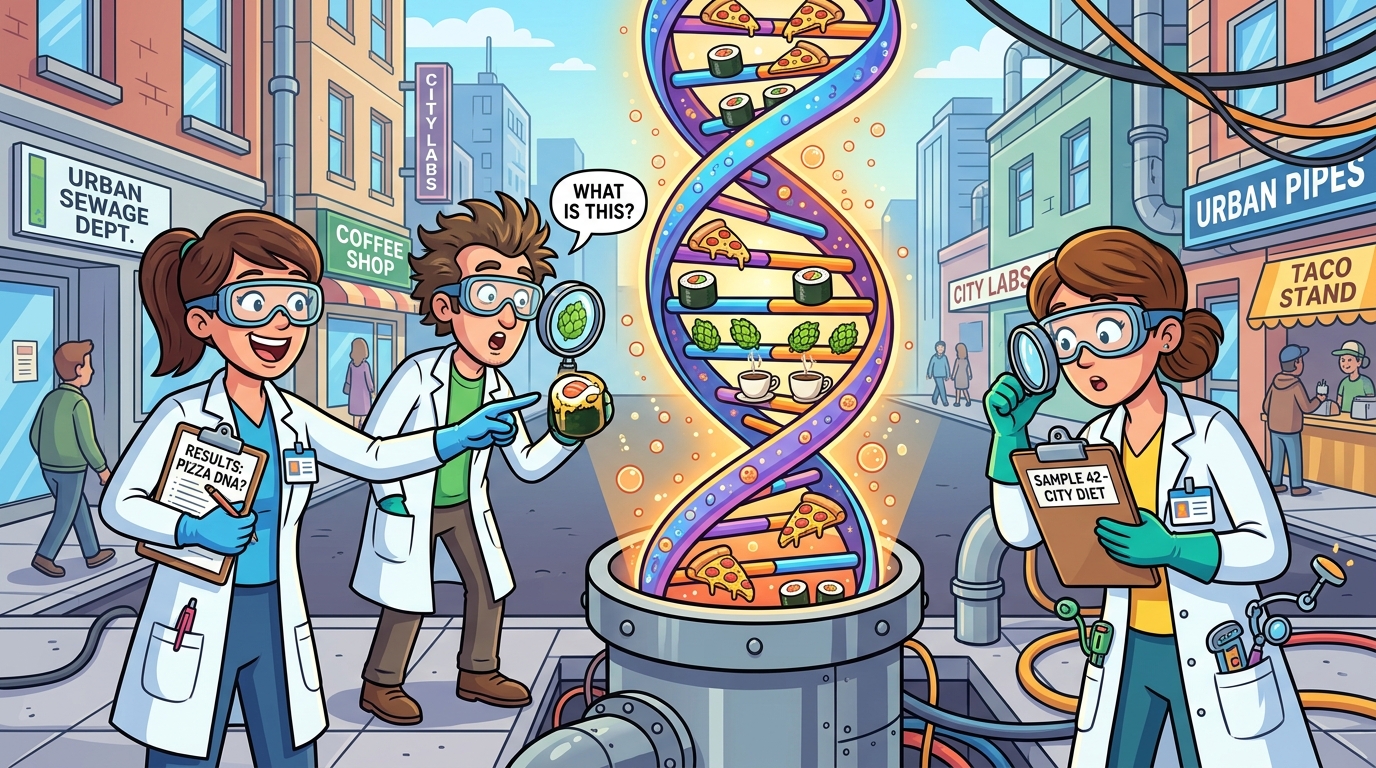
Scientists Sequence Sewage DNA to Catch Your Entire City's Diet Secrets
Researchers from Duke and UNC analyzed municipal wastewater across North Carolina using FoodSeq-FLOW, discovering plant and animal DNA that reveals craft beer hops in wealthy suburbs and seafood along the coast—for less than a penny per person.

The Great Molecular Arm Wrestle: Why the 2026 Nobel Prize in Chemistry Won't Shake Your Right Hand
The 2026 Nobel Prize in Chemistry honors Henri B. Kagan and Kenso Soai for cracking homochirality—explaining how a microscopic nudge can cause one mirror-image molecule to mercilessly bully its twin out of existence.
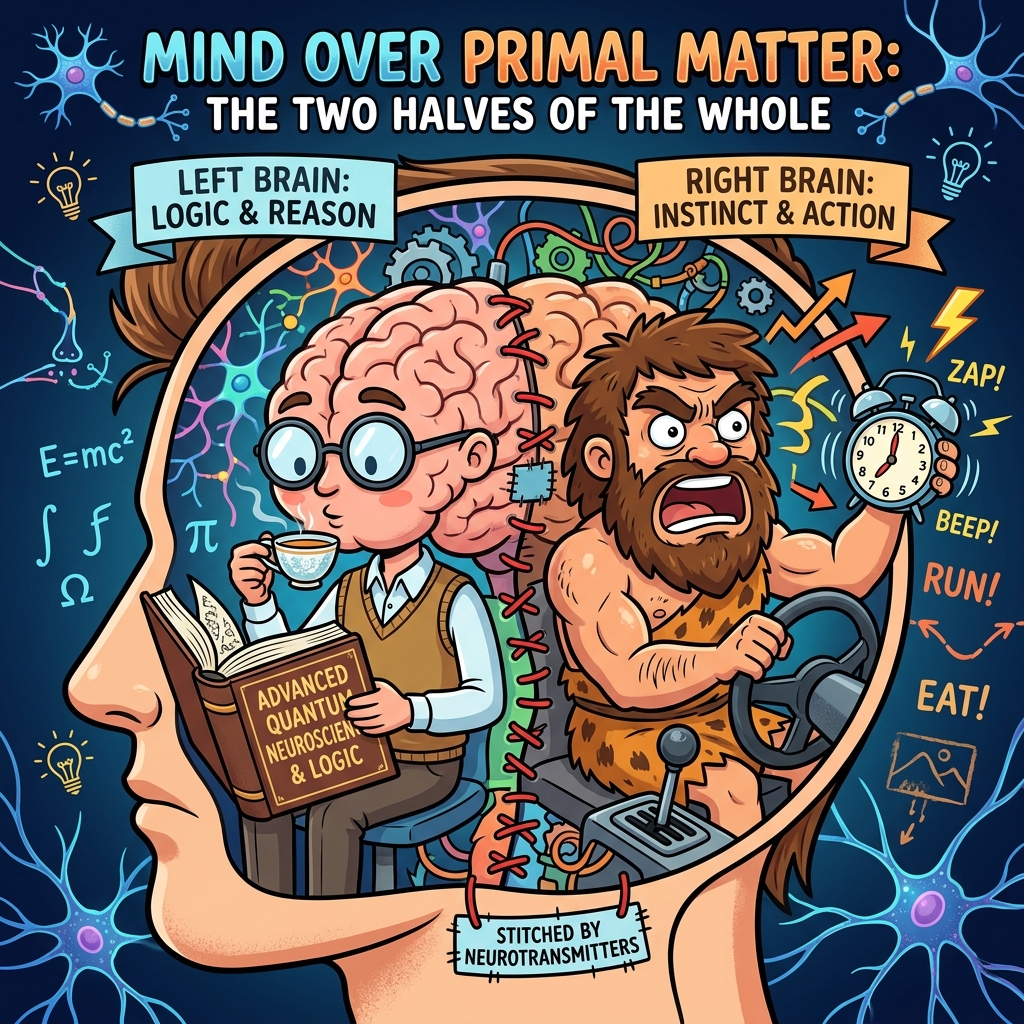
Textbooks Were Wrong: Your Brain Is Actually Two Separate Organs Glued Together
A groundbreaking Stanford Medicine study published in Nature Neuroscience revealed that the human brain isn't a single master organ. It's actually two ancient nervous systems from totally different evolutionary origins that fused together like reluctant biological roommates.