One Small Step for Man, One Giant Vacation for Mold: Earth Microbes Can Camp in Lunar Bootprints
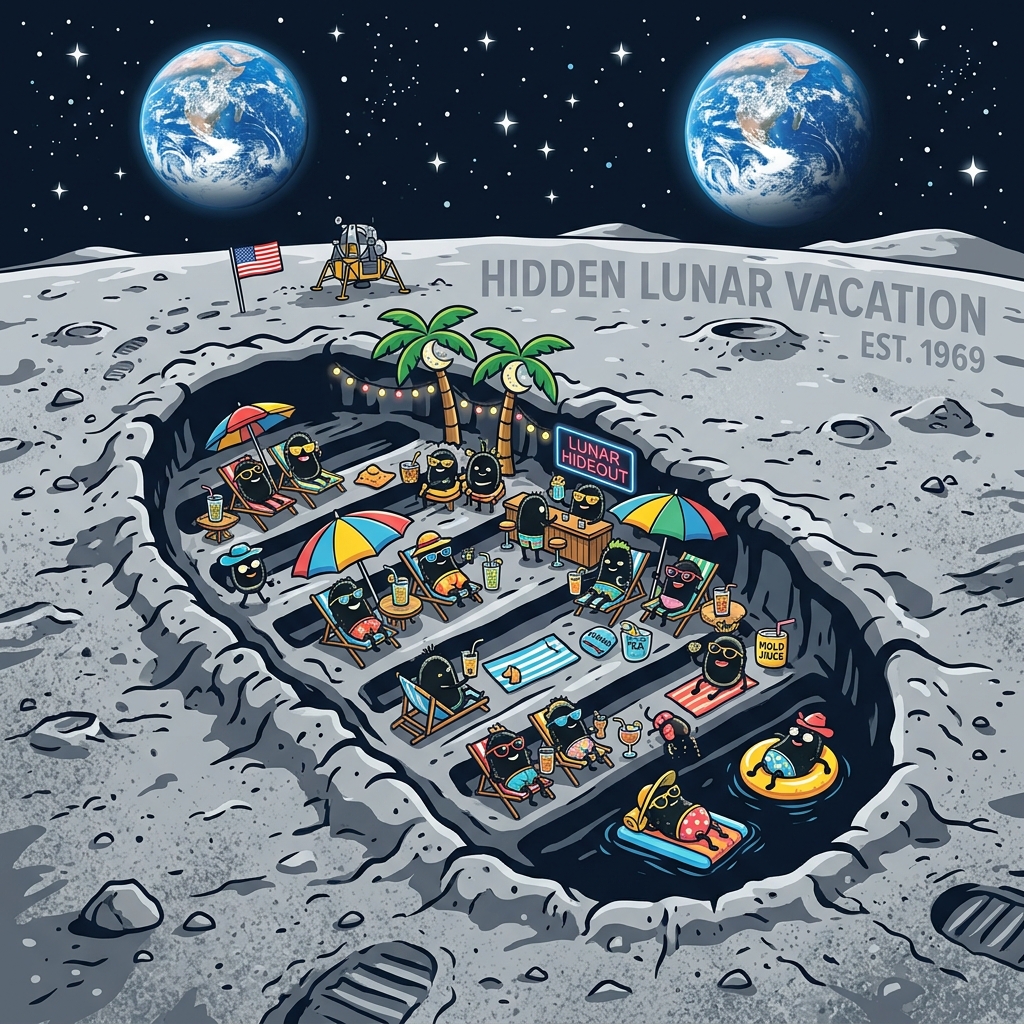
When Neil Armstrong declared "that's one small step for man, one giant leap for mankind," he forgot to mention the microscopic stowaways clinging to the soles of his space boots. For decades, space agencies assumed that the Moon's brutal surface—bombarded by lethal solar ultraviolet radiation, galactic cosmic rays, and a hard vacuum—would instantly sterilize anything earthly that dared to touch the lunar regolith. But according to a mind-bending study published in Science Advances, resilient Earth microorganisms like black mold don't just survive on the Moon: they can set up permanent camping resorts right inside the shadowed ridges of astronaut bootprints.
Conducted by an international team of astrobiologists examining micro-environmental conditions at the lunar South Pole, the study tested the survival limits of terrestrial extremophiles—specifically Aspergillus niger (common black mold) and endospore-forming bacteria—under simulated Artemis-era polar conditions.
🦠 The Lunar Bootprint Resort Amenities
Here is how a 1-inch-deep rubber boot tread becomes an impenetrable cosmic bunker:
- The Shadow Canopy: At the lunar South Pole, the Sun skims perpetually along the horizon at extremely low grazing angles (1.5° to 3°), casting permanent, deep shadows behind even tiny soil mounds.
- UV Sunblock: Inside the steep vertical ridges of an astronaut's boot tread, solar ultraviolet radiation drops to virtually zero, eliminating the primary sterilization mechanism of space.
- Melanin Shields: The thick black melanin pigments in fungal spores act as natural heavy-duty armor against scattered solar radiation and background cosmic rays.
- Freeze-Dried Stasis: Instead of dying from the vacuum, the spores undergo natural lyophilization (freeze-drying), remaining viable and ready to revive the moment water or warmth is introduced.
This discovery throws a massive spanner into NASA and ESA's "Planetary Protection" protocols. Space agencies spend hundreds of millions of dollars building ultra-clean rooms and sterilizing robotic rovers with heat, alcohol wipes, and vaporized hydrogen peroxide to prevent contaminating extraterrestrial bodies with Earth biology.
If human astronauts trekking across the lunar South Pole leave thousands of bootprints, each footprint effectively turns into a micro-greenhouse of dormant terrestrial spores. Future searches for indigenous lunar ice or prebiotic chemistry could easily end up discovering Gary the mold spore, who hitched a ride on an Artemis spacesuit cuff.
🏖️ "Thanks for the Shady Patio, Neil"
Imagine being a black mold spore: humanity spent \$100 billion developing the Apollo and Artemis programs, designed titanium rockets, trained elite fighter pilots, and flew 240,000 miles to the Moon... just to stomp on the regolith and give you the ultimate shaded pool cabana.
As astronauts prepare to set foot on the lunar South Pole for the first time in over half a century, one thing is certain: Earth life is far more stubborn than we ever gave it credit for. We might think we are the explorers colonizing the Moon, but our microbes are already treating our footprints like beach umbrellas.
You might also like

The Moon's Far Side Preserved 1,000°C Magnetic Hard Drives in Natural Glass Beads
Scientists analyzing Chang'e-6 lunar soil discovered rare high-temperature gamma-iron trapped inside impact glass beads, creating microscopic magnetic fossils that remember the Moon's ancient dynamo.

The Great Molecular Arm Wrestle: Why the 2026 Nobel Prize in Chemistry Won't Shake Your Right Hand
The 2026 Nobel Prize in Chemistry honors Henri B. Kagan and Kenso Soai for cracking homochirality—explaining how a microscopic nudge can cause one mirror-image molecule to mercilessly bully its twin out of existence.
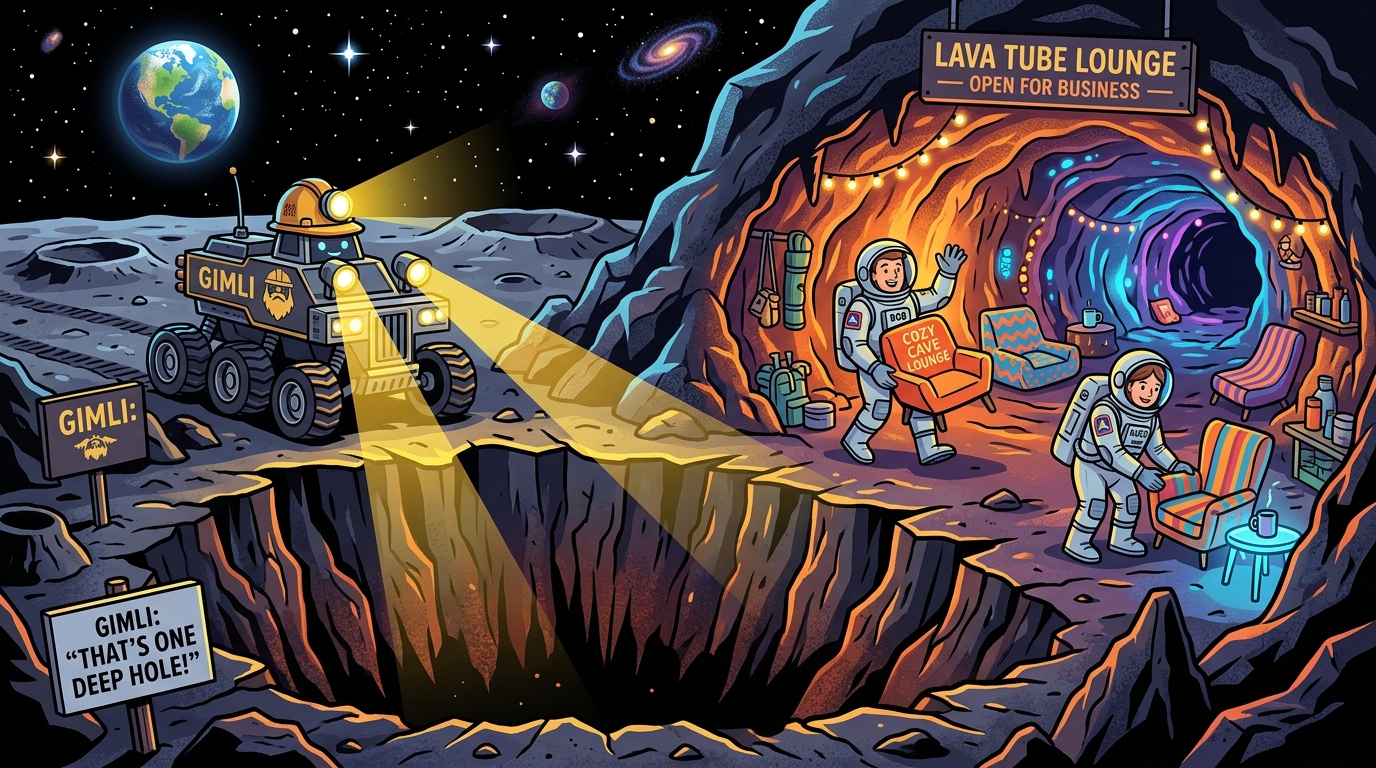
NASA Dispatches GIMLI to the Moon: Mining Subterranean Lava Caves for Astronaut Luxury Suites
NASA's PRISM program has officially selected the GIMLI mission to probe the mysterious Marius Hills Pit, verifying whether massive underground lunar lava tubes can shield future astronaut outposts from cosmic doom.