The Ultimate VIP Trash Lounge: Inside the Secret Garbage Shredders of Human Sperm
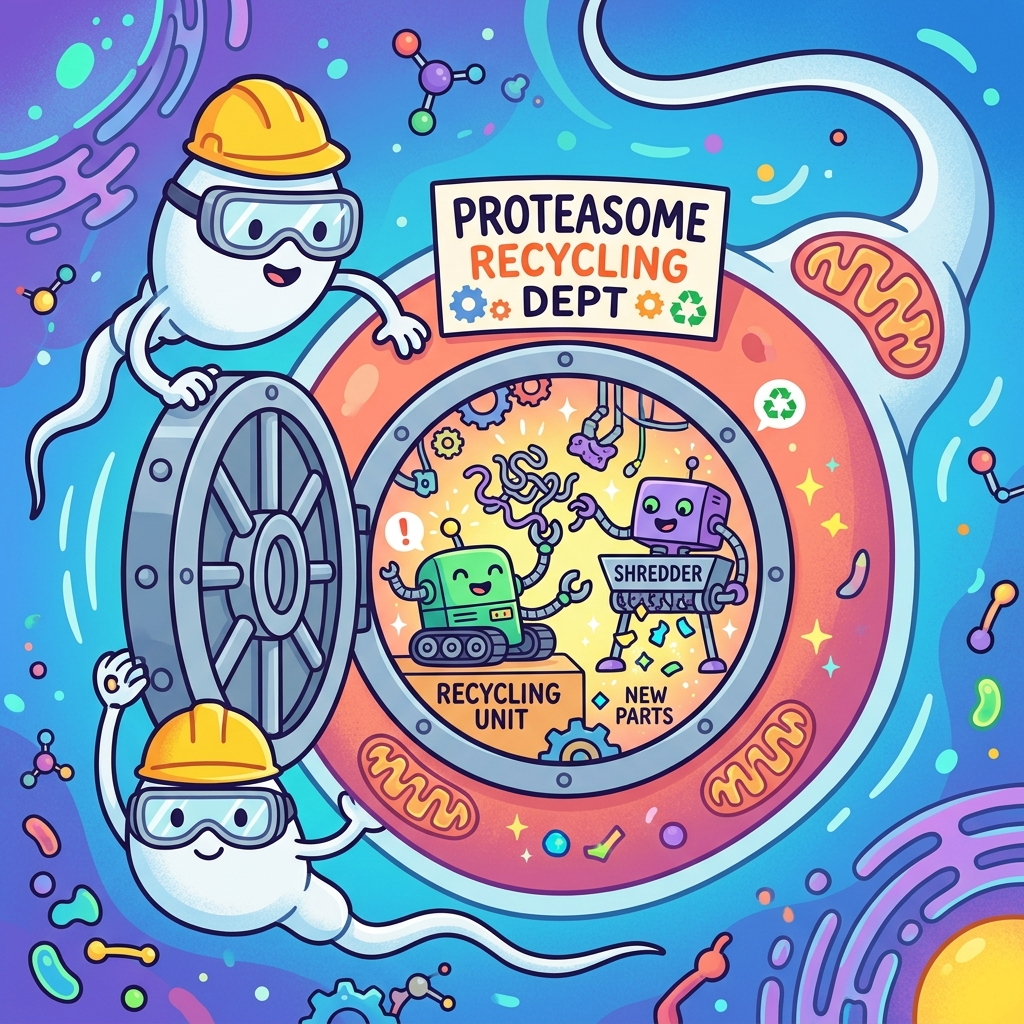
If you ever needed proof that real estate is competitive everywhere, look no further than a human sperm head. Its genetic cargo is packed tighter than commuters on a rush-hour subway train—so densely wound with protamines that for decades biologists assumed the nucleus was basically a solid rock of DNA.
Turns out, they missed the private executive suites!
🔬 Peeking into the "Nuclear Lacunae"
In a study published in Nature Structural & Molecular Biology on September 1, 2026, researchers from the VIB-VUB Center for Structural Biology (Belgium) and the MRC Laboratory of Molecular Biology (UK) deployed cutting-edge 3D cryo-electron tomography (cryo-ET) to inspect human sperm at near-atomic resolution. They zeroed in on mysterious, hollow cavities known as "nuclear lacunae" that had baffled microscopists for generations.
Far from being empty packing mistakes or biological flaws, these hollows are bustling, DNA-free industrial recycling facilities:
- Proteasome Mega-Clusters: The researchers discovered these cavities are packed with dense colonies of proteasomes—the cell's molecular paper shredders responsible for chewing up misfolded and expired proteins.
- Exclusive Architectural Design: These nuclear proteasomes sport unique structural arrangements distinct from those found anywhere else in human cells, custom-tuned to function inside the pressurized confines of a swimming gamete.
- Preserving the Swimmers: Because sperm dump most of their cytoplasm to streamline for their epic swim, they lack standard cellular maintenance systems. Stashing proteasomes inside nuclear vaults allows them to detoxify critical machinery on the go without damaging the pristine DNA genome.
🧬 A Fresh Blueprint for Fertility
Understanding how sperm maintain their internal hygiene offers critical insights into unexplained male infertility. If the nuclear trash shredders break down, toxic protein build-up can grind fertilization to a screeching halt.
So the next time you feel cramped in a tiny studio apartment, take comfort: even your microscopic beginnings required a secret built-in recycling closet to survive the journey!
You might also like
Mammals Can Breathe Through Their Backsides: How 'Butt Gills' Won an Ig Nobel and Just Passed Human Trials
Forget lungfuls of fresh air: scientists proved mammals can absorb oxygen enterally via the rectum using oxygenated liquid, and clinical trials show our rears might actually be emergency backup gills.
The Ultimate Plot Twist: Rattlesnakes Carried a 10x More Potent Antidote in Their Blood All Along
For over a century, humans have milked deadly snakes to inject horses and brew crude antivenom. Now, scientists discovered western diamondbacks have their own super-cocktail of blood proteins that neutralizes viper venoms 10 times better!
Nature Liked Life So Much It Invented Free-Living Cells Twice
A landmark Science Advances study reveals that the leap from hydrothermal vents to independent free-living cells happened twice—giving rise to pioneer bacteria and pioneer archaea 4 billion years ago.