Exonerating a Ghost: 3D Skull Scans Prove Tasmanian Tigers Were Crocodile-Snappers, Not Sheep Killers
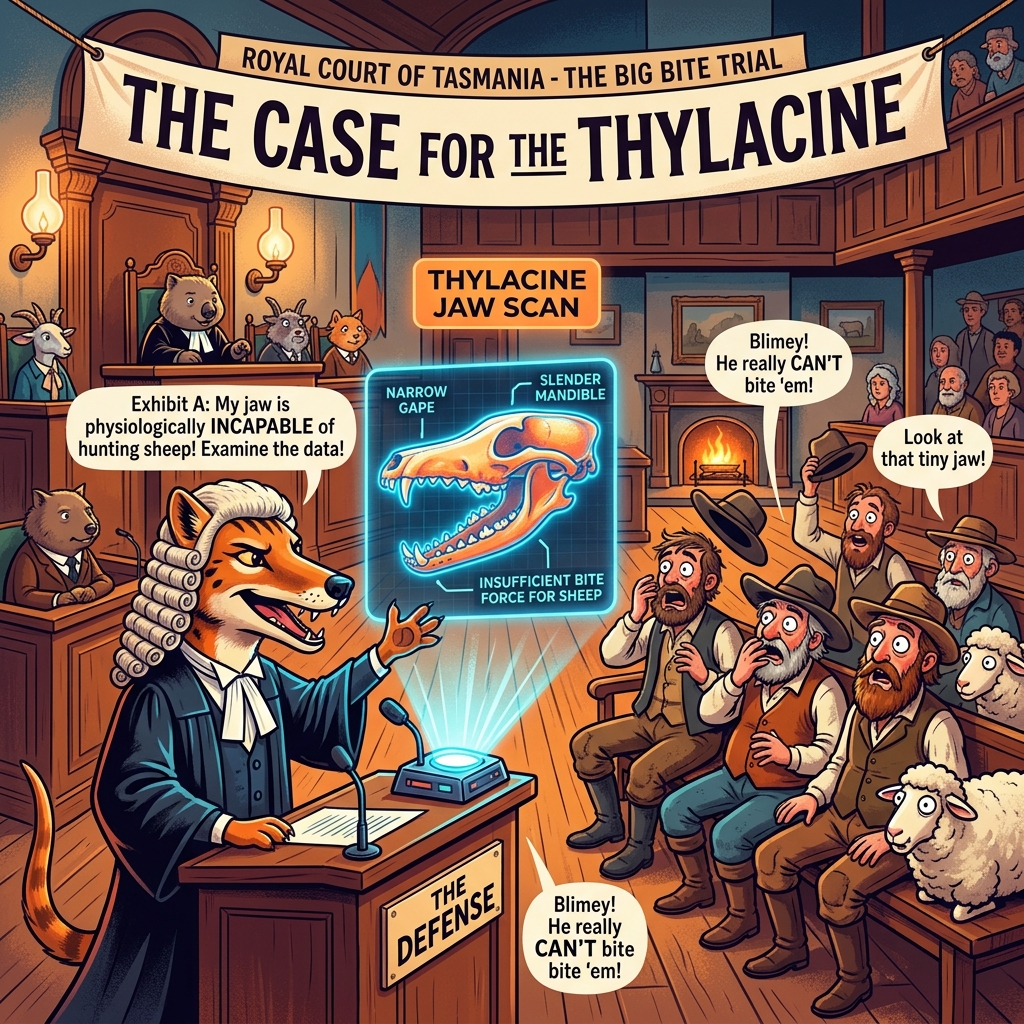
For more than a century, the Tasmanian tiger was branded history's ultimate marsupial villain: a ferocious, bloodthirsty "dog-headed wolf" blamed for slaughtering colonial sheep by the thousands. But according to high-tech paleontology, that entire reputation was a tragic case of mistaken identity.
In an eye-opening study published in Nature Communications, a research team led by Professor Vera Weisbecker from Flinders University, along with the University of Melbourne and the Australian Museum, performed rigorous 3D biomechanical reconstructions of thylacine skulls. Their findings deliver a heartbreaking verdict: the thylacine was anatomically incapable of taking down sheep.
🐊 A Crocodile Snapper in Marsupial Clothes
Instead of possessing the robust, bone-crushing jaw mechanics of true canids like wolves or dingoes, the thylacine sported a long, deep mandible with a widened, mace-like snout. Biomechanically, this skull was engineered for ultra-fast, high-impact snapping strikes—strikingly similar to modern crocodiles and fish-hunting predators—rather than prolonged grappling with large prey.
Why does this rewrite what we know about evolutionary biology and conservation?
- Ill-Suited for Livestock: Wolf jaws are optimized to clamp down and hold thrashing large mammals. If a thylacine attempted to clamp onto a 60-kilogram struggling sheep, its slender, high-speed jaw would have risked severe dislocation or bone fracture.
- The True Menu: The thylacine was actually a specialist hunter of small, agile woodland marsupials: bandicoots, pademelons, and possums. It used its wide gape and whiplash snap to nab darting critters in the undergrowth.
- The Tragedy of False Bounties: Between 1888 and 1909, the Tasmanian government paid bounties on over 2,000 thylacines because pastoralists blamed them for missing sheep. The species was hunted to extinction by 1936 based on a physiological myth.
⚖️ Posthumous Exoneration
While convergent evolution made the thylacine look like a dog on the outside, 3D physics reveals it was an evolutionary one-of-a-kind. It was closer to a pouch-bearing reptilian-style snapper than any wolf that ever lived.
Science has finally cleared the Tasmanian tiger's criminal record. If only 3D CT scanners had existed before the bounty hunters!
You might also like
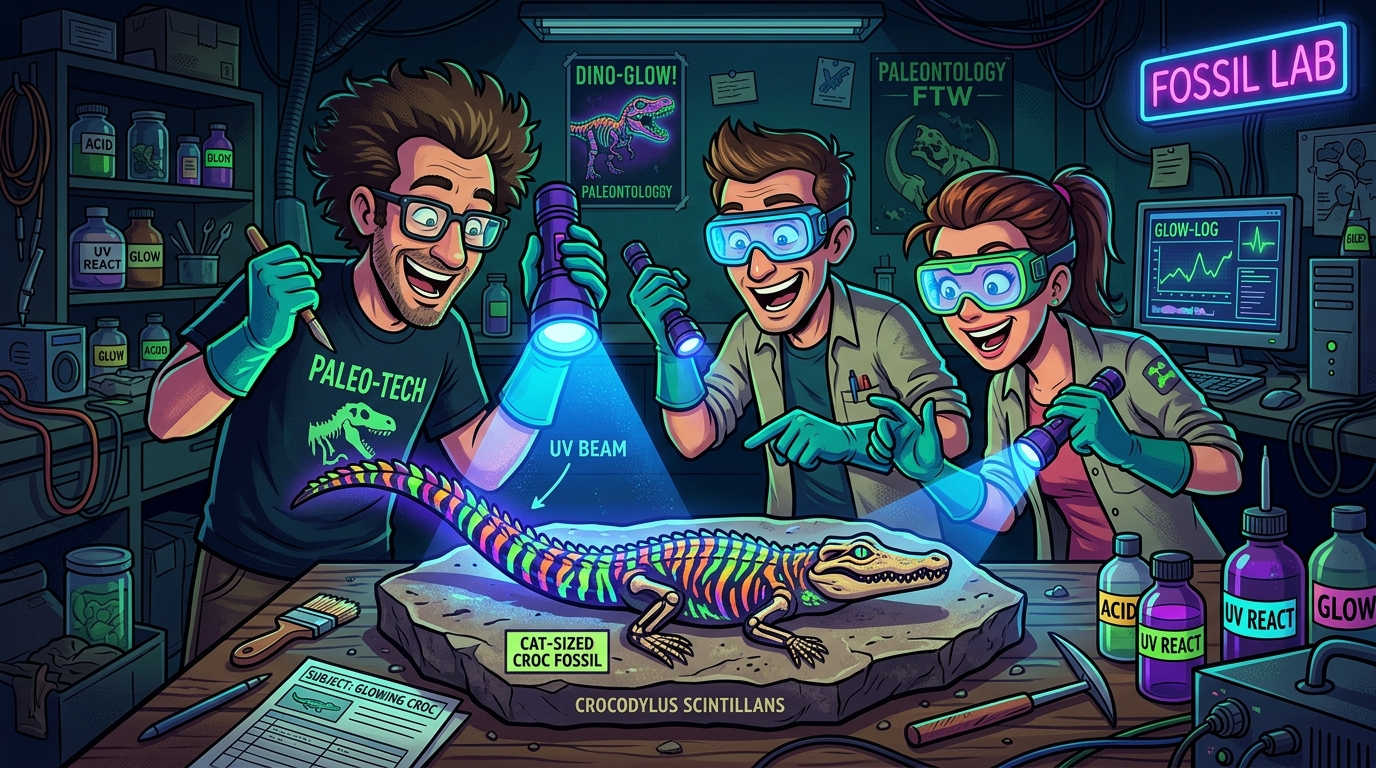
Jurassic Rave Party: UV Blacklight Reveals 125-Million-Year-Old Tiger Stripes on Cat-Sized Fossil Crocodile
Scientists shined an ultraviolet blacklight on a 125-million-year-old Spanish fossil and uncovered prehistoric tail stripes and hidden soft tissues, proving ancient miniature crocodiles rocked disruptive camo fashion long before humans did.

The 400,000-Year-Old Dentist Visit: Ancient Tooth Proteins Link Denisovans to Homo Erectus
By delicately acid-etching 400,000-year-old teeth from China, paleontologists used paleoproteomics to discover a shared genetic mutation connecting Homo erectus directly to Denisovans and modern humans.

The 20-Meter Dinosaur with Spanish Cousins: Meet Brazil's Newly Crowned Super-Sauropod
When construction workers in northern Brazil dug up massive bones, they thought they found ice-age beasts. It turns out they unearthed Dasosaurus tocantinensis—a 66-foot Cretaceous titan whose closest relatives lived across the ocean in Spain!