The 20-Meter Dinosaur with Spanish Cousins: Meet Brazil's Newly Crowned Super-Sauropod
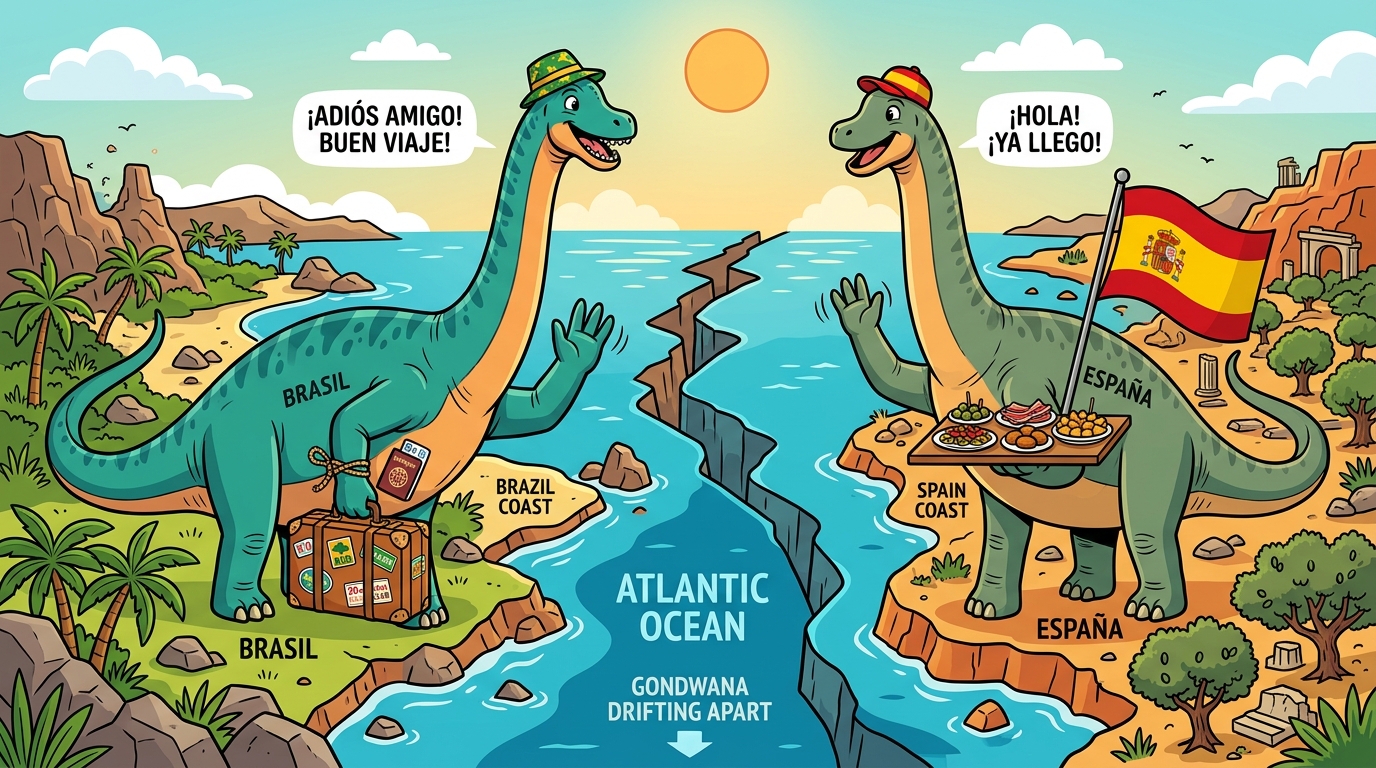
Before the Atlantic Ocean rudely tore the supercontinents apart, traveling from South America to Europe didn't require an 11-hour red-eye flight—it just took a very long, plodding stroll. Now, paleontologists in Brazil have officially described Dasosaurus tocantinensis, a breathtaking 20-meter (66-foot) Cretaceous giant that proves long-necked dinosaurs were doing transatlantic family reunions long before airlines existed.
Published in the Journal of Systematic Palaeontology by an international team of Brazilian and Spanish researchers, the magnificent beast was first stumbled upon during construction work for a road-rail cargo terminal in Davinópolis, in the northeastern state of Maranhão. Workers initially mistook the colossal fossilized leg bones for giant Ice Age sloths or mastodons. But when paleontologists cleaned off the rock from the 120-million-year-old Itapecuru Formation, they realized they were staring at the largest dinosaur ever found in Maranhão.
🦕 Dasosaurus by the Numbers
Here is what it felt like to meet this Cretaceous vegetarian bulldozing through prehistoric forests:
- Total Length: 20 meters (66 feet) from snort to tail tip—longer than a city articulated bus.
- Geological Age: Early Cretaceous period, roughly 120 to 113 million years ago (Aptian age).
- Anatomical Trademark: Distinctive longitudinal ridges on its caudal (tail) vertebrae and a prominent lateral bulge on its massive femur.
- Taxonomic Family: Somphospondyli, a subgroup of titanic sauropods renowned for immense bone density.
What makes Dasosaurus an international sensation is its family tree. When researchers ran comprehensive phylogenetic algorithms comparing its bones to sauropods worldwide, its closest evolutionary cousin wasn't an Argentine or Brazilian neighbor. It was Garumbatitan morellensis—a sauropod discovered thousands of miles away in Morella, Spain!
How did two virtually identical cousin species end up on opposite sides of the globe? Between 140 and 120 million years ago, South America, Africa, and the Iberian peninsula were still stitched together within the disintegrating supercontinent Gondwana. Animal migrations freely crossed across vast land corridors spanning from ancient Iberia through North Africa directly into modern-day northern Brazil.
🏖️ The Ultimate Breakup of Gondwana
Picture the tragic Cretaceous family drama: cousin Dasosaurus went on vacation to sunny prehistoric Brazil, plate tectonics slowly opened up the southern Atlantic rift, and suddenly the return path to Spain was flooded by hundreds of miles of ocean. "Sorry Garumbatitan, we can't make Thanksgiving this year—an ocean opened up between our backyards."
The discovery of Dasosaurus tocantinensis cements northern Brazil as a crucial paleogeographical crossroad during the Cretaceous. As paleontologists continue excavating Maranhão's railway corridor, who knows what other globe-trotting giants will crawl out of the Mesozoic rocks.
You might also like
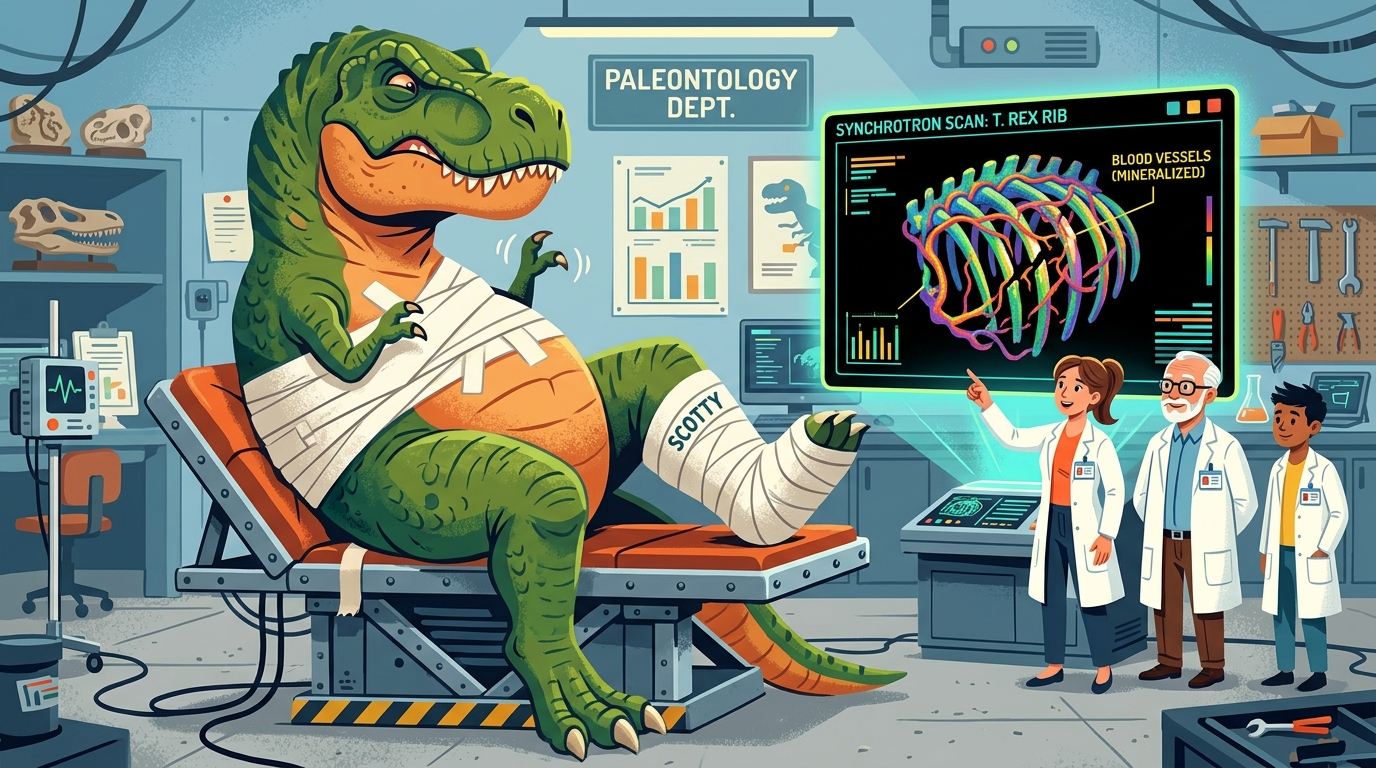
Even a 9-Ton T. Rex Needed Sick Days: 66-Million-Year-Old Blood Vessels Found in Broken Bone
Canadian physicists used particle accelerators to inspect the broken rib of Scotty—the world's largest Tyrannosaurus rex—and discovered 3D mineralized blood vessels that were actively nursing the apex predator back to health.
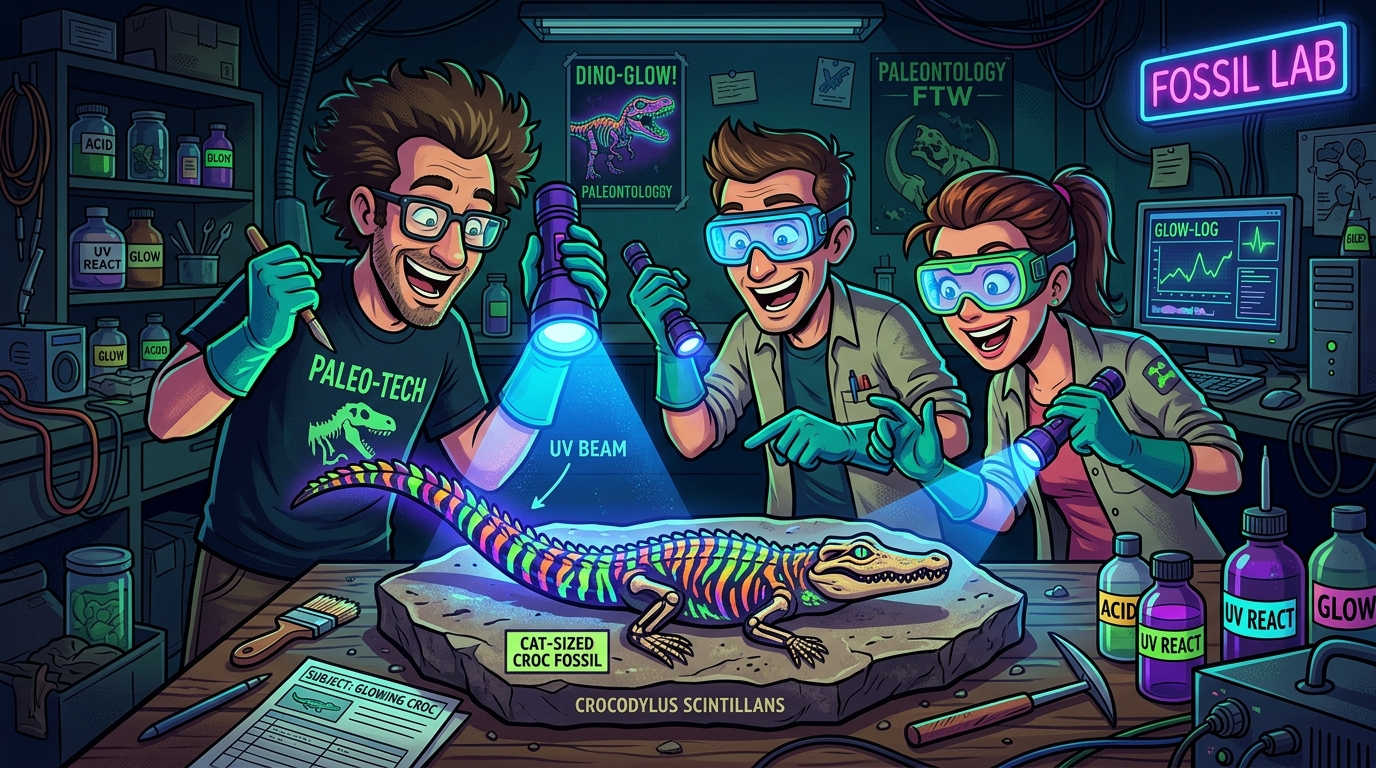
Jurassic Rave Party: UV Blacklight Reveals 125-Million-Year-Old Tiger Stripes on Cat-Sized Fossil Crocodile
Scientists shined an ultraviolet blacklight on a 125-million-year-old Spanish fossil and uncovered prehistoric tail stripes and hidden soft tissues, proving ancient miniature crocodiles rocked disruptive camo fashion long before humans did.
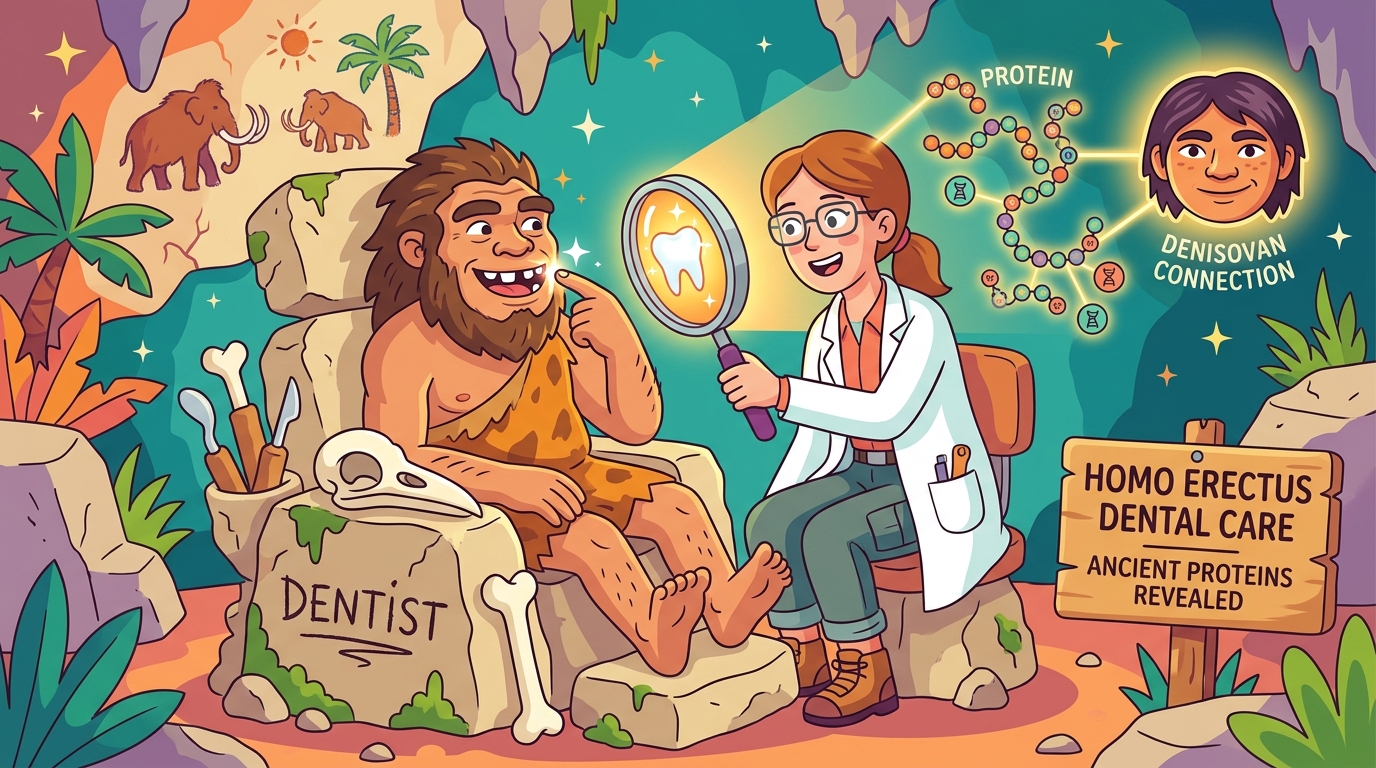
The 400,000-Year-Old Dentist Visit: Ancient Tooth Proteins Link Denisovans to Homo Erectus
By delicately acid-etching 400,000-year-old teeth from China, paleontologists used paleoproteomics to discover a shared genetic mutation connecting Homo erectus directly to Denisovans and modern humans.