One-in-a-Million Find: 450-Million-Year-Old Sea Lily Tube Feet Preserved in Canadian Museum Drawer
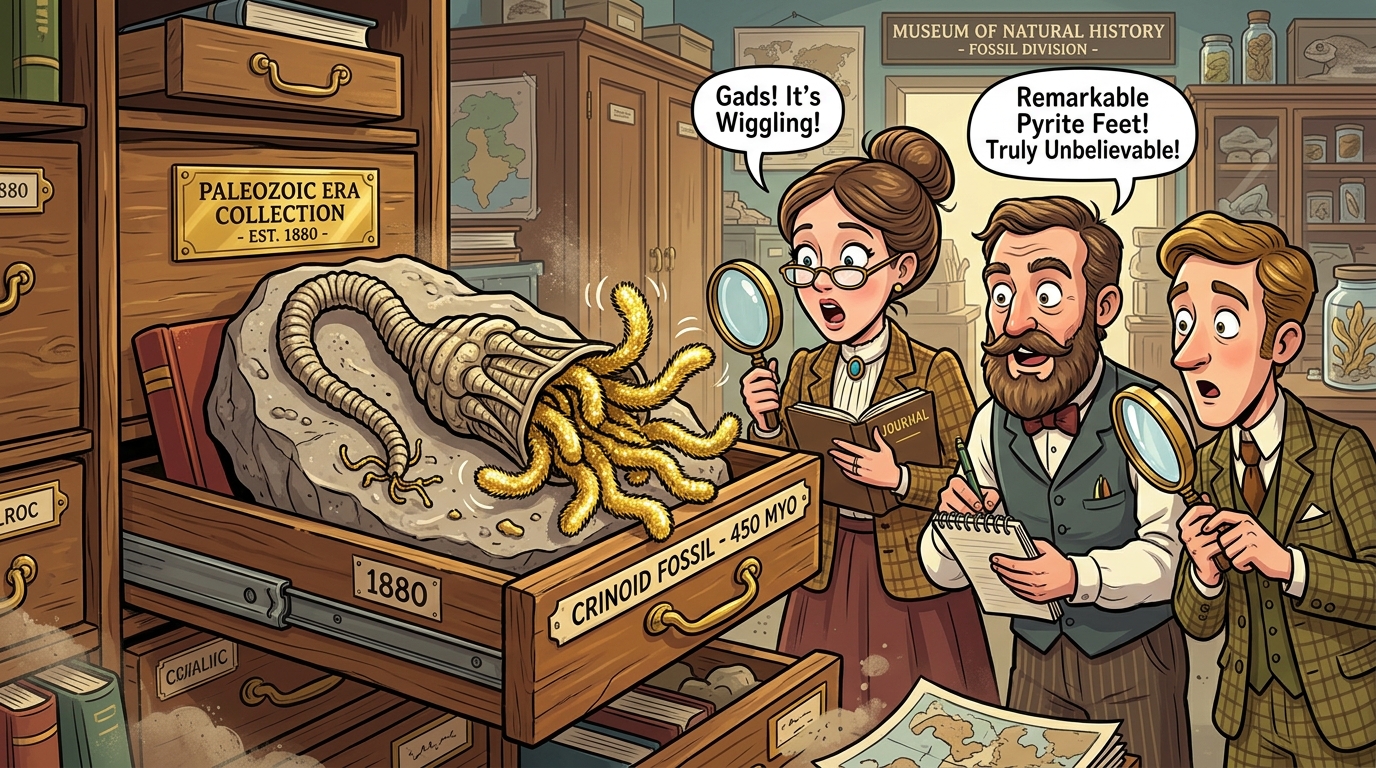
When paleontologists go fossil hunting, they usually endure blistering desert winds, precarious cliff climbs, or endless mud. But sometimes, the greatest discovery of a lifetime is waiting quietly inside a dusty wooden cabinet in Montréal, minding its own business next to old specimen tags. Researchers have uncovered a 452-million-year-old sea lily fossil whose delicate, fleshy "tube feet" were preserved in sparkling fool's gold—predating the very first dinosaurs by more than 200 million years!
Published in Royal Society Open Science by paleontologists Dr. Lena Cole and Dr. David Wright from the University of Oklahoma, the fossil belongs to a Late Ordovician crinoid known as Dendrocrinus simcoensis. While crinoid stems and hard calcite skeletons are common enough to pave riverbeds in certain parts of North America, their soft, squishy feeding appendages virtually never survive fossilization. In the entire history of paleontology, this marks only the second time soft tissue has ever been identified in a fossil crinoid.
⭐ The Pyrite Miracle: Mother Nature's Vacuum Sealer
How did fragile, watery flesh survive almost half a billion years without decaying?
- Instant Burial: 452 million years ago, a catastrophic submarine mudslide buried this delicate echinoderm in suffocating, anoxic sediment before scavengers or aerobic bacteria could tear it apart.
- Fool's Gold Replacement: In the absence of oxygen, sulfate-reducing bacteria precipitated iron sulfide (pyrite) molecule by molecule along the delicate cellular membranes of the tube feet, creating a micro-thin metallic cast before decay set in.
- Unprecedented Anatomy: High-resolution microscopy revealed that Dendrocrinus had tube feet with spacing and length ratios unlike any modern living crinoid, proving ancient sea lilies used a conical, multi-directional feeding basket rather than modern planar fans.
For modern echinoderms like starfish and sea urchins, tube feet are the ultimate Swiss Army knife—used for walking, clinging to rocks, breathing, and catching food. But because they are basically hydraulic water balloons made of soft connective tissue, scientists assumed we would never know what early Paleozoic crinoid feet actually looked like in the flesh.
The specimen had been sitting inside the collections of the Musée de paléontologie et de l'évolution in Montréal for decades, cataloged merely as an ordinary Ordovician invertebrate fossil. It took the trained eyes of visiting specialists armed with modern angled lighting and microscopy to realize the faint golden fringes along the creature's arms weren't mineral smudges—they were half-billion-year-old toes.
🧦 "Nice Socks, Mr. Crinoid"
Imagine taking a nap in an ocean trench in 450,000,000 BCE, getting flash-frozen in fool's gold, and waking up in 2026 in a Canadian museum drawer only to have scientists marvel over how well your fuzzy little pedicure held up over a geological epoch.
This remarkable find is also a triumphant reminder of the treasures sleeping inside natural history museum basements worldwide. You don't always need an archaeological permit and a helicopter to rewrite evolutionary history; sometimes all you need is a flashlight and the patience to open Drawer #42.
You might also like
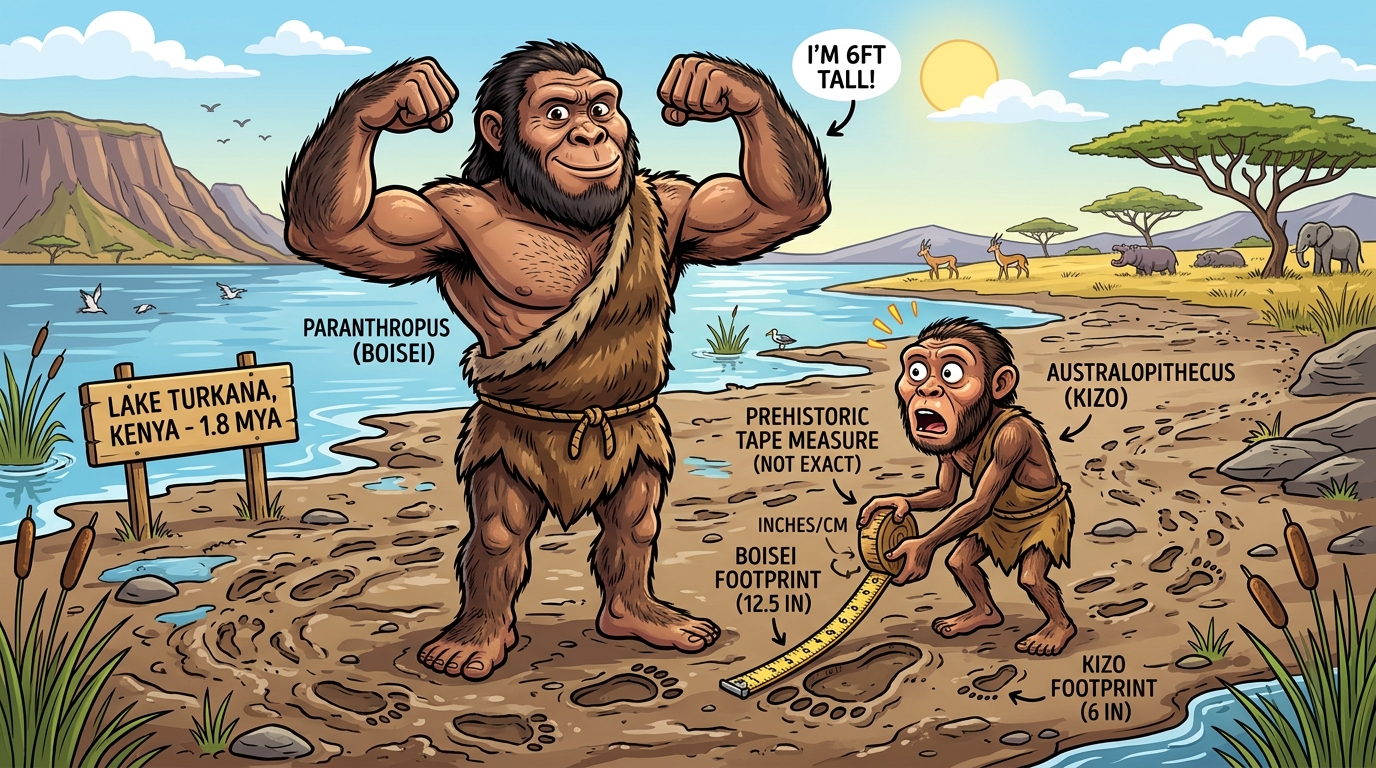
1.4-Million-Year-Old Footprints Reveal 'Nutcracker Man' Was a 6-Foot-Tall Prehistoric Giant
Fossilized footprints along Kenya's Lake Turkana show that Paranthropus boisei grew up to 6 feet tall and weighed 75 kg, shattering the myth that ancient hominins were squat little hobbits.
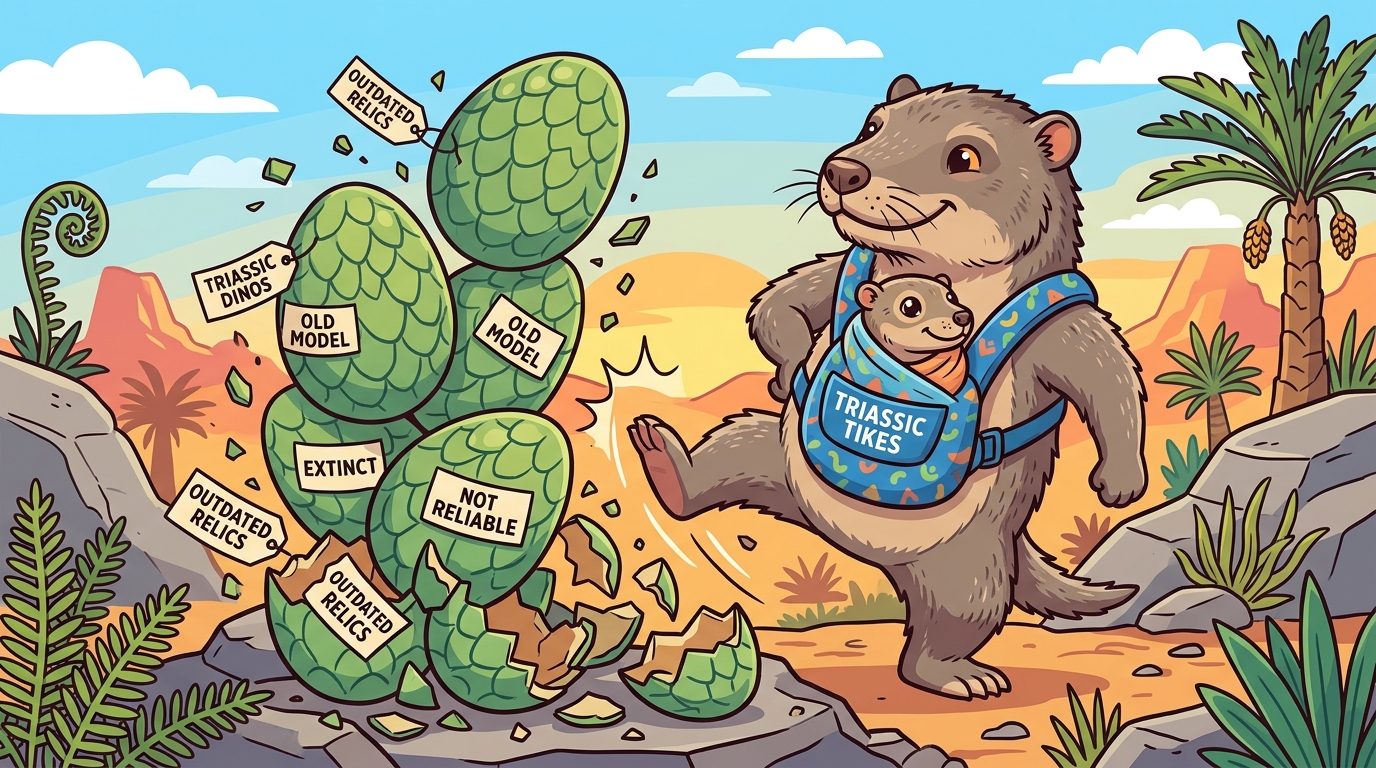
Skipping the Omelet: 236-Million-Year-Old 'Rat-Dog' Fossil Pushes Live Birth Back 95 Million Years
Long before dinosaurs were hatching eggs like oversized chickens, our furry Triassic ancestors were already popping out live babies. A 236-million-year-old cynodont fossil just rewrote mammal maternity history.
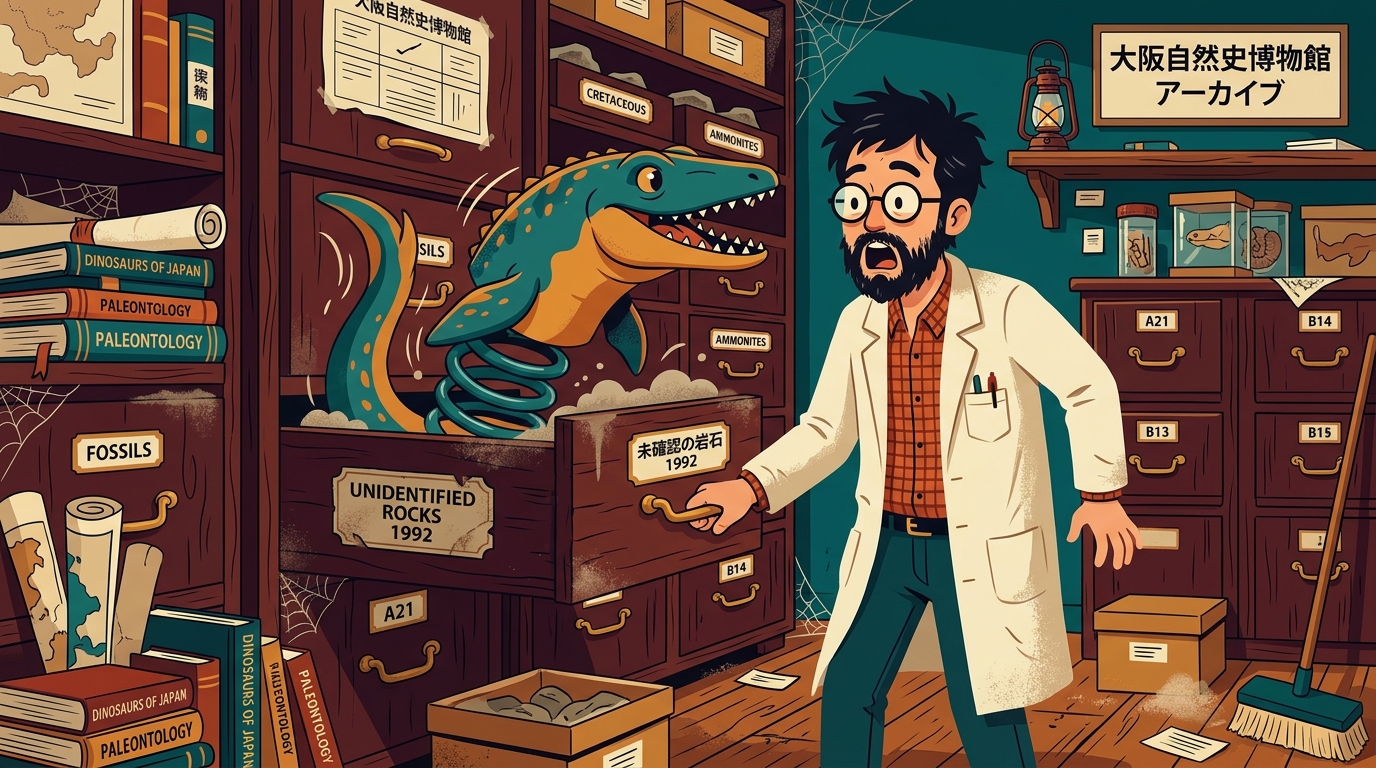
Scientists Opened a 30-Year-Old Museum Drawer in Osaka and Found a Brand New Sea Monster
A chunk of Cretaceous rock stored in the Osaka Museum of Natural History since 1992 was finally prepped and CT-scanned—revealing Japan's first confirmed mosasaur premaxilla jaw bone and a brand new prehistoric apex predator.