Nuclear Reactors Glow with 'Ghost Particles' Even When Shut Off: Physics Detects Antineutrino Afterglow
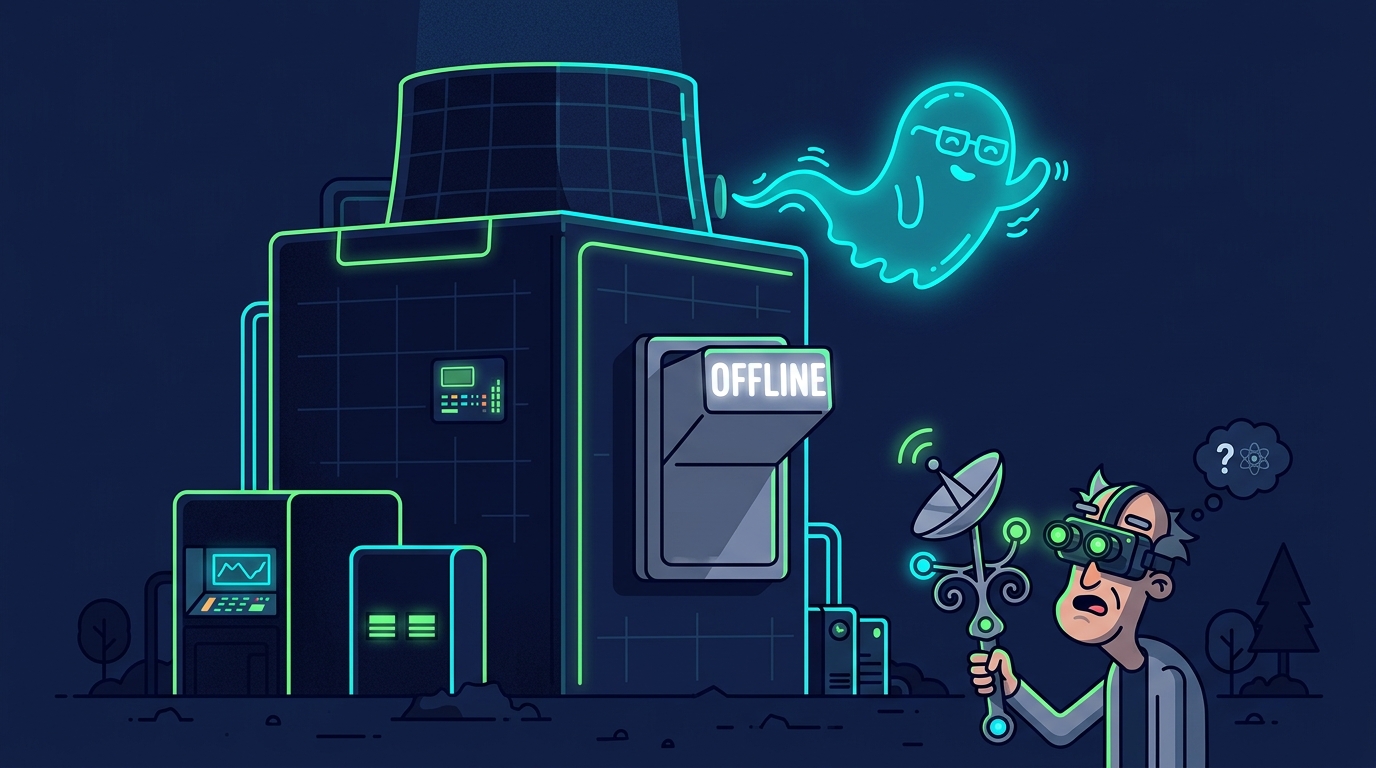
You can turn off the turbine, lock the doors, and kill the power grid, but you can't stop a nuclear reactor from whispering subatomic ghost stories into the night.
In a study published in Physical Review Letters, physicists from the international Double Chooz collaboration announced that they have directly detected the "ghostly afterglow" of antineutrinos emitted from a completely shut-down nuclear reactor for the first time in human history.
👻 The Subatomic Whisperers
Antineutrinos are near-massless fundamental particles produced during radioactive beta decay. Because they interact extremely weakly with normal matter, trillions pass harmlessly through your body—and through concrete and lead shielding—every second. While active reactors blast an intense neutrino flood, offline reactors were thought to be practically invisible.
Analyzing 17.2 days of quiet data at the Chooz nuclear plant in France during a scheduled refueling outage, the team's ultra-sensitive subterranean detectors caught 106 candidate antineutrino signals (about six per day). Mathematical modeling confirmed that 56% came from long-lived fission isotopes (like Strontium-90 and Cesium-137) still decaying inside the offline core, while 44% drifted up from the spent fuel cooling pools.
🛡️ The Ultimate Non-Proliferation Watchdog
This subtle afterglow is a game-changer for nuclear safeguards. Because antineutrinos cannot be shielded, spoofed, or blocked by steel walls, future mobile neutrino monitors can verify whether spent fuel has been covertly removed from a reactor pool—even when the facility is closed for maintenance.
So remember: no matter how quietly you try to sneak out of the room after turning off the lights, the laws of quantum beta decay will always betray your position.
You might also like
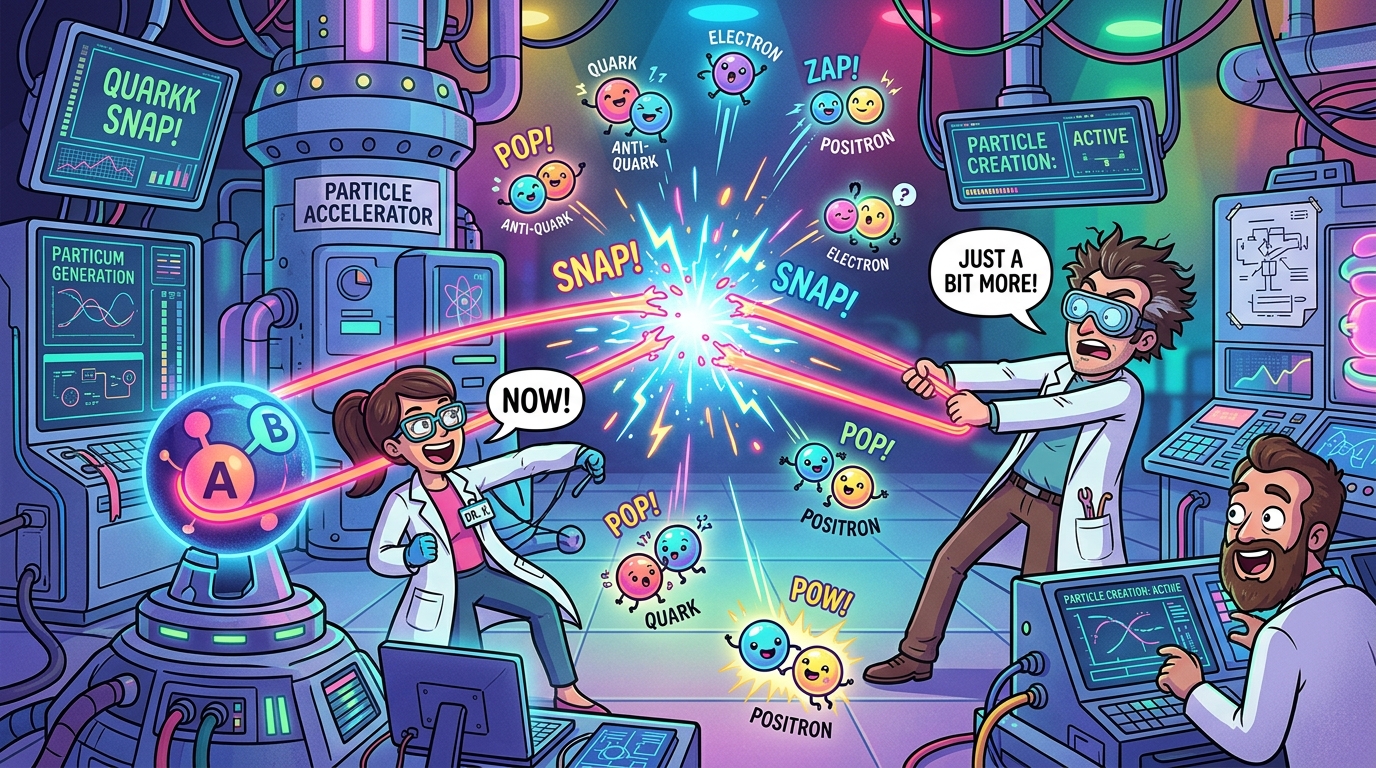
Snapping the Cosmic Rubber Band: Duke Physicists Use 13 Ions to Make Matter Pop Out of Nothing
Physicists at the Duke Quantum Center built a 13-trapped-ion quantum computer to simulate string-breaking dynamics. When you stretch the quantum bond between subatomic particles, the tension snaps—forcing the vacuum to spontaneously materialize brand-new particle pairs out of thin air.

Quantum Flash Mob: Distant Time Crystals Spontaneously Synchronize Across a Microchip
Physicists at TU Dortmund University watched separate quantum time crystals lock into the exact same ticking tempo across 40 micrometers—over 1,000 times their own size. Bridged by diffusing electron spins, this spontaneous quantum choreography breaks new ground for future quantum processors.

The Quantum Pisa Drop: Physicists Split an Atom and Dropped Half to Test Einstein's Ghost
In 1589, Galileo supposedly dropped cannonballs from the Tower of Pisa. In 2026, physicists built a 'Quantum Galileo' device that split an atom's wave function in two—holding one half in midair while dropping the other—to test general relativity at the quantum scale!