Catching Its Breath: University of Michigan Overturns 100-Year Dogma on Major Lung Bacterium
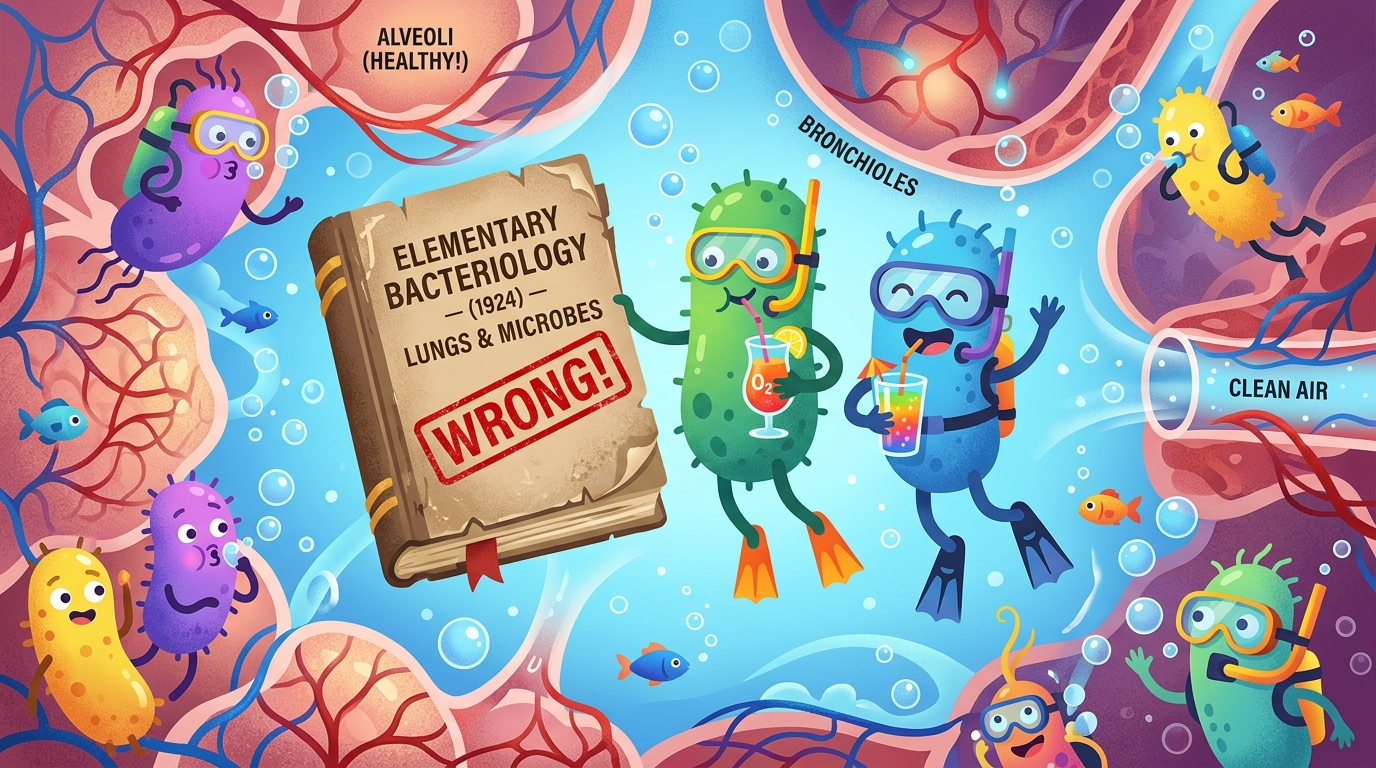
Imagine spending a century telling medical students that fish hate water, and you have a pretty good idea of what microbiologists have been doing since the 1920s. For over one hundred years, standard medical dogma insisted that Prevotella melaninogenica—a ubiquitous bacterium that makes up roughly 10% of the human lung microbiome—was a strict "obligate anaerobe" that drops dead the second it touches oxygen. There was just one tiny, awkward problem: it literally lives inside human lungs, the single most oxygenated organ in the entire human body.
Now, a groundbreaking study from the University of Michigan led by Dr. Ariangela Kozik has officially debunked the century-old textbook myth. By culturing clinical isolates under physiological oxygen gradients, the researchers proved that P. melaninogenica doesn't just survive oxygen; it actively consumes it.
🫁 How an "Anaerobe" Thrives on Fresh Air
Dr. Kozik's team uncovered the sophisticated molecular machinery that textbooks missed:
- Oxygen Consumption: Far from being poisoned, the bacterium actively depleted dissolved oxygen in culture media, utilizing an alternative respiratory metabolic pathway.
- Oxidative Armor: Genetic sequencing revealed a robust suite of protective enzymes, including rubrerythrin, catalase, and superoxide dismutase, which neutralize toxic oxygen radicals before they cause damage.
- The 100-Year Laboratory Blunder: Early 20th-century scientists classified it as an anaerobe simply because standard broth cultures exposed to ambient air dried out or suffered shock, rather than reflecting its natural home in the warm, humid lung mucosa.
This discovery fundamentally reshapes our understanding of respiratory health. In healthy lungs, P. melaninogenica plays a peaceful, protective commensal role. However, in patients with chronic obstructive pulmonary disease (COPD), cystic fibrosis, and severe asthma, its populations crash and are replaced by vicious pathogens like Pseudomonas aeruginosa.
Because doctors previously assumed Prevotella were accidental, inert hitchhikers washed down from saliva that couldn't possibly survive long in the airway, their metabolic activity was largely ignored in clinical trials.
🌬️ Time for a Textbook Recall
As Dr. Kozik and her colleagues pointed out, you can't understand lung health if you misunderstand 10% of the lung's residents. Take a deep breath of fresh air today—and know that billions of tiny roommates in your chest are happily raising a glass of O2 right along with you.
You might also like

Cancer Cells Bake Themselves a Glazed-Donut Sugar Shield to Hide from Immune Police
Scientists at Sanford Burnham Prebys discover that cancer cells hijack high blood sugar and HSF1 protein to coat themselves in a thick glycocalyx shield, dodging immune destruction.
We Are Becoming Carbonated: 20-Year Study Shows Human Blood Chemistry Is Changing with Atmospheric CO2
A landmark 20-year study of over 100,000 Americans reveals that rising atmospheric carbon dioxide is silently altering human physiology, driving a 7% surge in blood bicarbonate while reducing essential minerals.

Turning Neurons into Disco Lights: How Green Algae Bagged the 2026 Nobel Prize in Medicine
The 2026 Nobel Prize in Physiology or Medicine goes to Karl Deisseroth, Peter Hegemann, and Georg Nagel for inventing optogenetics—hijacking pond scum proteins to control living brain cells with laser beams.