The Sun's 10,000°C Plasma Swirls Accidentally Painted Van Gogh's 'Starry Night'
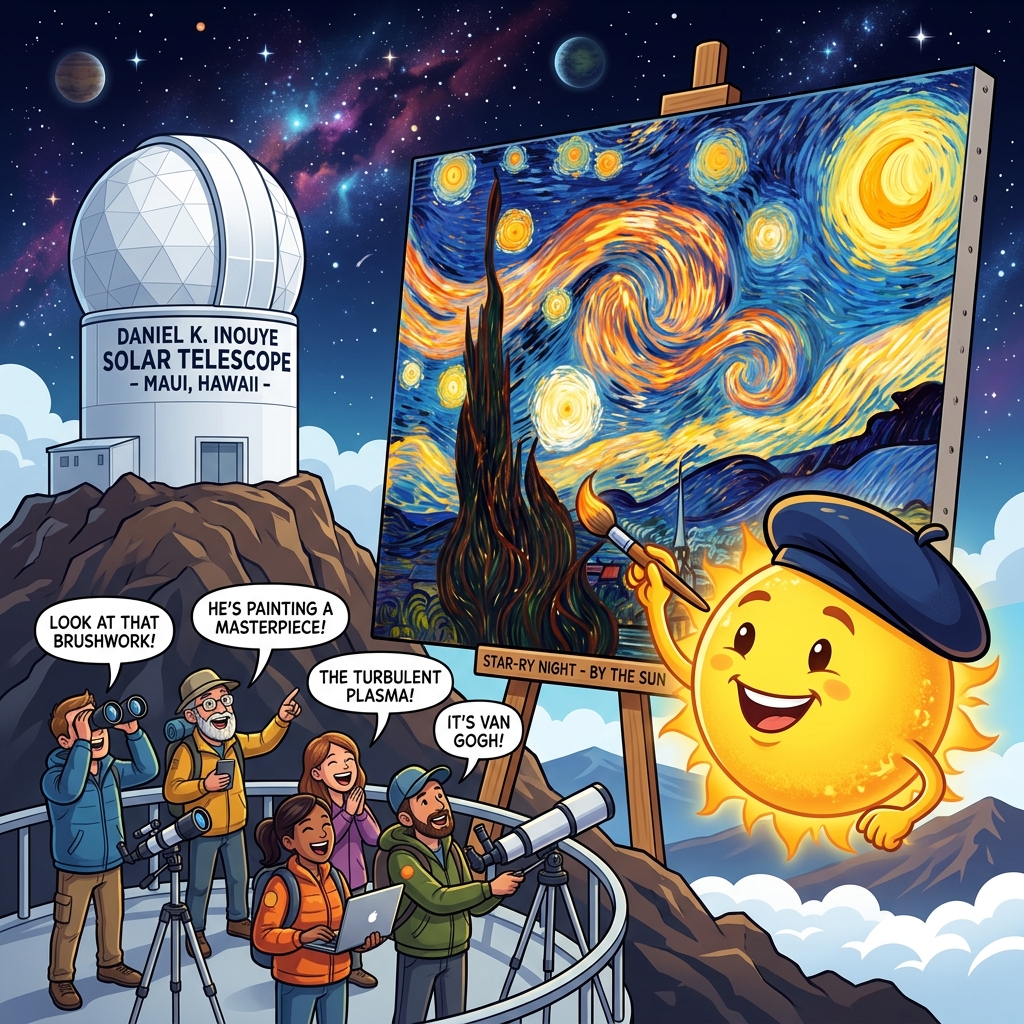
It turns out Vincent van Gogh wasn't just a Post-Impressionist master—he was accidentally channeling the fluid dynamics of a 10,000°C solar plasma storm 93 million miles away.
Using Hawaii's high-powered Daniel K. Inouye Solar Telescope, solar astronomers published groundbreaking images in Nature capturing Kelvin-Helmholtz instability (KHI) vortices on the Sun for the very first time. The resulting wave-like plasma swirls look shockingly like the iconic sky from The Starry Night.
☀️ High-EQ Solar Physics Translation:
When superheated plasma streams slide past each other at wildly different speeds, fluid dynamics whip the solar surface into feathery wave-swirls that look like Van Gogh took a giant paintbrush to our star.
First Time Observed on a Star
While Kelvin-Helmholtz vortices are well-documented in Earth's ocean waves and cloud formations (and Jupiter's atmosphere), this marks the first time scientists have directly resolved these micro-vortices on the surface of a star. Each plasma swirl spans anywhere from 12 to 100 miles wide!
Solving the Solar Corona Mystery
Beyond being cosmic art, these fiery plasma swirls hold key clues to one of astrophysics' greatest puzzles: why the Sun's outer atmosphere (the corona) is millions of degrees hotter than its actual surface. Understanding these wave instabilities will help scientists better forecast solar flares and space weather storms before they hit Earth.
You might also like
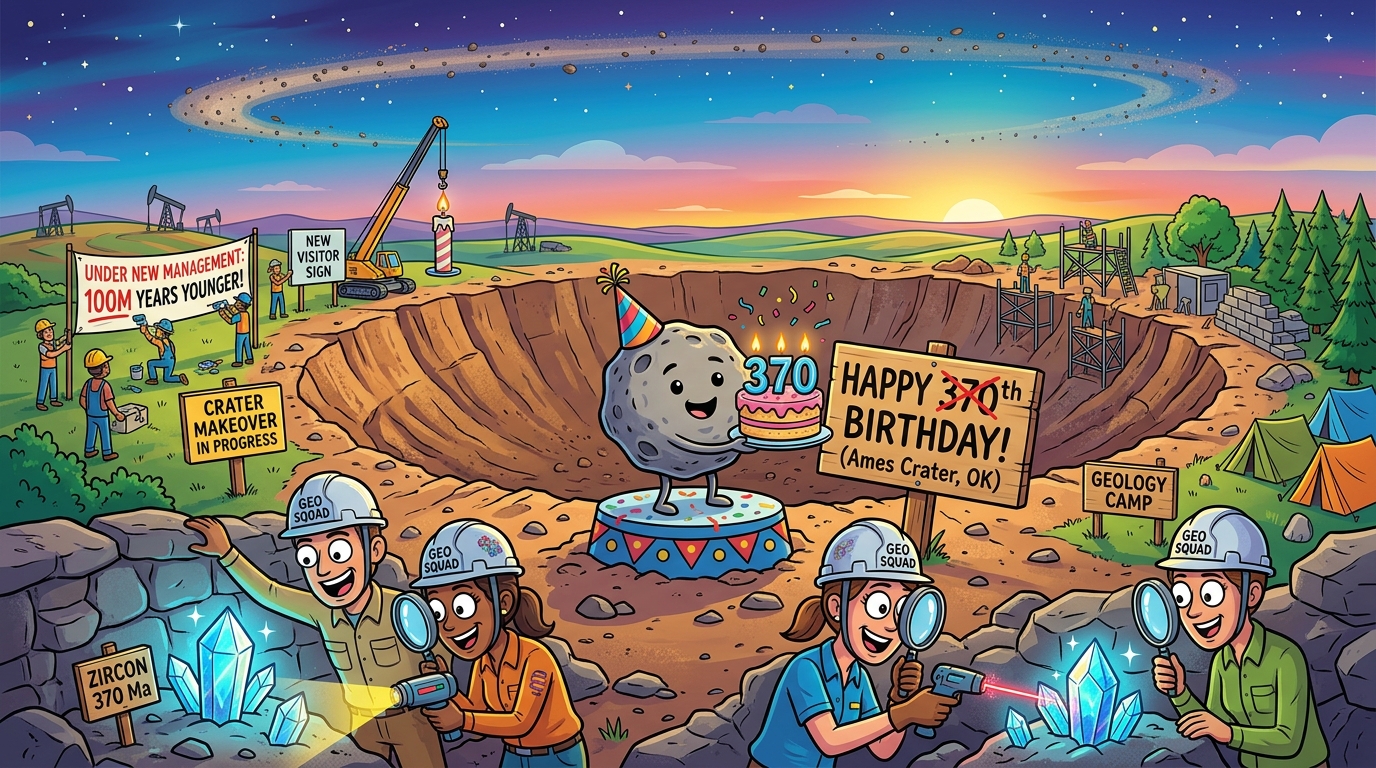
Oklahoma's Ames Meteor Crater Knocked 100 Million Years Off Its Age After Getting Caught With Recycled Fossils
High-precision uranium-lead zircon dating reveals Oklahoma's Ames impact crater was formed 370 million years ago—nearly 100 million years later than believed—kicking it out of Earth's hypothetical Saturn-ring club.

The Moon's Far Side Preserved 1,000°C Magnetic Hard Drives in Natural Glass Beads
Scientists analyzing Chang'e-6 lunar soil discovered rare high-temperature gamma-iron trapped inside impact glass beads, creating microscopic magnetic fossils that remember the Moon's ancient dynamo.
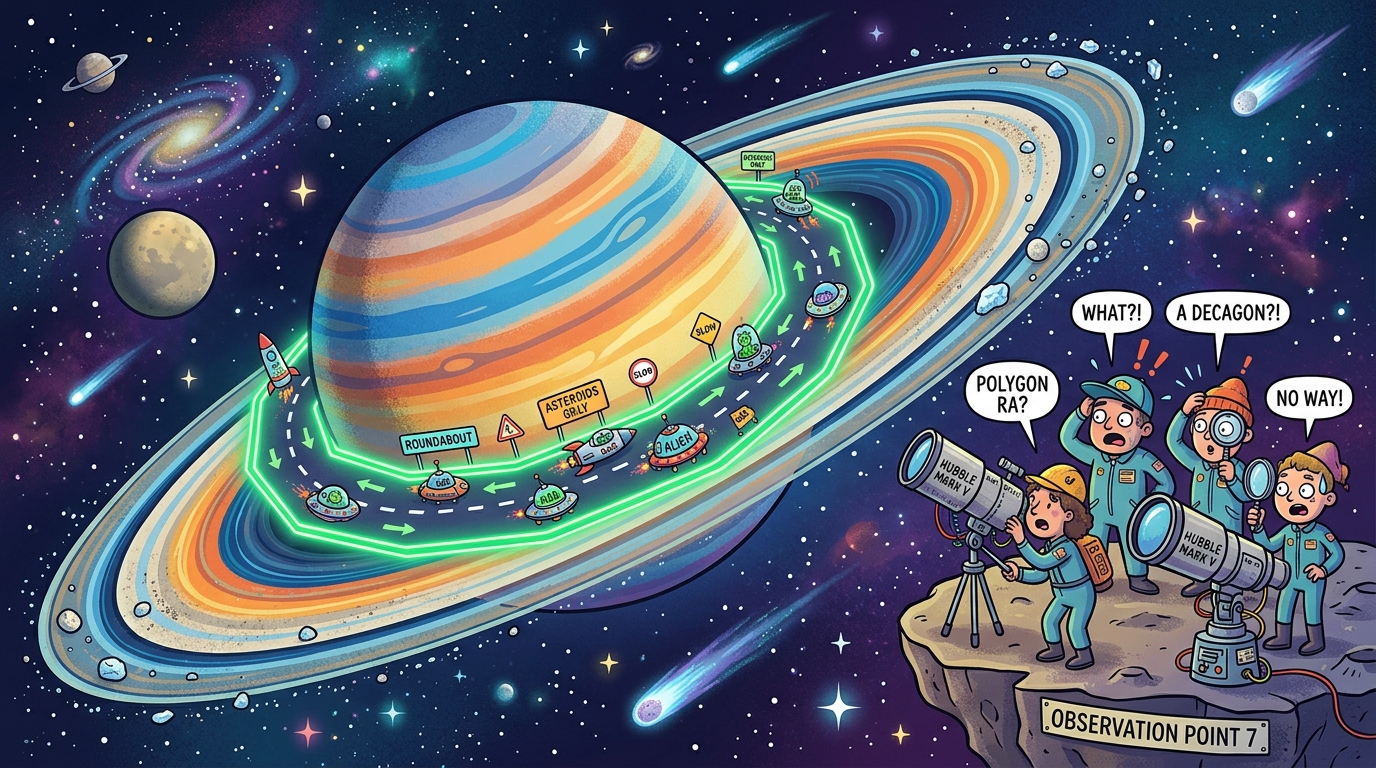
Saturn Got Bored With Its Hexagon, So Its South Pole Spun Up a 10-Sided Decagon
Hubble astronomers discovered a giant 10-sided atmospheric wave cruising around Saturn's south pole at 10 km/h, with each side stretching longer than planet Earth.