SpaceX Sets Fast-Food Speed Record: Two Orbital Rockets in 38 Minutes
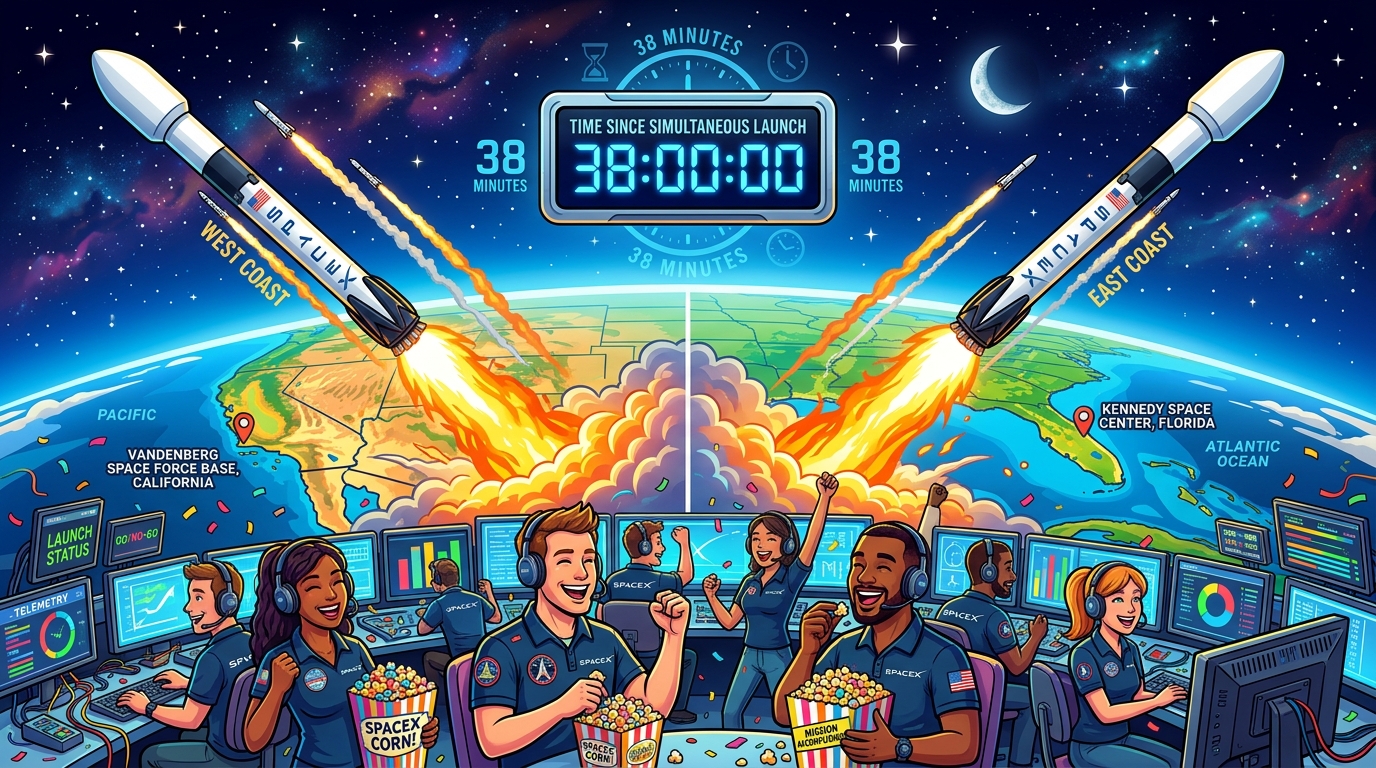
If you ordered a pizza at 9:10 PM on Saturday, by the time your delivery driver got lost in your apartment complex, SpaceX had already launched two giant orbital rockets into space from opposite coasts of the United States.
On August 15, SpaceX officially set a new company record for the shortest turnaround between two orbital spaceflights, firing off two Falcon 9 rockets a staggering 38 minutes apart. The twin missions spanned thousands of miles, operating simultaneously from Cape Canaveral Space Force Station in Florida and Vandenberg Space Force Base in California.
🚀 The Double-Header Scorecard
- 9:12 PM EDT (Florida): Falcon 9 roars off from Cape Canaveral carrying eight Globalstar telecommunication satellites, followed by a pristine landing back at Landing Zone 1.
- 9:50 PM EDT (California): Exactly 38 minutes later, another Falcon 9 lifts off from Vandenberg carrying the classified USSF-366 payload for the U.S. Space Force, nailing its booster touchdown on the droneship Of Course I Still Love You in the Pacific Ocean.
This new 38-minute interval obliterates SpaceX's previous orbital record of 65 minutes (set back on August 31, 2024). At this pace of launch cadence, orbital rocketry is starting to look less like an exotic aerospace event and more like a high-frequency subway schedule.
⏱️ When Rocket Refurbishment Beats Airport Security
Consider the logistics: two launch sites separated by 2,500 miles, two distinct launch teams, two flight profiles, two telemetry streams, and two booster recovery teams simultaneously executing precision burns and autonomous drone ship touchdowns. Commercial spaceflight is officially operating at drive-thru speed.
The next milestone? Launching two rockets so close together that launch control can save money by using a single countdown timer.
You might also like
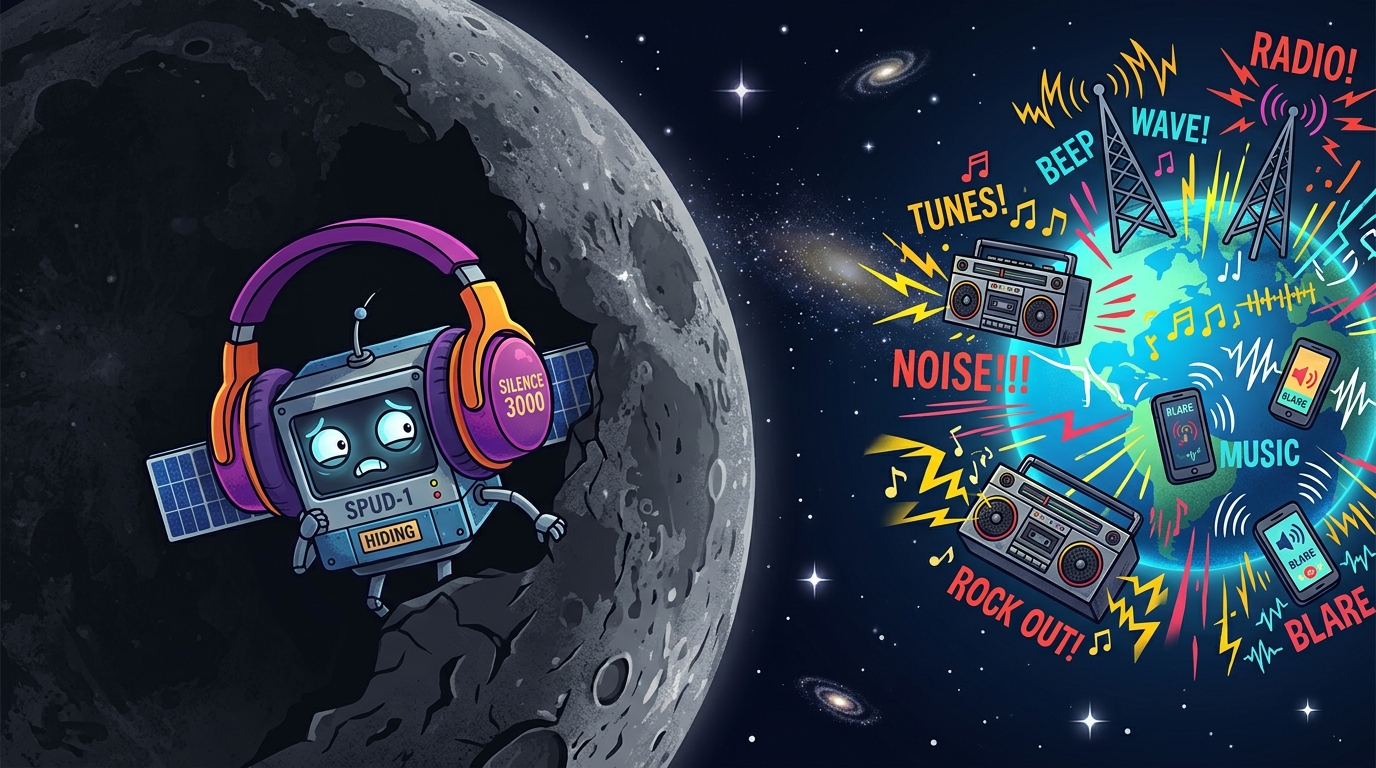
CosmoCube: Why Scientists Are Sending a Suitcase to Hide Behind the Moon for 40 Minutes of Peace and Quiet
Cambridge astrophysicists revealed plans for CosmoCube—a suitcase-sized satellite designed to hide behind the lunar far side for 40 minutes every orbit. Its goal? Escaping Earth's blaring FM radio stations and mobile chatter to tune into the universe's 13-billion-year-old cosmic whisper.
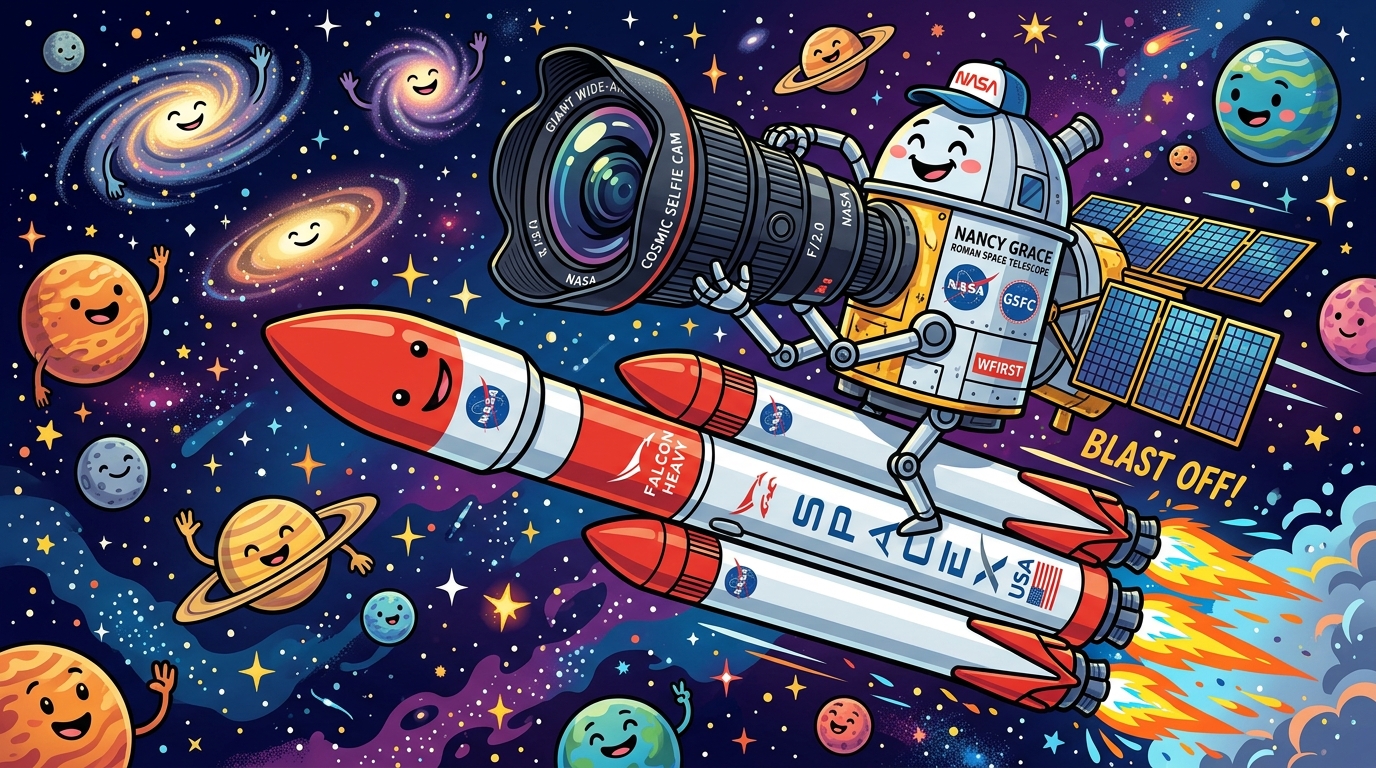
NASA's Nancy Grace Roman Space Telescope Blasts Off on Falcon Heavy to Map the Dark Universe
NASA's next flagship observatory launched on a SpaceX Falcon Heavy with a panoramic field of view 100x larger than Hubble, heading 1.5 million kilometers to L2 to hunt rogue planets and dark energy.

NASA Abandons $30M Space Telescope Rescue After Tow Truck Starts Spinning Out of Control
NASA hired a commercial space tug to save the 22-year-old Swift Observatory from plummeting into Earth. Then the rescue ship broke two wheels and started breakdancing in orbit.