66-Million-Year-Old Dinosaur Hip Still Has Real Collagen: Jurassic Park Chemistry Is Getting Closer
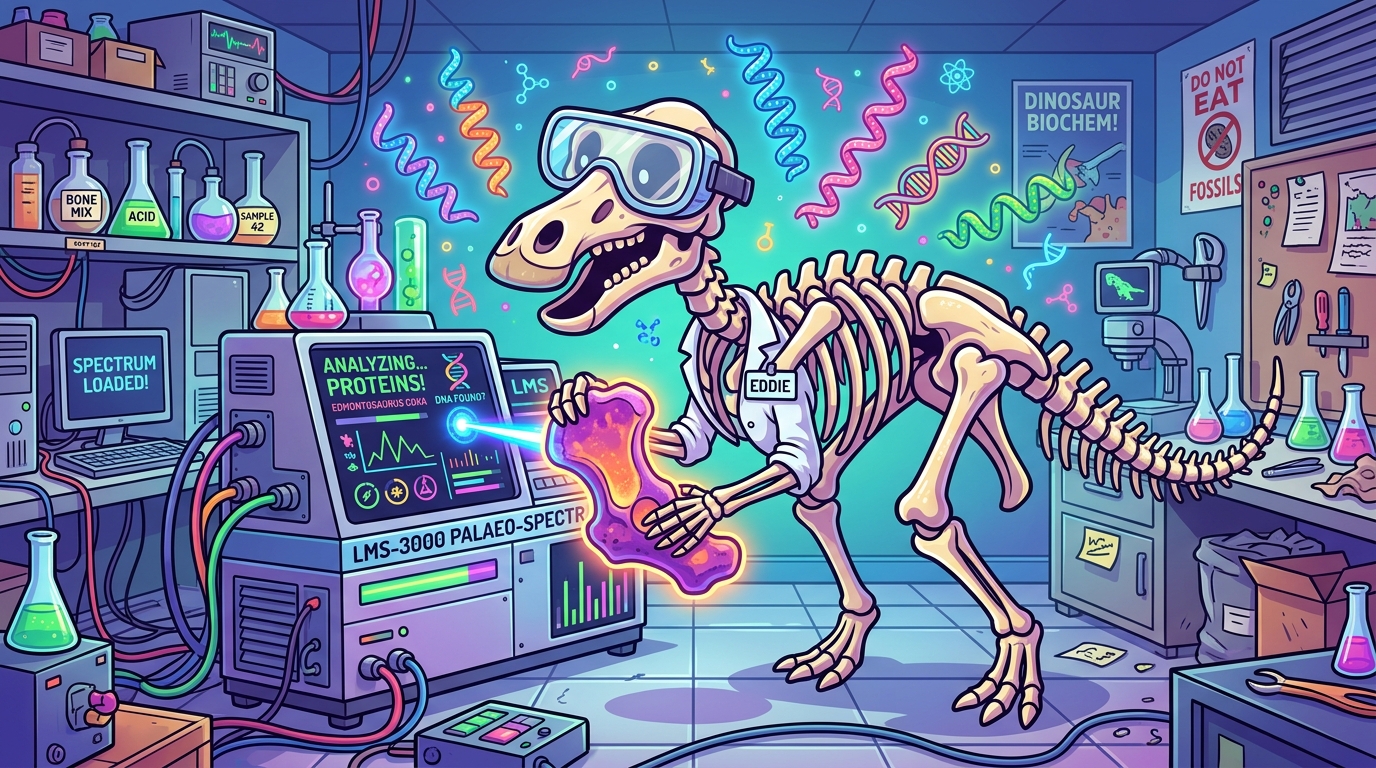
For decades, high school textbooks promised us that after 66 million years underground, any living creature turns strictly into hard rock. It turns out someone forgot to tell this duck-billed dinosaur's hip.
In an astonishing breakthrough published in paleobiology, a research team led by the University of Liverpool used ultra-high-resolution mass spectrometry to extract and sequence original, endogenous collagen protein fragments trapped inside a 66-million-year-old Edmontosaurus annectens ilium (hip bone) excavated from South Dakota's famous Hell Creek Formation.
🦴 Breaking the "Million-Year Barrier"
Conventional biochemical doctrine stated that peptide bonds degrade completely within 1 to 3 million years at best. But within the dense, mineralized cortical matrix of this hadrosaur bone, collagen helices were cross-linked with iron ions and shielded in microscopic crystal vaults—surviving the mass extinction asteroid, ice ages, and 660,000 centuries intact.
The spectral analysis revealed distinct amino acid sequences that match the evolutionary branching between ancient archosaurs and modern birds:
- Avian & Crocodilian Kinship: The sequenced peptides show an unambiguous match to modern chicken, ostrich, and alligator collagen, definitively confirming their shared evolutionary blueprint.
- Zero Bacterial Contamination: Rigorous mass spectrometry confirmed the signatures were ancient archosaurian proteins, completely dismissing critics who previously blamed modern bacterial biofilm.
🧬 Does This Mean We Can Clone a T-Rex?
Don't book your tickets to Isla Nublar just yet. While proteins (the durable bricks of the body) can survive deep time in mineral vaults, delicate DNA molecules break down far faster. So no living dinosaurs yet—but palaeoproteomics has just opened a direct chemical portal into the Late Cretaceous.
Still, finding genuine dinosaur protein that outlasted the apocalypse by 66 million years gives a whole new meaning to the phrase "built to last."
You might also like
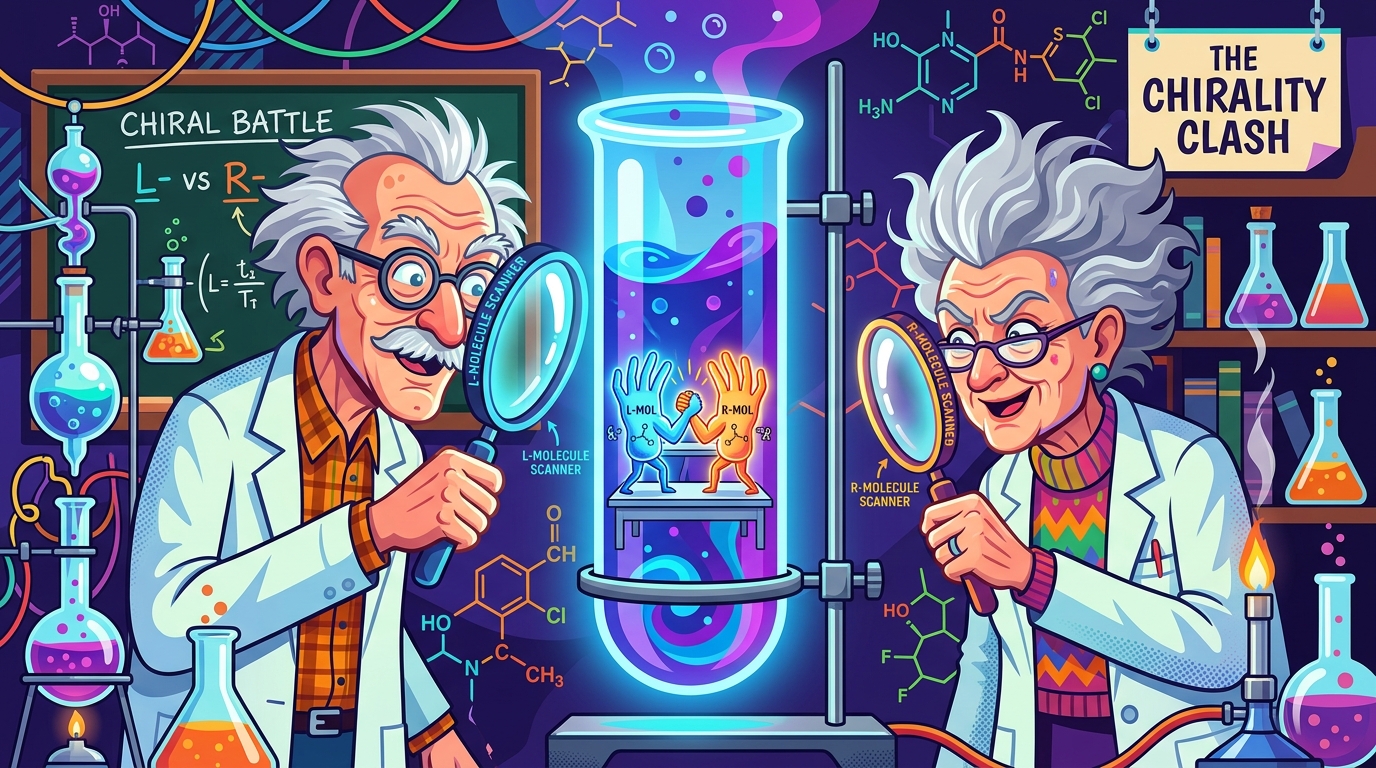
The Great Molecular Arm Wrestle: Why the 2026 Nobel Prize in Chemistry Won't Shake Your Right Hand
The 2026 Nobel Prize in Chemistry honors Henri B. Kagan and Kenso Soai for cracking homochirality—explaining how a microscopic nudge can cause one mirror-image molecule to mercilessly bully its twin out of existence.
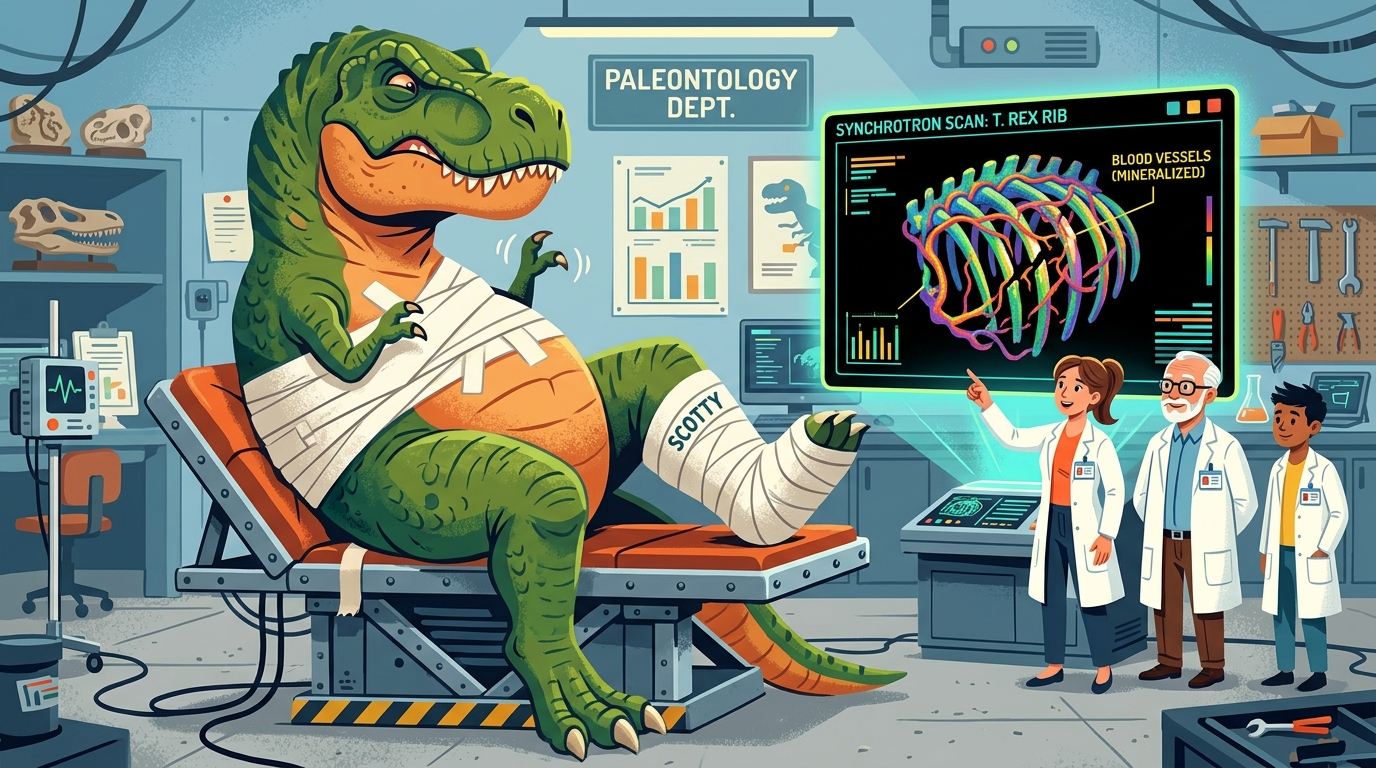
Even a 9-Ton T. Rex Needed Sick Days: 66-Million-Year-Old Blood Vessels Found in Broken Bone
Canadian physicists used particle accelerators to inspect the broken rib of Scotty—the world's largest Tyrannosaurus rex—and discovered 3D mineralized blood vessels that were actively nursing the apex predator back to health.
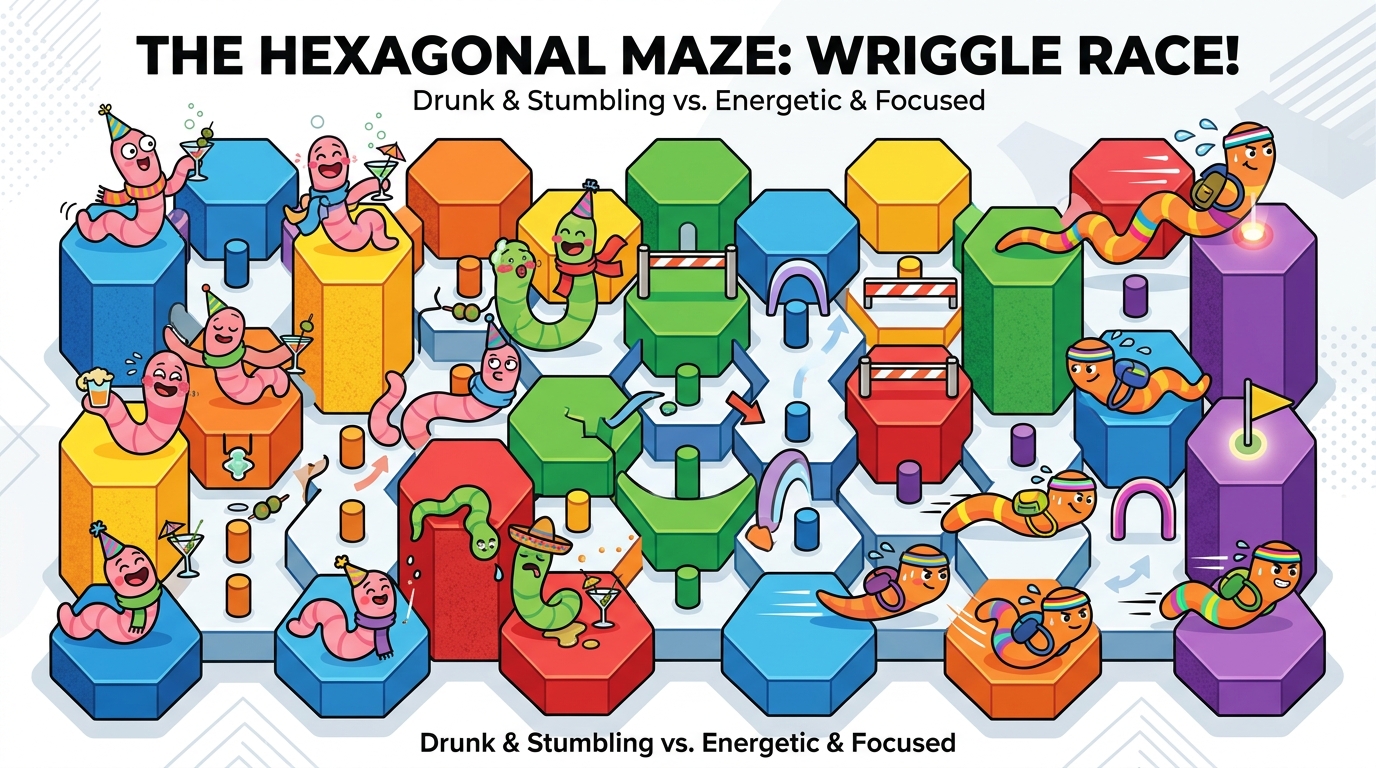
The Great Worm Pub Crawl: Scientists Win Ig Nobel for Sorting Drunk Worms in an Obstacle Maze
University of Amsterdam physicists got thousands of aquatic worms tipsy on beer-strength ethanol, built a tiny hexagonal pegboard maze, and proved that sober worms make vastly superior life choices.